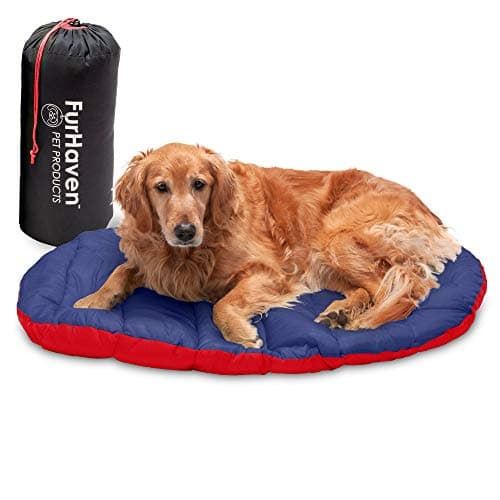
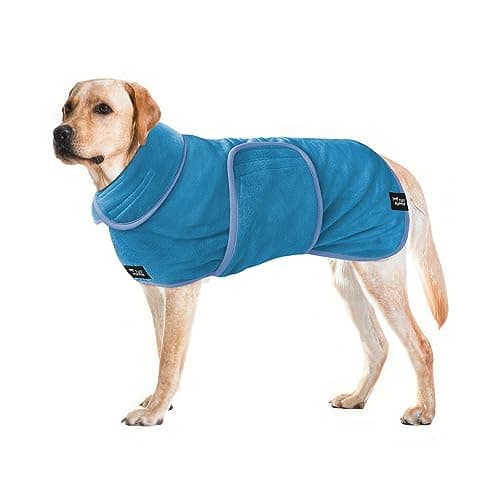
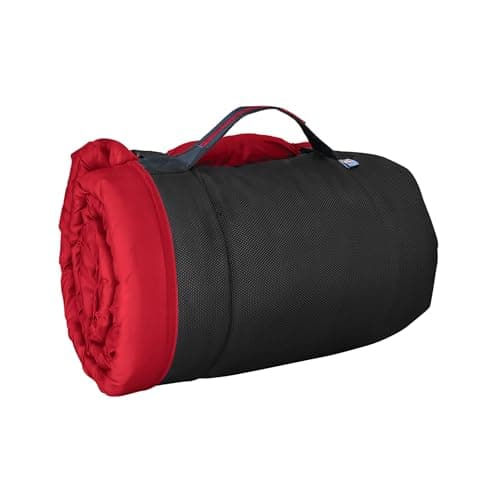
The short answer, in order of how much difference each makes: dry the dog before it gets in, put something insulating between the dog and the seat or the cargo floor, and know that your car's heater reaches the footwell you are sitting in several minutes before it reaches the back of a vehicle - and in many cars it barely reaches a cargo bay at all. If you buy one thing, buy an insulating travel pad; if you buy two, add a drying coat for the tailgate.
And the rule that is not about gear: do not leave a dog in a parked car in the cold. A stationary vehicle in winter behaves like a refrigerator - it holds cold in, the engine heat bleeds away within minutes, and there is no sun to help as there is in summer. The AVMA's pets-in-vehicles material makes the same point in both directions, which is why the honest version of this page is about the drive rather than about the wait. Our hot-weather sibling, keeping a dog cool in the car, deals with the summer half of the same problem.
Where the heat actually goes in a car
Three facts about vehicles that change what you buy:
- A cargo bay is the coldest place in the vehicle. It is furthest from the vents, it usually sits over an uninsulated metal floor directly above the road, and in an estate or SUV it is often behind a barrier that blocks the airflow you are paying for. A dog crated in the back of an SUV on a January motorway is in a genuinely different climate from the driver.
- Rear vents are not standard. Plenty of cars have none at all. If yours does, open them and point them down rather than at the dog; if it does not, you are heating the back of the car by convection and it takes a long time.
- Glass radiates heat away. A dog pressed against a rear window on a cold night is losing heat to it. A bed that sits a few inches off the floor and away from the door panel is worth more than a thicker blanket in the wrong place.
The practical consequence: insulation from below beats covering from above. Most owners reach for a blanket on top, when the heat is being lost into a cold seat or a metal floor.
The real problem is a wet dog
Almost every uncomfortable winter car journey with a dog starts the same way: a good walk, a wet dog, and then forty minutes of sitting still in a vehicle that is only just warming up. You are warm because you have been working. The dog has stopped, and evaporation off a wet coat is doing the opposite of what you want.
Dry the dog at the tailgate. A drying coat is the version that keeps working while you drive; a high-absorbency towel is the cheaper version and perfectly adequate if you are thorough about the chest and the belly, which is where water sits. Our drying towels page ranks the field on published fabric weight and how fast each one is usable again. Pay particular attention to the feet: a dog with wet feet on a cold vinyl floor is uncomfortable long before the rest of it is.
What to put the dog on
| Where the dog travels | What to put down | Why |
|---|
| Back seat, loose on a hammock or cover | A folding travel bed on top of the cover | The cover protects the car; the bed insulates the dog. They are different jobs. |
| Crated in a cargo bay | A firm crate pad, plus a liner under the crate | The metal floor is the heat sink. A pad that compresses to nothing under a 60 lb dog is not insulating anything. |
| In a carrier at your feet | The carrier's own pad, with a fleece layer | Warmest place in the car. This is the easy case. |
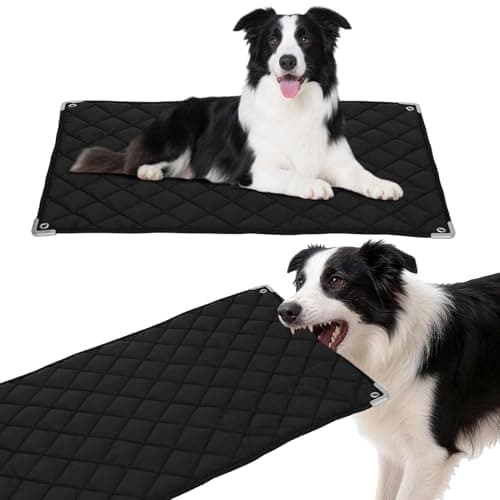
| Cargo bay, uncrated behind a barrier | A cargo liner, then a bed on top of it | Liner for the car, bed for the dog - and the bed needs a non-slip underside or it will migrate. |
Live prices for each pick are under the table below with the date they were pulled. Nothing here is a heated product: we do not rank 12V heated pads, for the reason set out at the end.
Winter stops, and what changes about them
Our road-trip rhythm page recommends stopping every two to three hours, and that does not change in winter - but what happens at the stop does:
- Keep the breaks shorter and the dog moving. A long stand-around in a service area is the part of a winter stop that chills a dog, not the walk.
- Wipe the feet before the dog gets back in. Grit and de-icer come off car parks onto paws and then get licked. Carry water and a cloth.
- Offer water anyway. Dogs drink less in the cold and still lose moisture - our hydration guide covers the trade-off, and a collapsible bowl is the whole apparatus.
- Never leave the dog in the car with the engine off to pop inside. This is the cold-weather version of the summer rule and it is the same answer.
Three things we would not do
Leave the engine running with the dog inside and nobody in the car. It is the obvious workaround and it is a bad one: exhaust in an enclosed space, a vehicle that can be driven away, and a climate system that will cheerfully cook a dog if the controls are set wrong.
Use a 12V heated pad in a vehicle with a dog on it unsupervised. We do not rank them and we are not going to: they are a burn and chew risk on a dog that is restrained and cannot move away from a hot spot, and the problem they solve is solvable with insulation.
Dress the problem instead of fixing it. A coat on a wet dog on a cold seat is three layers of nothing. Dry dog, insulated surface, then a coat if the dog is thin-coated, elderly or small - in that order.
For the trail half of a winter day out, see winter hiking with a dog, which covers the ice-between-the-pads problem this page inherits at the tailgate.