Skip to content
Paw & Passport

HUB 02 · Car Travel Safety

Driving to Canada or Mexico With a Dog

Crossing a land border with a dog is mostly about coming back. Since August 2024 the United States asks for a form, a microchip and a dog at least six months old - even if the dog is yours and lives here.

By Stephen V.Updated How we research
#ad

We earn a commission when you buy through our Amazon links, at no extra cost to you. It never affects our rankings, and we say so when the cheaper product is the better buy. How this works.

The surprise on a Canada or Mexico road trip with a dog is almost never the outbound crossing. It is the return. Since 1 August 2024 the US Centers for Disease Control and Prevention has applied its dog importation rules to every dog entering or returning to the United States - including your own dog, which lives in the United States, and which you drove across the border yourself last Tuesday. The short version: you need the CDC Dog Import Form, the dog needs a microchip a universal scanner can read, and the dog must be at least six months old at the time of entry. That last one quietly ends a lot of trips planned around a new puppy.

Canada and Mexico are both treated as dog-rabies low-risk countries by the CDC, which is the good news - it means the lighter of the two rule sets applies. The CDC's own wording is that for dogs that have only been in rabies-free or low-risk countries in the past six months, "the only required documentation... is the CDC Dog Import Form." Low-risk still means the form, the microchip, the six-month age minimum, and a dog that appears healthy on arrival.

This page is the land-border version of paperwork. The airline version - health certificates with validity windows, carrier documents, airline-specific forms - is a different problem and lives on dog health certificates to fly and flying internationally with a dog. Rules change, and we are a gear site rather than a government one: treat everything here as the thing to go and confirm on the official pages linked at the bottom, dated the day you read them.

Going into Canada

For a personal pet dog from the United States, the document Canadian border officers expect is a valid rabies vaccination certificate, issued in English or French by a licensed veterinarian, that clearly identifies the dog and shows the vaccination is current. A dog under three months old does not need rabies certification. "Personal" matters: it means the dog lives with you and is not being transferred to anyone on arrival, and you are the person importing it.

Two practical notes. Pet dogs imported into Canada are not subject to post-import quarantine, so the fear people arrive with is unfounded. And the certificate has to identify the dog - breed, colour, markings, ideally the microchip number - not just assert that a dog was vaccinated. A certificate that could describe any brown dog is the one that causes a conversation at the booth.

Going into Mexico

Mexico's requirements for pets arriving with their owners are administered by SENASICA, and the process at a land crossing is an inspection rather than a paperwork handover: the animal is looked at for signs of disease and for external parasites. Carry the rabies certificate and veterinary records regardless, because they cost nothing to bring and the alternative is improvising at a border. Verify the current requirement on the official source before you leave - this is the one of the three that has changed most in recent years, and a travel blog from two years ago is not evidence.

Coming home: the part that catches people

This is the section to read twice. Returning to the United States from Canada or Mexico, as of 1 August 2024, your dog needs:

  • A CDC Dog Import Form. Completed online before arrival; you present the receipt. For dogs that have only been in low-risk or rabies-free countries, this is the only required document.
  • A microchip readable by a universal scanner.The CDC's wording is that dogs must have a microchip "that can be detected with a universal scanner to identify them." An older non-standard chip is worth having checked by your vet before the trip, not at the border.
  • A dog at least six months old at entry or return. No exception for a US-born dog. If you have a four-month-old puppy, a cross-border road trip is off until it is six months old.
  • A dog that appears healthy on arrival. Discretionary, and the reason a sick dog at a border is a long afternoon.

The microchip rule has a second benefit worth taking seriously: a chip is only useful if the registry behind it has your current phone number. Check that before you leave the country, not after. Our comparison of microchip versus GPS tracker explains why the chip is the legal identity and the tracker is the search tool - on an international trip you want both.

What to actually carry, in one folder

  • Rabies vaccination certificate, original, vet-signed, identifying the dog.
  • CDC Dog Import Form receipt for the return leg.
  • Microchip number written down, plus the registry login.
  • A current photo of the dog on your phone and on paper.
  • Your vet's phone number, and a vet near your destination looked up in advance.
  • Any prescription medication in its labelled original packaging.

Then there is the drive itself

Paperwork is the part people worry about and the drive is the part that actually goes wrong. A border crossing means an idling queue in the sun, which is the exact condition our heat page is about - plan to keep the engine and the air running, and never leave the dog in the car to go inside a border building. Restrain the dog properly for the drive with a crash-tested harness, work from the road trip checklist, and if the crossing is part of a longer relocation, read moving cross-country with a dog.
The short answer

Quick picks

#ProductBest forScorePrice
01
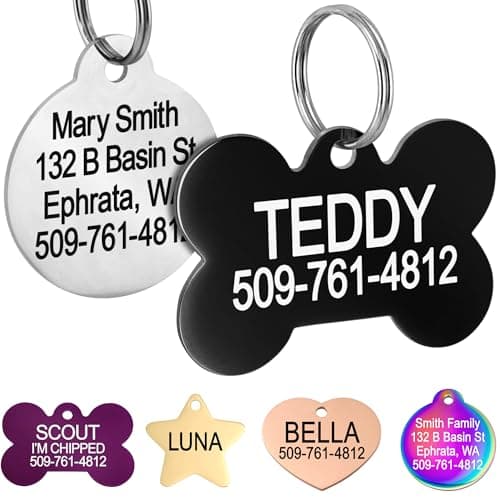
GoTags GoTags Personalized Stainless Steel Dog Tag
GoTags Personalized Stainless Steel Dog Tag

Deep-engraved stainless. The engraving is still readable in three years, which is the only spec that matters.

The tag you actually rely on
8.2
$11.82Amazon
02
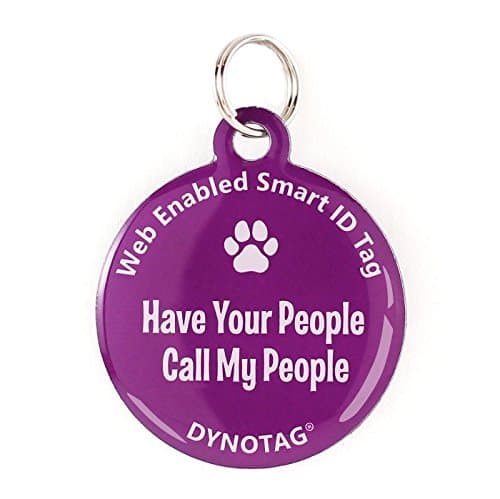
Dynotag Dynotag Web-Enabled QR Pet ID Tag
Dynotag Web-Enabled QR Pet ID Tag

The only tag here you can update from a hotel room — which is exactly the problem travel creates.

Travel, where your location keeps changing
7.6
$21.25Amazon
03
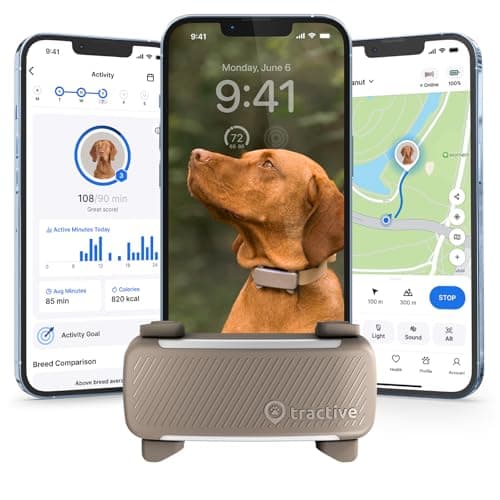
Tractive Tractive Smart Dog GPS Tracker
Tractive Smart Dog GPS Tracker

The real GPS pick. Unlimited range and live tracking — as long as you accept it needs a subscription.

Actual live GPS location
6.8
$55.30Amazon

#ad · Live prices from the Amazon Product API, as of October 5, 2026. Where we have no verified live price we show none — we would rather leave a gap than print a number that has rotted.

In detail

The picks, in full

01
GoTags GoTags Personalized Stainless Steel Dog Tag

The tag you actually rely on

GoTags Personalized Stainless Steel Dog Tag

Stainless steelFront and back engravingMultiple shapesDeep engraving
8.2/10

Deep-engraved stainless. The engraving is still readable in three years, which is the only spec that matters.

Legibility
10
Durability
10
Quietness
5
Customization
8
Value
8

Pros

  • Stainless resists the wear that turns cheap aluminum tags into unreadable discs within a year
  • Two-sided engraving fits a phone number plus a second contact, which is what you want when traveling
  • The engraving is cut deep rather than laser-marked on the surface

Cons

  • Steel is noisier against other tags than aluminum or silicone
  • Costs several times a basic aluminum tag

Don't buy this if…

…you change contact details often. Engraving is permanent; a QR tag you can re-point is the better shape for that.

$11.82View on Amazon

Price as of October 5, 2026. Prices change — Amazon's at checkout is the one that counts.

#ad · we may earn a commission from this link to GoTags Personalized Stainless Steel Dog Tag

02
Dynotag Dynotag Web-Enabled QR Pet ID Tag

Travel, where your location keeps changing

Dynotag Web-Enabled QR Pet ID Tag

QR code linked to an online profileEditable contact detailsCoated steelNo subscription stated
7.6/10

The only tag here you can update from a hotel room — which is exactly the problem travel creates.

Legibility
7
Durability
8
Quietness
6
Customization
10
Value
7

Pros

  • You can change the contact details and add a temporary address without re-engraving anything, which is the whole point on a trip
  • The online profile holds more than a tag can — vet contact, medications, a second phone number
  • A scan can notify you, so you learn the dog has been found rather than waiting for a call

Cons

  • It depends on the finder having a smartphone, a signal and the willingness to scan — so it should never be the only tag
  • It depends on the service continuing to exist, which an engraved number does not

Don't buy this if…

…it would be your only tag. Pair it with an engraved tag carrying a plain phone number; belt and braces.

$21.25View on Amazon

Price as of October 5, 2026. Prices change — Amazon's at checkout is the one that counts.

#ad · we may earn a commission from this link to Dynotag Web-Enabled QR Pet ID Tag

03
Tractive Tractive Smart Dog GPS Tracker

Actual live GPS location

Tractive Smart Dog GPS Tracker

LTE + GPSUnlimited rangeWaterproofSubscription required
6.8/10

The real GPS pick. Unlimited range and live tracking — as long as you accept it needs a subscription.

Location accuracy
9
Battery life
8
No subscription
2
Size/weight
8
Value
7

Pros

  • True cellular GPS: it reports live location anywhere there's a mobile signal, not just within Bluetooth range
  • Waterproof and light enough to ride on a collar all day
  • Live tracking and virtual fences are the features an escape-prone dog actually needs

Cons

  • Requires a paid subscription — the device price is not the real cost of ownership
  • Battery is measured in days or weeks, not months — Tractive lists up to two weeks with Power Saving Zones, and about six days without them

Don't buy this if…

…you won't pay a monthly fee. Without the subscription a cellular tracker is a paperweight — if you refuse the fee, an AirTag is the honest alternative.

$55.30View on Amazon

$79.0030% off

Price as of October 5, 2026. Prices change — Amazon's at checkout is the one that counts.

#ad · we may earn a commission from this link to Tractive Smart Dog GPS Tracker

Three things worth buying before an international road trip

None of these is paperwork, and none of them substitutes for it. They are the identity layer - the part that matters when a dog is loose in a country where your phone may not work and nobody can read your plate.

  • A legible engraved tag. The GoTags stainless tag takes front-and-back engraving, which is what you need when a home number is not enough and you want a second contact on it.
  • A tag whose details you can change from a hotel. This is the one that is genuinely better abroad: the Dynotag QR tag points at an online profile you can edit, so the finder sees where you are rather than where you live. Engraving cannot do that mid-trip.
  • A tracker, if you will be somewhere unfamiliar and unfenced. The Tractive tracker is the live-location option on this site; check its coverage for the specific country before you rely on it, because cellular GPS trackers depend on a network and that is a per-country question.

The full fields are on best dog ID tags for travel and best GPS dog trackers.

The timeline

  • Two months out: confirm the dog is microchipped with a universal-scanner chip and that the registry has your current number. Confirm the dog will be six months old at the return date.
  • One month out: check the rabies vaccination is current through the whole trip, and get the certificate reissued if it does not clearly identify the dog.
  • Two weeks out: re-read the official pages. This is the step people skip and it is the one that catches rule changes.
  • Before the return leg: complete the CDC Dog Import Form and save the receipt offline, not just in a browser tab.

How we picked

We do not test the gear

We compiled the manufacturers' published dimensions and specs, cross-checked them against airline under-seat limits and published safety certifications, read the owner reviews, and scored each product against a published rubric. The scores are judgments from that research — they are not measurements we took, because we do not own a lab and we are not going to pretend we do. Where we could not verify a fit or a claim, we say so on the page.

Questions

Frequently asked

What documents do I need for my dog to travel to Canada?
For a personal pet dog from the United States, a valid rabies vaccination certificate issued in English or French by a licensed veterinarian that clearly identifies the dog and shows current vaccination. A dog under three months old does not need rabies certification. Pet dogs are not subject to post-import quarantine in Canada.
What paperwork do I need to bring my dog back into the US?
Since 1 August 2024, a CDC Dog Import Form, a microchip readable by a universal scanner, and a dog at least six months old at entry. For dogs that have only been in rabies-free or low-risk countries in the past six months - which includes Canada and Mexico - the CDC says the form is the only required documentation. The microchip and age rules still apply.
Does my own US dog need the CDC form to come home?
Yes. The rules apply to dogs entering or returning to the United States, with no exemption for a US-resident dog that left a week ago. This is the single most common surprise on a cross-border road trip.
Can I take a puppy to Canada or Mexico by car?
You can get it out, but you may not get it back. The CDC requires a dog to be at least six months old at the time of entry or return to the United States. A four-month-old puppy therefore cannot legally re-enter, which in practice means waiting until it is six months old before you plan the trip.
Do I need a health certificate to drive to Mexico with my dog?
Mexico's pet entry process at a land crossing is administered by SENASICA and centres on an inspection for signs of disease and external parasites rather than a document handover. Carry the rabies certificate and veterinary records anyway, and confirm the current requirement on the official source before you travel - this is the rule set that has changed most recently.
Does my dog need a microchip to cross the border?
To return to the United States, yes - the CDC requires a microchip that can be detected with a universal scanner. Have an older or non-standard chip verified by your vet before the trip rather than discovering at the border that a scanner cannot read it, and make sure the registry has your current contact details.
Is my dog quarantined coming back from Canada?
No, and not going in either - Canada does not place imported pet dogs in post-import quarantine. On the US return, a healthy dog with the form, the chip and the age requirement met is processed, not held. A dog that appears unwell at the border is where discretion enters.

Keep reading

Receipts

Sources

We do not run a testing lab, and we do not pretend to. Product dimensions and safety claims come from the manufacturer's own listing; airline limits come from the airline's published policy, with the date we checked it. Where we could not verify something, we say so on the page rather than quietly leaving it out. Read our full method.