There is a version of this comparison that weighs cost against time and comes out neatly balanced. It is not much use, because for most people the decision has already been made by two facts: how much the dog weighs, and what shape its face is.
There is a third option this comparison leaves out, and for a small dog it is often the cheapest and calmest of the three: the train. Amtrak's limits are tighter than any airline's - see taking a dog on Amtrak.
The thresholds that decide it for you
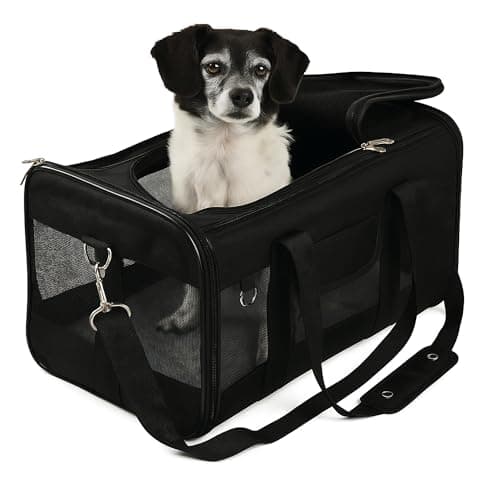
- Under about 15 lb: flying is genuinely available on any US airline, in the cabin, under the seat in front of you. Both options are open.
- 15-25 lb: the airlines that publish a 20 lb combined pet-and-carrier cap drop out. You are looking at United or Delta, who judge on fit rather than weight. Open, but narrower.
- Over about 25 lb: the cabin is closed. What remains is the hold, which is restricted, seasonal and unavailable to some breeds - or driving.
- Snub-nosed, any weight: the hold is closed on most airlines outright. If the dog does not fit the cabin, drive. See flying with a snub-nosed dog.
The one-line version: small dog, either; big dog, drive. Everything below is for the trips where you genuinely have a choice.
Cost
Flying costs roughly $99-150 each way in pet fees on major US airlines, per pet, and often per segment rather than per journey. Add the carrier, any health paperwork the airline requires, and the checked bag you now need because the carrier took your carry-on slot. Our full cost breakdown runs the whole bill.
Driving costs fuel, wear, and - past a certain distance - hotel nights that are themselves subject to pet fees. The crossover point is real but personal: a solo traveler with a small dog flying non-stop can easily come out cheaper than two nights of pet-fee hotels.
Time
Flying wins on paper and by less than the schedule suggests. A dog adds airport time at both ends - counter check-in rather than a kiosk, a longer security process, relief-area stops - and airlines cap pets per cabin, which constrains which flights you can actually take.
Driving is slower in total but the time is more useful: you leave when you like, you stop when the dog needs it, and there is no version of it where a delay leaves you holding a dog in a terminal for five hours.
Stress, from the dog's side
This is where the honest comparison lives, and it is dog-specific rather than universal.
Flying is more intense and shorter. Noise, pressure changes, a confined carrier, hours of not being able to move, and no ability for you to intervene beyond a hand on the mesh. For a well-acclimated small dog that already sleeps in its carrier, it is a nap in a loud room. For a dog that has never spent four hours in a bag, it is four hours of panic you cannot fix mid-flight.
Driving is milder and much longer. The dog can see you, hear you, and be reassured, and the whole thing pauses every couple of hours. The trade-off is duration and, for dogs prone to it, motion sickness - see stopping dog car sickness.
The practical test: has your dog done four hours in a carrier, at home, calmly? If not, that is the work to do before choosing to fly - and if you cannot do the work before the trip, drive this time.
Risk
In-cabin flying is low-risk for a healthy dog: it is with you the whole time in a climate-controlled space. The hold is a genuinely different risk category, which is why it is embargoed seasonally and closed to brachycephalic breeds.
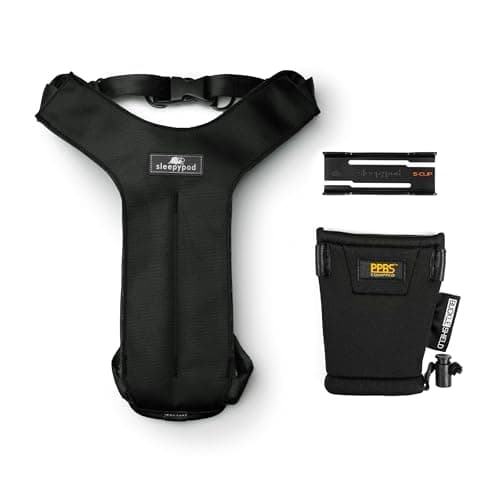
Driving's risk is the road, and it is manageable with equipment: a crash-tested harness or a secured crate converts the main hazard into a controlled one. An unrestrained dog on a long drive is riskier than any cabin flight; a restrained one is not.
The trip-shape questions
- How far?Inside a day's drive, drive - the flight's time advantage disappears into airport overhead.
- What happens at the other end? If you need a car when you arrive, add a rental and its pet cleaning fee risk to the flying column.
- How long are you staying? Two nights makes a long drive hard to justify; two weeks makes it easy.
- Non-stop available? A connection roughly doubles the stressful parts of flying, and often the fee. A one-stop itinerary is a meaningfully worse trip for a dog.
- Time of year? Summer heat argues against hold travel entirely and against long midday driving; both push toward early departures.
Our default
Drive anything inside about ten hours. It is usually cheaper once fees are counted, it is always more flexible, and it sidesteps size limits, breed rules and paperwork.
Fly if the dog is small, the flight is non-stop, and the drive is two days or more. At that distance a two-day drive with hotel nights is worse for the dog than four hours under a seat.
For a big dog over a long distance, the choice is a multi-day drive or a professional pet transport quote. The hold is a real option on some routes and airlines, but it needs to be a decision rather than a default - read flying with a dog in cargo first.