Skip to content
Paw & Passport

HUB 01 · Flying With Dogs

How to Get a Dog Used to a Carrier

The bag arrives three days before the flight and goes straight to the airport. That is the version that goes badly, and it is the common one.

By Stephen V.Updated How we research
#ad

We earn a commission when you buy through our Amazon links, at no extra cost to you. It never affects our rankings, and we say so when the cheaper product is the better buy. How this works.

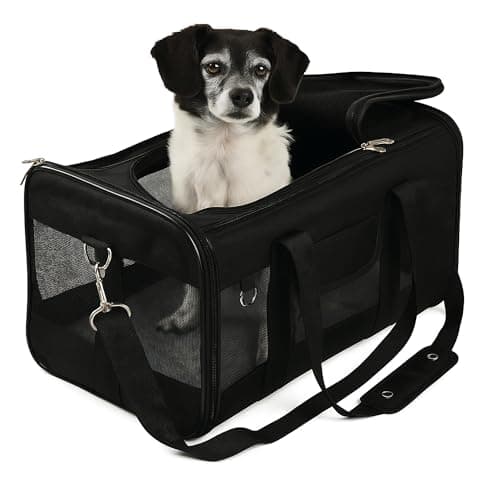
The verdict first: give yourself two weeks, keep the carrier open on the floor of the room the dog already sleeps in, and move the dog's meals into it. That single change does most of the work, because it replaces the one association the dog is likely to already have - bag means vet - with a better one. If you are shopping at the same time, the Sherpa Original Deluxe is the carrier we would train in, because it is the one you are most likely to keep for years, and training the dog into a bag you will replace is wasted work.

This is behaviour, not gear, so the honest framing is: we are describing a desensitisation routine that is standard in crate-training advice from the AKC and the AVMA, applied to a soft carrier. It is not a cure for separation anxiety or for a dog that panics when confined. If that is your dog, the AVMA's separation-anxiety material and your own vet are the right next step, and a flight is a decision to make with them rather than around them.

Why the carrier is harder than the crate

A travel crate is rigid, it stands up on its own, and the dog can see out through bars on several sides. A soft carrier moves. It flexes when the dog shifts its weight, the floor gives, the sides press in when you pick it up, and it swings while you walk. A dog that is completely relaxed in a wire crate at home can still be unhappy in a shoulder bag, which surprises people who thought this box was ticked. The difference is motion, so the plan below adds motion last and deliberately.

There is a second difference: in a crate the dog is on the floor and you are standing. In a carrier the dog is at your hip, your arm is against the mesh, and the hand of a stranger at a security line is about eight inches from its face. Nothing in crate training rehearses that.

The two-week plan

Days 1-3: the bag is furniture

Unzip every door, take the pad out, put the pad back in, and leave the carrier on the floor in the room the dog sleeps in. Do not put the dog in it. Drop a treat near it, then on the lip, then just inside, at random times. The goal for three days is that the dog walks past the carrier without changing direction.

Days 4-6: meals move in

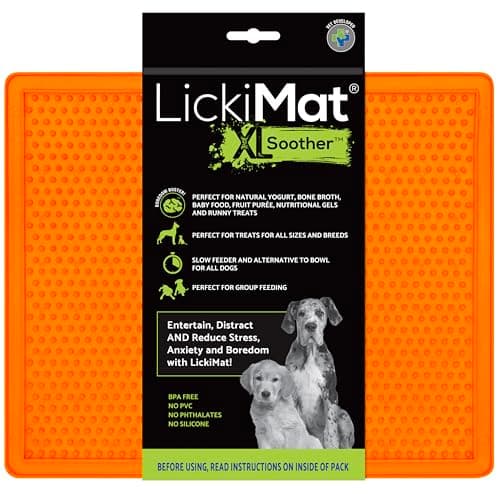
Put the bowl just inside the opening. Next meal, a little further in. By day six the bowl is at the back and the dog is standing fully inside to eat with the doors still open. If your dog eats anywhere, anytime, and this is too easy to count as training, use a loaded LickiMat instead - a long, slow, licking task inside the bag is worth more than thirty seconds of kibble, and it is the one piece of enrichment gear that is genuinely useful here.

Days 7-9: the door closes

Close the zip for three seconds while the dog is eating, and open it before the dog finishes. Then five seconds. Then fifteen. Stay in the room, stay boring, and do not make the opening of the door an event - a celebration on release teaches the dog that release is the good part. Build to a minute or two, not an hour.

Days 10-12: the bag is lifted

This is the step everyone skips. Zip the dog in, lift the carrier six inches off the floor, put it down, let the dog out. Then lift and take two steps. Then carry it to the next room. Lift with a hand under the base rather than by the handles alone, which is the difference between a floor that stays flat and a floor that sags under the dog.

Days 13-14: motion and noise

Carry the bag out to the car, strap it in, and drive ten minutes somewhere good - not to the vet. Then do it again with the radio on. If you can, walk a busy pavement with the carrier on your shoulder. You are rehearsing the terminal: noise, movement, strangers, and no control over any of it. For what the actual airport sequence looks like, read TSA screening with a dog before you fly, because you will be asked to take the dog out of the carrier at the checkpoint and that is worth knowing in advance.

When the dog refuses

  • Will not go in at all. Go back a step and make the step smaller. Feed beside the bag for two more days rather than pushing. Nothing is gained by posting the dog in.
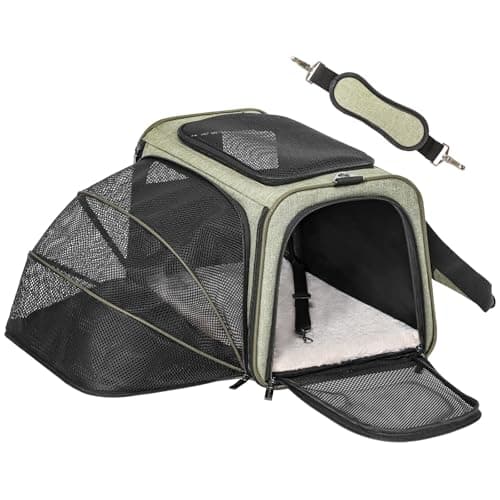
  • Goes in, panics when zipped. Your increments are too big. Three seconds, not thirty. Also check the ventilation - a dog that cannot see out of a bag with one mesh panel is reacting to the bag, not to confinement. The Petsfit expandable and mesh-heavy designs exist for exactly this dog.
  • Fine at home, frantic in the car. That is motion sickness as often as it is fear - see how to stop dog car sickness.
  • Still refusing after two weeks. Stop and talk to your vet before you book a flight. Sedation for air travel in particular is a veterinary decision, and the AVMA discusses it in its air-travel guidance - it is not something to read about on a gear site and try.

What not to do

Do not use the carrier only for vet visits - that is how the association forms in the first place. Do not leave a collar and tags on a dog zipped into a mesh bag unattended; tag-on-mesh is a snag risk, and a tag silencer pouch solves it for the journey. Do not test the plan for the first time at the airport, and do not buy a carrier the week of the flight: the bag you train in should be the bag you fly in, because a dog that is relaxed in a borrowed carrier has learned nothing about yours.
The short answer

Quick picks

#ProductBest forScorePrice
01
Sherpa Sherpa Original Deluxe Travel Pet Carrier
Sherpa Original Deluxe Travel Pet Carrier

The default in-cabin carrier, and the only one with a program that gets you rebooked if a specific airline turns it away.

Most in-cabin flyers
8.4
$46.04Amazon
02
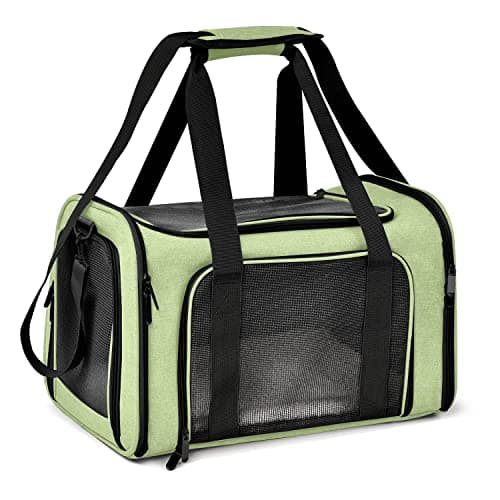
Henkelion Henkelion Soft-Sided Pet Carrier
Henkelion Soft-Sided Pet Carrier

The cheapest carrier here that we'd actually put a dog in. Good enough for the occasional flyer.

The budget in-cabin pick
7.6
$26.09Amazon
03
Petsfit Petsfit Expandable Airline-Approved Carrier
Petsfit Expandable Airline-Approved Carrier

Zips flat for the plane, expands to a room once you land. The best answer to a long layover.

Long layovers and connections
8.0
$34.19Amazon
04
LickiMat LickiMat Soother XL
LickiMat Soother XL

The passenger's tool, not the driver's. A flat textured mat spread with something soft — the quietest, gentlest way to take a nervous dog's attention off the road.

Anxious dogs, with a passenger
6.4
$16.99Amazon

#ad · Live prices from the Amazon Product API, as of October 10, 2026. Where we have no verified live price we show none — we would rather leave a gap than print a number that has rotted.

In detail

The picks, in full

01
Sherpa Sherpa Original Deluxe Travel Pet Carrier

Most in-cabin flyers

Sherpa Original Deluxe Travel Pet Carrier

Soft-sidedSpring wire frameGuaranteed On Board programS / M / L
8.4/10

The default in-cabin carrier, and the only one with a program that gets you rebooked if a specific airline turns it away.

Fits under seat
9
Ventilation
9
Build quality
8
Dog comfort
8
Value
8

Pros

  • The Guaranteed On Board program reimburses your ticket if an airline on its approved list denies boarding — no other carrier here offers that backstop, though Sherpa limits it to flights within and between the US and Canada
  • The spring-wire top frame pushes down, so it squashes into a tight under-seat gap that a rigid carrier won't
  • Mesh on three panels, which is the ventilation an anxious dog needs on a hot jet bridge

Cons

  • Sizing runs small for the weight it lists — a dog at the top of a size's range is a squeeze
  • The base is soft; larger dogs get a floppier floor than a structured carrier gives

Don't buy this if…

…your dog is at the very top of a size band. Sherpa's dimensions are honest but tight, and the carrier that fits the dog but not the seat is the classic gate-agent problem. Measure and size up.

$46.04View on Amazon

Price as of October 10, 2026. Prices change — Amazon's at checkout is the one that counts.

#ad · we may earn a commission from this link to Sherpa Original Deluxe Travel Pet Carrier

02
Henkelion Henkelion Soft-Sided Pet Carrier

The budget in-cabin pick

Henkelion Soft-Sided Pet Carrier

Soft-sidedMesh ventilationMachine-washable padMultiple sizes
7.6/10

The cheapest carrier here that we'd actually put a dog in. Good enough for the occasional flyer.

Fits under seat
8
Ventilation
8
Build quality
6
Dog comfort
7
Value
9

Pros

  • A fraction of the price of the name brands, with the same basic soft-sided under-seat shape
  • Four-panel mesh gives it better airflow than the price suggests
  • Removable, washable pad — the accident cleanup that matters on a real trip

Cons

  • No boarding guarantee and thinner materials — this is a carrier that survives occasional use, not weekly flying
  • The frame is minimal, so it needs the dog's own weight to hold its shape

Don't buy this if…

…you fly often or your dog is a chewer. The materials are the give at this price, and heavy use will find the seams.

$26.09View on Amazon

$28.9910% off

Price as of October 10, 2026. Prices change — Amazon's at checkout is the one that counts.

#ad · we may earn a commission from this link to Henkelion Soft-Sided Pet Carrier

03
Petsfit Petsfit Expandable Airline-Approved Carrier

Long layovers and connections

Petsfit Expandable Airline-Approved Carrier

Two-side expansionSoft-sidedFleece pad includedAirline-approved footprint
8.0/10

Zips flat for the plane, expands to a room once you land. The best answer to a long layover.

Fits under seat
8
Ventilation
8
Build quality
7
Dog comfort
9
Value
8

Pros

  • Both sides unzip into extra floor space, so a dog stuck in a carrier for a five-hour layover can actually turn around
  • Collapses to a standard under-seat footprint for the flight itself
  • Fleece mat and a safety leash clip come in the box, which the cheaper carriers skip

Cons

  • The expansion panels are the first thing to wear — the zips take the stress
  • Bulkier when packed than a plain soft carrier of the same rated size

Don't buy this if…

…you only ever fly direct short-hauls. The expansion is the whole point of paying more, and on a 90-minute flight you'll never unzip it.

$34.19View on Amazon

Price as of October 10, 2026. Prices change — Amazon's at checkout is the one that counts.

#ad · we may earn a commission from this link to Petsfit Expandable Airline-Approved Carrier

04
LickiMat LickiMat Soother XL

Anxious dogs, with a passenger

LickiMat Soother XL

XL: 30.5 x 25.5 cm (about 12 x 10 in)Food-grade TPRFreezer and microwave friendlyHand wash (non-Tuff model)
6.4/10

The passenger's tool, not the driver's. A flat textured mat spread with something soft — the quietest, gentlest way to take a nervous dog's attention off the road.

Settle time
7
Car safety
7
Durability
5
Clean-up
5
Value
8

Pros

  • Licking is slow, repetitive work — the reason this category exists is that it occupies a dog without winding them up, which is the opposite of what a tug toy or a squeaker does in a car
  • The flat shape is the safest geometry here: nothing to roll under a seat, nothing wedged in a mouth, and it lies flat on a lap or a crate floor
  • Freezer-friendly, so a mat spread with wet food and frozen the night before lasts a long time and travels cold in a lunch bag
  • A thin smear of food goes a long way — the smallest calorie load of any pick on this page

Cons

  • It needs a hand. A mat on a loose dog in a moving car slides, flips and ends up licked clean on the floor; this works on a lap or held by a passenger
  • Soft food on a mat in a car is the messiest option here. Pair it with a towel or a seat cover and plan on cleaning something
  • This is the standard Soother, not the TUFF version. LickiMat's guidance is to supervise and train until you are sure the dog will not chew the mat — a dog that chews it should have the TUFF line or nothing
  • Hand wash on the standard mats, and the nub surface is fiddly to get properly clean in a hotel sink

Don't buy this if…

…you drive alone with the dog. Without a second person this is a rest-stop tool, not a driving tool — use a stuffed frozen Toppl in the crate instead.

$16.99View on Amazon

Price as of October 10, 2026. Prices change — Amazon's at checkout is the one that counts.

#ad · we may earn a commission from this link to LickiMat Soother XL

The gear that actually helps

  • Sherpa Original Deluxe - the carrier to train in if you are buying one anyway. A spring wire frame means the entrance holds its shape while a nervous dog decides whether to step in, which a collapsing bag does not.
  • Henkelion Soft-Sided Carrier - the budget way to have a bag on the floor for a fortnight. Multiple sizes and a machine-washable pad, which matters when meals are being eaten inside it.
  • Petsfit Expandable Carrier - more mesh and more room, for the dog whose problem is visibility rather than confinement. Its own write-up, including the thing to check before expanding it at a gate, is the Petsfit expandable review.
  • LickiMat Soother XL - a licking task that lasts minutes rather than seconds, which is what the door-closed stage needs. Supervised use only, as the maker states, and that is fine here because you are sitting next to the bag.

The full carrier field, ranked on fit rather than on training, is at best airline-approved dog carriers.

How we picked

We do not test the gear

We compiled the manufacturers' published dimensions and specs, cross-checked them against airline under-seat limits and published safety certifications, read the owner reviews, and scored each product against a published rubric. The scores are judgments from that research — they are not measurements we took, because we do not own a lab and we are not going to pretend we do. Where we could not verify a fit or a claim, we say so on the page.

Questions

Frequently asked

How long does it take to get a dog used to a carrier?
Plan on two weeks of short daily sessions, and more for a dog that already dislikes the bag. The sequence that works is: open carrier as furniture, meals inside, zip closed for seconds then minutes, lifted off the floor, then short car trips. Most of the failures we hear about are not stubborn dogs - they are three-day timelines.
Should I put the dog's bed or blanket in the carrier?
Yes, something that already smells of home, and put it in from day one rather than on the day of travel. Keep it washable: meals are going to be eaten on it during the middle stage of the plan.
Can I give my dog something to calm it down for a flight?
Ask your vet. Sedatives and air travel are a veterinary decision, not a gear decision, and the AVMA's air-travel guidance treats it that way. We do not recommend any medication, dose or over-the-counter calming product for a flight.
My dog is fine in a crate but hates the soft carrier. Why?
Because a soft carrier moves. It flexes under the dog's weight, the floor gives, the sides press in when it is lifted, and it swings as you walk. A rigid crate does none of that. Train the motion separately: lift the bag six inches, put it down, repeat - then two steps, then a room, then the car.
Should I let the dog out of the carrier during a flight?
No. Airlines require the kennel to stay stowed under the seat in front of you for the duration - Delta's published policy says the kennel must fit fully underneath that seat and that the pet stays secured inside it on board. That is the rule the whole acclimation plan exists to make survivable.

Keep reading

Receipts

Sources

We do not run a testing lab, and we do not pretend to. Product dimensions and safety claims come from the manufacturer's own listing; airline limits come from the airline's published policy, with the date we checked it. Where we could not verify something, we say so on the page rather than quietly leaving it out. Read our full method.