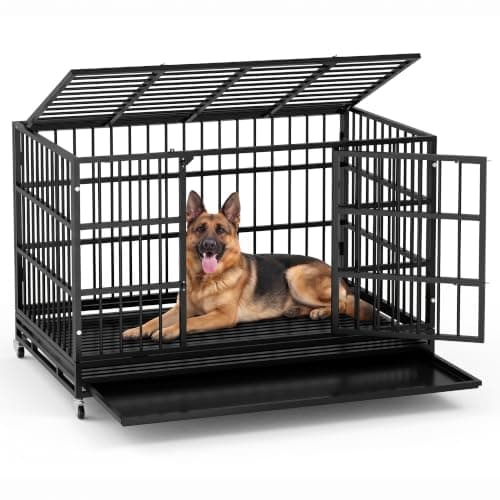
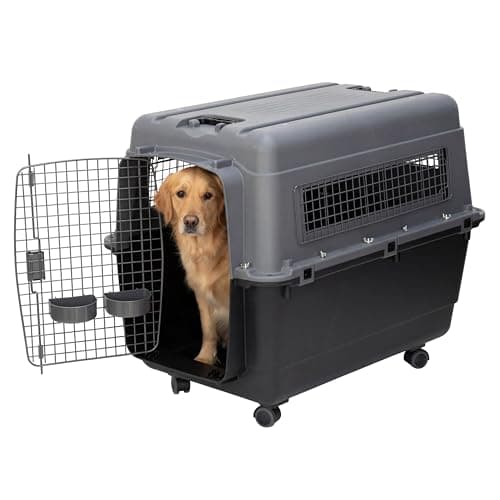
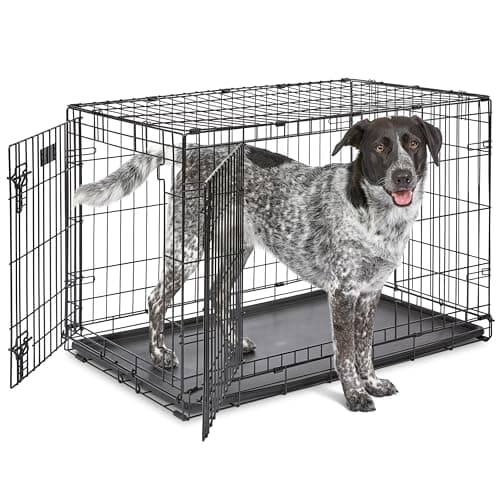
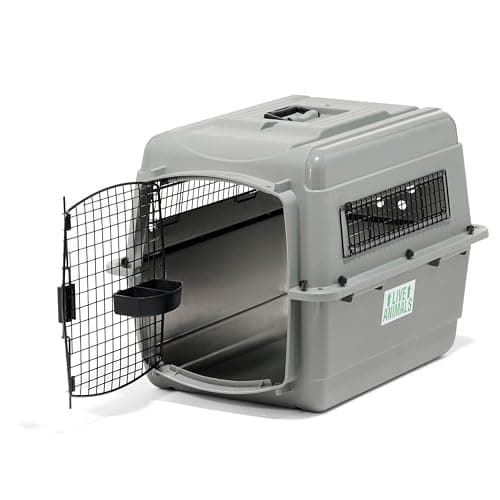
Our portable crate roundup is about crates that fold flat and travel easily. This one is the opposite end of the same category: crates that prioritize holding a dog over being easy to carry, because for some dogs and some journeys that is the only thing that matters.
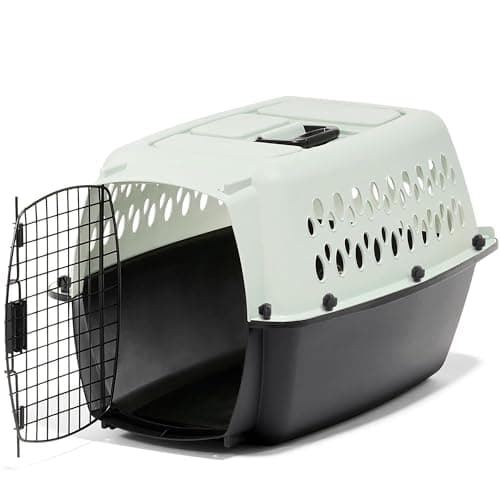
Two distinct problems bring people here. The first is a dog that gets out of ordinary crates — bending wire, working latches, or chewing through fabric. The second is air travel in the hold, where the airline sets construction requirements that only a rigid kennel meets.
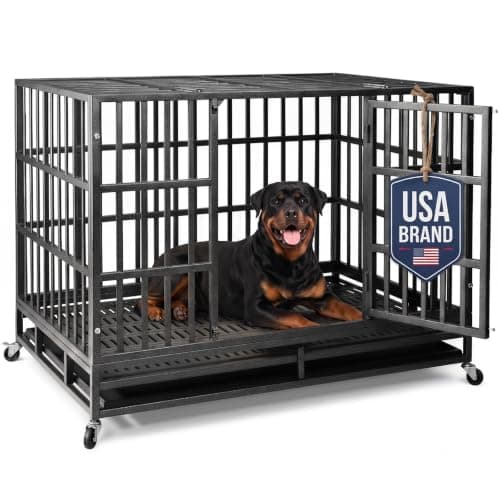
They overlap more than you would expect, because both are solved by rigidity and metal hardware. The NUGRIART leads for pure escape resistance; the SportPet Designs and Petmate are the ones built for a hold. And the honest note for anyone here about chewing: a crate is a management tool, not a treatment. Persistent crate destruction is usually separation anxiety, and that is a training and veterinary problem that steel does not fix.
Two of these shells also fly. Ranked for the hold rather than for chewing - which changes what matters to metal hardware, four-sided ventilation and attached bowls - they are in best hard-sided dog carriers for flying.
How to choose a heavy-duty crate
Work out which problem you are actually solving
For a dog that escapes at home: tube steel, and accept that it never leaves the house. For a dog flying in the hold: a rigid plastic kennel meeting your airline's construction rules — see our cargo crate requirements guide. For a mild chewer that still needs to come on trips: a wire crate that folds, and realistic expectations. Buying steel for a flight or plastic for an escape artist wastes money in both directions.
Gauge and welds, not marketing adjectives
"Heavy duty" is not a defined term. What actually holds a dog is the thickness of the tube or wire and the quality of the welds at the corners. Tube steel (NUGRIART, LEMBERI) is a genuinely different product from thick wire; a dog that bends wire will not bend tube.
Latches are where dogs actually get out
Most escapes are not through a panel — they are through a door a dog learned to nose or paw open. Look for two latch points rather than one, and for a latch design a dog cannot reach through the bars to operate. This is the specification people notice last and should notice first.
Be honest about portability before you buy
A tube-steel crate on casters can be rolled across a room and cannot realistically be lifted into a car by one person. If the crate needs to travel, the folding wire crate (MidWest Homes for Pets) or a plastic kennel that splits into halves is the only workable answer, and you accept less containment for it. Deciding this honestly at the start avoids an expensive, immovable mistake.
Size snugly, especially for the car
Stand up, turn around, lie down — and not much more. Excess space lets a dog build momentum inside the crate in a sudden stop, and it also undermines the den instinct that makes crates calming in the first place. Our travel crate sizing guide covers the measurements.
Ventilation cuts the other way for plastic
Wire crates ventilate brilliantly and contain poorly. Solid plastic kennels contain well and ventilate through vents on the sides only. On a hot day in a car or a campsite that difference is real — a plastic kennel in the sun is a hot box, and it needs shade and airflow that a wire crate does not.
What we would actually buy
A dog that has escaped a wire crate: the NUGRIART. A large dog on a budget: the LEMBERI. Flying more than once: the SportPet Designs, because it collapses between trips. A single flight: the Petmate. A mild chewer that travels: the MidWest Homes for Pets. A small dog and a tight budget: the Petmate, for car and hotel use rather than the hold.