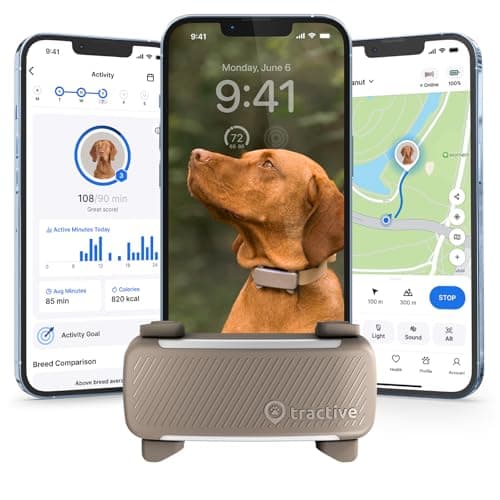
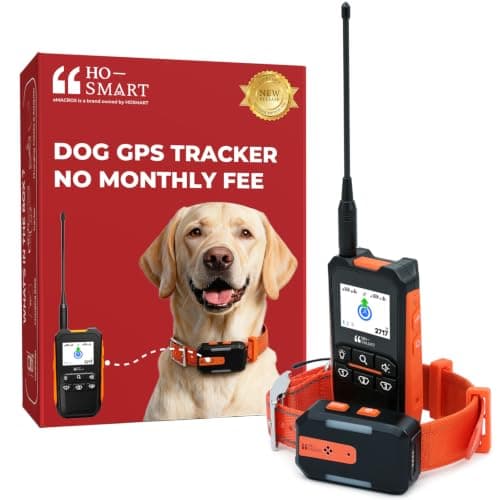
The verdict, for the owner whose dog roams where phones do not work: buy the eMACROS off-grid tracker. It is the only unit in this field that does not need a network - the collar has GPS and reports its position over a radio link to a handheld receiver you carry, so there is no SIM card, no monthly fee and nothing to lose when the bars disappear. The price you pay is range: eMACROS lists up to three miles over open ground and about half a mile in forest, and when the dog is past that you have nothing. If your dead zones are occasional rather than constant, the Tractive remains the better daily tracker - we go through what it buys in our Tractive GPS tracker review - and this page is a warning label rather than a shopping list.
Here is the thing the category does not advertise. Almost every "GPS dog tracker" on sale is really two radios: a GPS receiver that works out where the collar is, and a cellular modem that has to tell you. The first one works almost everywhere. The second one works where your phone works. A tracker in a canyon, a state forest, a desert or a national-park backcountry has usually fixed its position perfectly well and has no way to send it, which is why owners describe a tracker "dropping out" exactly where they most needed it.
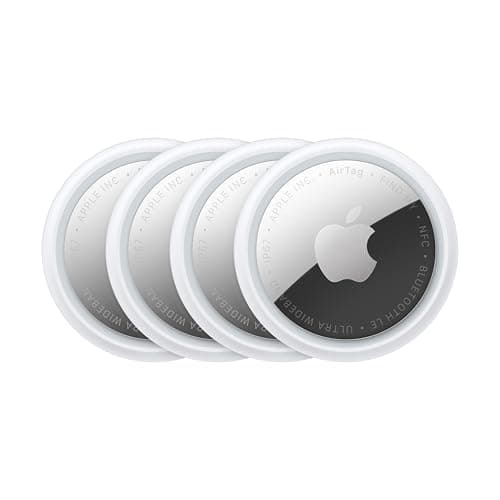
Apple's AirTag fails for a related but different reason, and it is worth being precise about: it has no GPS and no modem at all. It is a Bluetooth beacon that is found when somebody else's iPhone walks past it and reports the sighting through the Find My network. In a city that network is enormous and an AirTag is genuinely useful. On a ridge with nobody on it, there is no phone to do the reporting and the last known location is wherever you were standing when the dog left. We compare the two mechanisms in detail on GPS tracker vs AirTag for dogs.
How we sorted this field
One question, asked first: what does this device do when there is no signal? Everything else - battery life, waterproofing, app design - is secondary on this page, because a tracker that cannot report is not a tracker. The honest answers group into three:
| Tracker | How it reports | Works with no cell service? | Monthly fee |
|---|
| eMACROS Off-Grid Dog GPS Tracker | GPS collar, radio link to a handheld receiver | Yes - up to 3 mi open ground, ~0.5 mi in forest | None |
| Tractive Smart Dog GPS Tracker | GPS + LTE to your phone | No - needs a mobile signal to send a position | Subscription required |
| Apple AirTag (2nd generation, 4-pack) | Bluetooth, relayed by passing iPhones | No - needs other people's phones nearby | None |
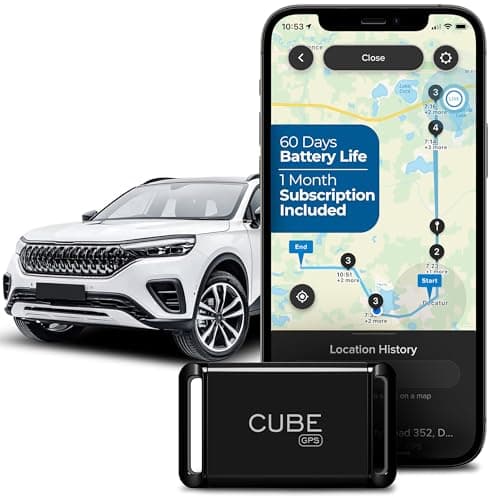
| Cube GPS Real-Time Tracker | GPS + cellular | No - same dependency as any cellular tag | Subscription required |
Prices under the table are live from the Amazon Product API with the date shown, and we show no number where we have no verified price.
The trade you are actually making
Range instead of coverage
A radio-link tracker turns an unlimited-range device that sometimes cannot speak into a limited-range device that always can. Half a mile in timber is not much when a bird dog is working, and it is a great deal more than zero when you are standing in a valley with one bar. Decide which failure you would rather have, because you cannot buy your way out of both.
A handheld to carry and charge
The off-grid design puts a second device in your hand: eMACROS lists roughly two days on the controller against five on the collar unit, so the receiver is the thing you will forget to charge. It also gives you an arrow and a distance rather than a map pin - fine in the field, worse for showing a neighbour where to look.
Dog size
eMACROS lists this unit for dogs 35 lb and up. That rules it out for most of the dogs this site's carrier pages are about, and it is the single biggest reason the answer on this page is not the answer on the main tracker roundup. A 12 lb dog in a dead zone is a genuinely unsolved problem in this price bracket, and we are not going to pretend otherwise.
What a microchip does and does not do
A microchip is not a tracker - it has no battery and no radio, and it only works once somebody scans the dog. It is still the thing that gets a found dog home, which is why it belongs alongside whatever you buy here rather than instead of it. See microchip vs GPS tracker.
Before you spend anything: check your own dead zones
The cheap diagnostic is the phone in your pocket. Walk the places the dog actually goes - the trailhead, the far fence line, the bottom of the field - and watch the bars. If you have signal everywhere you walk, buy the cellular tracker and ignore this page; the subscription buys live tracking and virtual fences, which a radio link does not do as elegantly. If the signal dies at the treeline, the radio link is the only thing on this list that will still be working when it matters. Carriers differ, too: your partner's network may cover ground yours does not, and most cellular trackers are tied to a specific SIM.
What to pair with the tracker
- An engraved ID tag. The no-battery, no-subscription, no-coverage layer. A travel ID tagwith a phone number is still the fastest route from a stranger's hands to your front door.
- A visible light at dusk. Finding a dog is often a visibility problem, not a location problem - our safety lights page covers it.
- A plan. The first twenty minutes decide most of these, and we wrote the sequence down.
What we left out, and why
Satellite dog collars. The technology exists for livestock and research telemetry and there is no consumer dog product we can buy and price through this site. When one appears we will rank it; we will not describe one that is not on sale.
Hunting e-collar systems with built-in tracking. A real answer to this query and a different purchase - those systems bundle training stimulation, which is outside what this site covers and not something we will recommend without the expertise to do it responsibly.
"No subscription" cellular tags. Several listings advertise no subscription and then require a SIM you buy separately. We have not ranked one, because the fee has not gone anywhere - it has just moved.