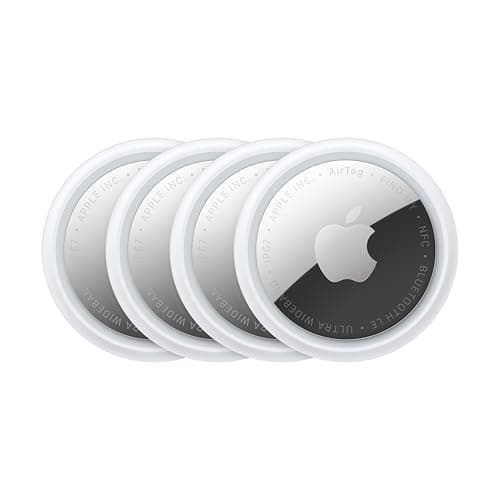
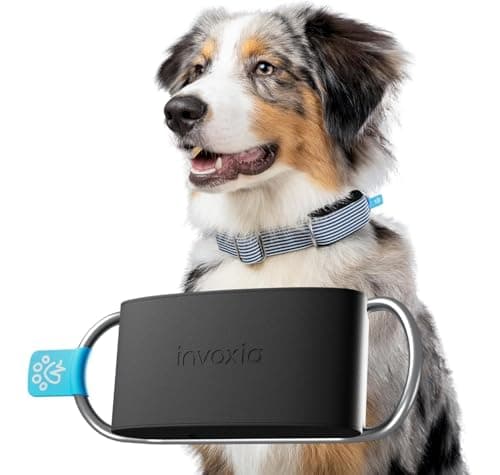
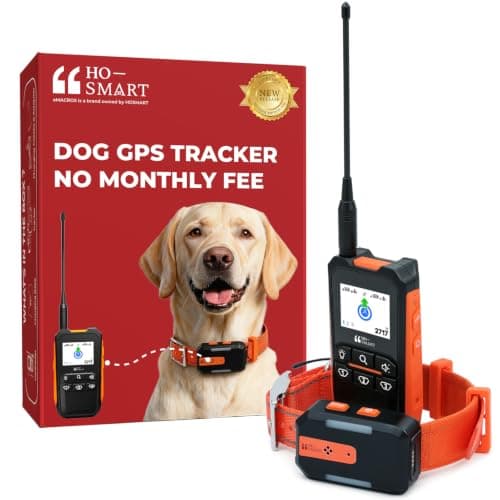
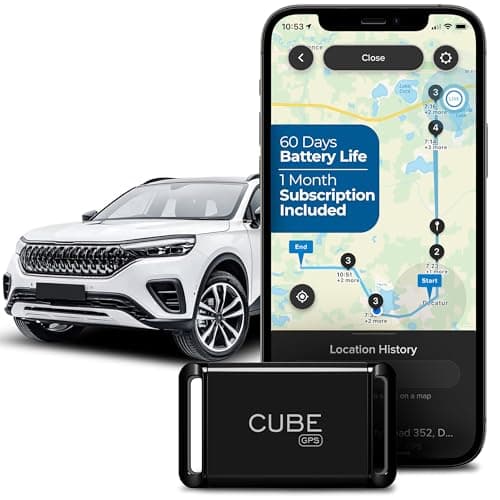
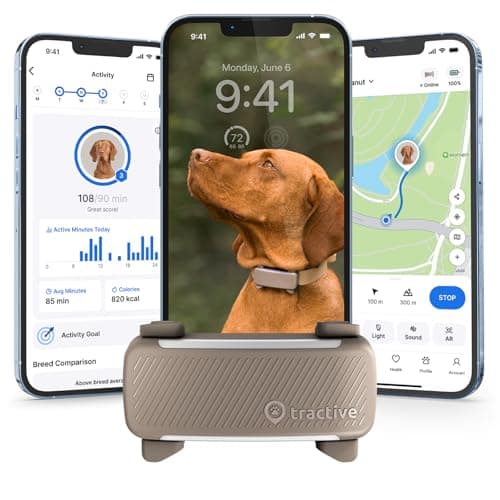
Dog trackers are the most confusing category in dog travel gear, because two very different products share a shelf. A real GPS tracker uses a cellular connection to report your dog's live location anywhere with signal — and needs a subscription to do it. A Bluetooth tag like an AirTag has no live location at all; it's found only when someone else's phone passes near it.
Both are useful; they solve different problems. And there's an honest wrinkle we'll say up front: Whistle still sells mainly direct or through Chewy rather than on Amazon, and Fi's Series 3+ is listed there but we haven't ranked it yet. So this list ranks what we have actually checked as buyable on Amazon — led by the Tractive for real GPS and the Apple as the no-subscription route — and tells you plainly where each falls short.
One case this ranking does not answer: ground with no mobile coverage at all. Every cellular tracker here, including our top pick, needs a signal to deliver a position - trackers for areas with no cell service sorts the same field by what each one does when the bars disappear. The long-form review of the Tractive is our Tractive GPS tracker review.
GPS vs AirTag: which problem are you solving?
You want to track a dog that roams or bolts — get real GPS
If your dog escapes yards, chases wildlife, or you hike somewhere remote, you want live location. That means real GPS, and there are two routes to it. A cellular tracker (Tractive, Invoxia) reports anywhere there is mobile signal and charges a subscription to do it — that fee is the real cost of ownership, so budget for it rather than the device price. A radio-linked system (eMACROS) reports to a handheld receiver instead of a phone network, so it costs nothing per month and works with no signal at all, but it only reaches as far as its radio does.
You want to find a dog near people, cheaply — an AirTag is honest
For an iPhone household, an Apple on the collar is cheap, needs no subscription, and lasts about a year on a battery. But understand its limit: it has no GPS. It's located only when a nearby iPhone reports it, which is fast in a city and useless in empty countryside — exactly where a lost dog most needs finding. It also needs a collar holder and only works for Apple users.
The subscription-vs-no-subscription trade
"No monthly fee" trackers exist, but they are not all the same thing, and the cheap end of that shelf is misleading. Most sub-$40 "GPS collars" advertising no fee and no SIM are Apple Find My or Find Hub tags with no GPS in them at all — that is the Apple route under another name. The genuine no-fee GPS route is a radio-linked system like the eMACROS: a GPS collar unit that talks to a handheld receiver rather than a phone network, so there is no SIM and no bill, at the cost of range and a second device to charge. The subscription trackers earn their fee with better apps, better battery management and coverage anywhere there is signal. Decide honestly which of those three you are actually buying.
Battery is a real feature
Live GPS is power-hungry, and every figure in this category is a best case. Tractive lists up to two weeks with its power-saving zones on and about six days without; Invoxia lists up to fifteen days. Heavy live tracking cuts both. If you're the sort who forgets to charge things, weigh battery life as heavily as accuracy — a dead tracker tracks nothing.