A dog that pants, drools, paces and cries in the car is telling you something, and "buy a car seat" is only the right answer to one version of it. Car anxiety in dogs comes from at least three separate places - motion sickness, which is a vestibular problem; no sightline, which is a sensory problem; and genuine fear of the vehicle, which is a learned one - and the gear that solves each is different. Our top pick, the Snoozer Lookout II, fixes exactly one of them: the dog that settles the moment it can see the horizon. If your dog is the other kind, keep reading before you spend anything.
One thing has to be said before the list, because it is the most common and most expensive mistake in this category. A booster seat is not a crash restraint.Every raised seat on this page is a comfort and containment product. The interior clip on a booster exists to stop a dog jumping into the footwell, not to hold it in a collision, and the American Veterinary Medical Association's own position on transporting pets is that animals should be properly restrained in a carrier or a restraint system. If you want the crash-energy answer, that is a crash-tested harness, and you can run one with a seat. We say the same thing on the main car seat roundup and on crate versus harness, and it does not change because the dog is anxious.
We have not driven an anxious dog around in any of these. Every figure below is the manufacturer's published spec or the live retail listing, sourced at the bottom of the page, and the scores are judgments from that research rather than tests. Where the honest answer is "ask your veterinarian" - and for a dog that is genuinely panicking, it is - we say that instead of selling you a product.
Work out which anxiety you are buying for
1. The dog that cannot see out
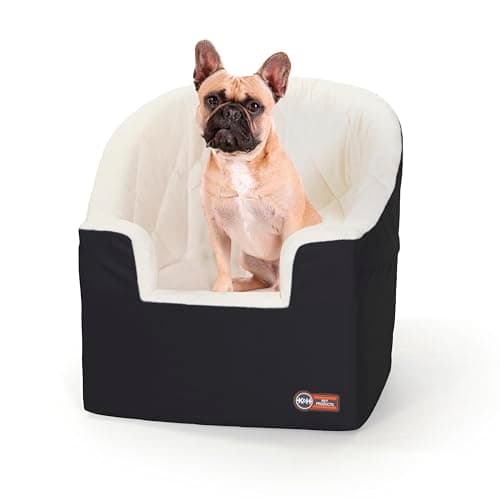
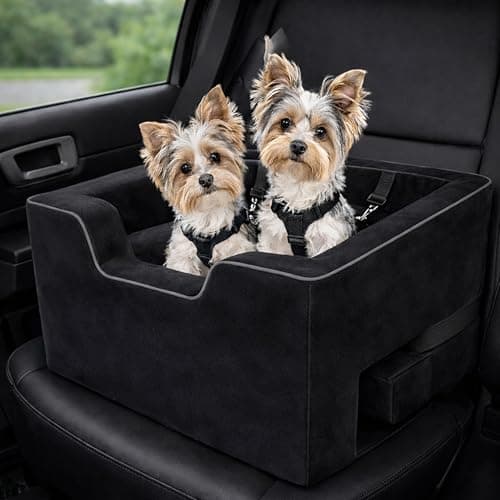
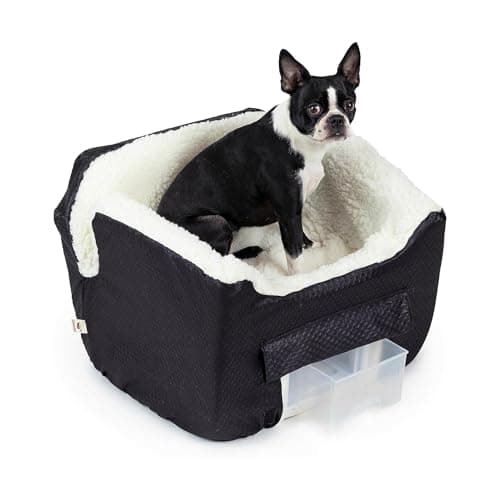
This is the one a seat actually fixes. A small dog on a flat bench sees upholstery, feels the car move, and gets no visual confirmation of why. Raising it to window height gives the inner ear and the eyes the same story, which is also why a raised seat sometimes helps nausea as a side effect. The tell: the dog is fine once it is on somebody's lap, or fine in the front seat and frantic in the back. All three seats here - the Snoozer Lookout II, the K&H Bucket Booster and the Pet Gear Lookout - are built for this dog, and they differ mainly in what kind of seat they sit on.
2. The dog that is nauseous
Drooling, lip-licking, swallowing and vomiting are motion sickness, not fear, and they are most common in young dogs because the vestibular system is still developing. A raised seat can help by steadying the horizon, but the real levers are an empty-ish stomach, cool moving air, and shorter legs between stops. We cover that in full on how to stop dog car sickness - and if it is severe, there are prescription anti-nausea options that only a veterinarian can dispense. No product on this page is one of them.
3. The dog that is frightened of the car
This dog is anxious before the engine starts. It plants at the door, shakes on the driveway, and a better view changes nothing because the view was never the problem. For this dog the seat is irrelevant and the work is behavioural - short rides that end somewhere good, feeding in a stationary car, and building up. The gear that supports that work is the pressure wrap, the pheromone collar and something to lick, which is why the back half of this list is not seats at all.
4. What the seat sits on
This is the spec people skip and then return the product over. A bench-style booster needs a flat bench. The K&His shaped for bucket seats and captain's chairs, which is what most SUVs and minivans actually have in the second row, and it is the pick if your middle seat is a hump or a console. The Pet Gear has a rigid base and a seatbelt install, which is what makes it the one to move between two cars.
5. Does it hold the dog, or just raise it?
All three seats have an interior clip. None of them is crash-rated, and none of their makers claims to be. Treat the clip as the thing that stops a dog stepping out mid-drive, and run a proper restraint underneath if the dog is big enough that it matters. A dog in a booster wearing a crash-tested harness clipped to the vehicle belt is a legitimate setup; a dog in a booster clipped only to the booster is not restrained.
6. Can it be washed, and will it survive being drooled on
An anxious dog is a wet dog. The Pet Gear has a removable washable liner and the Snoozer has a washable cover; a seat you cannot strip is a seat that smells by the third month. If the dog is a heavy drooler or occasionally sick, put a hammock or seat cover under the seat as well - it is a lot cheaper to wash.
The three non-seats, and what they honestly do
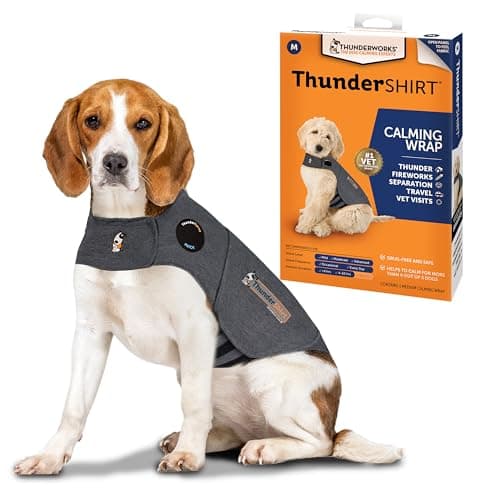
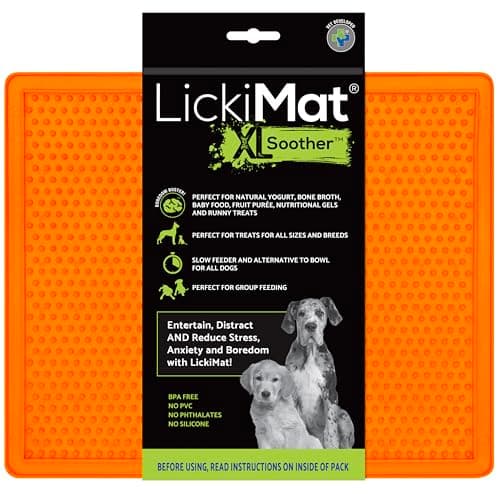
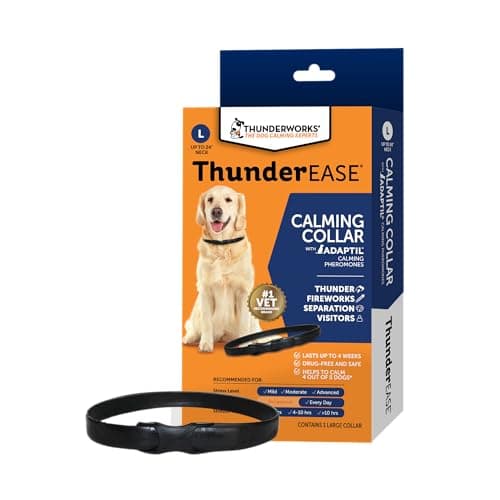
The ThunderShirt is a pressure wrap sized by girth, drug-free, and machine washable. The ThunderEase collar is a pheromone product worn on the neck. The LickiMat Soother XL is a 30.5 x 25.5 cm food-grade TPR mat you spread something soft on and freeze. We are not going to tell you how well any of them works, because we did not measure it and the honest literature on all three is mixed. What we will say is what they cost relative to a seat, which is very little, and that the lick mat has the clearest mechanism of the three: a dog that is licking is doing something other than escalating, which is why it earns its place at the start of a drive.
One safety line on the mat, carried over from our car enrichment page: LickiMat publishes supervised-use guidance, and a driver is not a supervisor. The mat is for a dog with a passenger beside it, or for the stationary ten minutes before you pull out. It is not something to hand a dog and then drive for two hours.
What we left out
Calming treats, chews and supplements. Unregulated as a class, with no published dose-response data we could check. Prescription anxiety and anti-nausea medication. Appropriate for a lot of these dogs and entirely a veterinary decision - ask, do not order. Pheromone diffusers for the car. Twelve-volt plug-in versions exist; none we found publishes a coverage figure for a vehicle cabin. Crates sold as anxiety fixes. A crate is genuinely the right answer for some dogs, but it is a containment decision, not an anxiety one - see portable crates.