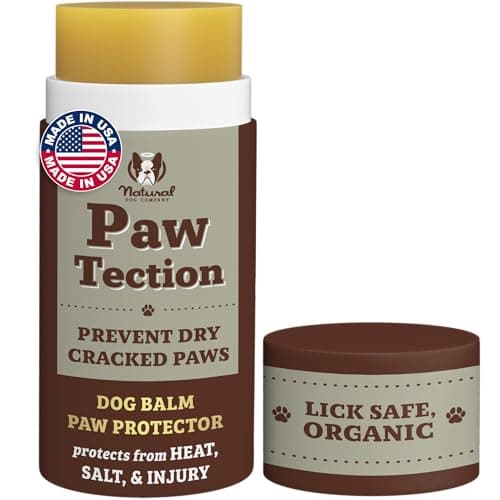
If you want the same job in a better format, buy the Natural Dog Company PawTection Stick (2 oz). If you want it cheaper, buy the Warren London Paw Defense Wax. If your dog's pads are already cracked, buy the Natural Dog Company Paw Soother (2 oz Tin) — and do not put a barrier wax on damaged skin at all. Those are the three honest answers, and which one applies depends entirely on why you are looking.
First, the fair version of the product you are replacing, because Musher's Secret is still our number one pick on the paw balm roundup and nothing here changes that. What it is known for is a genuinely unusual formula: a dense blend of beeswax, carnauba and candelilla waxes with vitamin E that soaks into the pad rather than sitting on top of it, and which the maker describes as semi-permeable— the pads can still perspire through it, which is the reason it can be used year-round rather than only in snow. Musher's publishes a straightforward application routine (one to two applications a week for year-round use) and sells it in a 200 g tin with 60 g and 454 g sizes also listed. Per gram of wax it is the best value in the category, which is exactly why it is hard to beat head-on.
So people do not usually leave Musher's because it works badly. They leave for one of four specific reasons, and each has a different answer.
The four reasons to switch, and what to buy for each
| Why you are looking | What Musher's does | Buy instead | What you give up |
|---|
| Applying it on the road | A screw-top tin: fingers in wax, then four paws, then nowhere to wipe | Natural Dog Company PawTection Stick (2 oz) | Far less product for the money — a 2 oz stick against a 200 g tin |
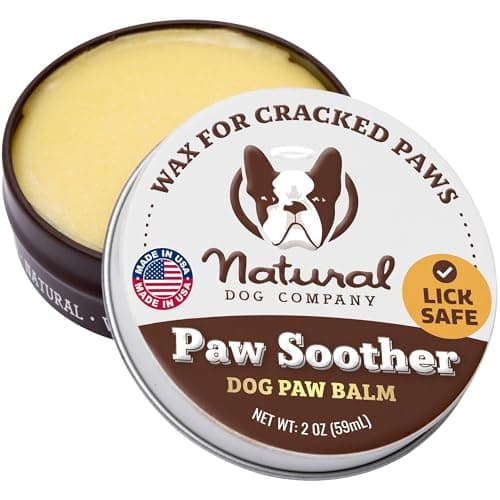
| Pads already cracked or peeling | Wrong tool: a barrier over damaged skin traps the problem rather than treating it | Natural Dog Company Paw Soother (2 oz Tin) | Barrier protection — this is an after-the-damage balm, not a trail wax |
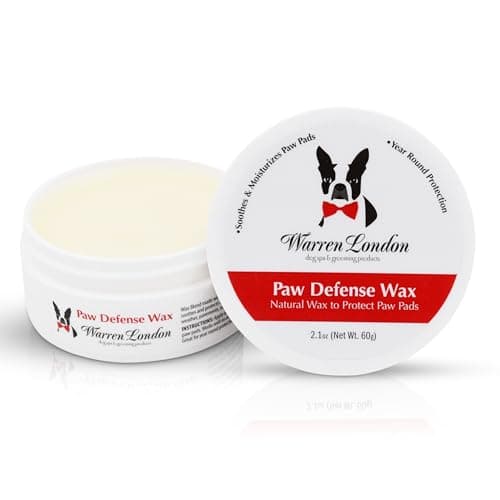
| Price | Excellent per gram, but the tin is the biggest single outlay here | Warren London Paw Defense Wax | A smaller jar, and an essential-oil formula rather than a plain wax blend |
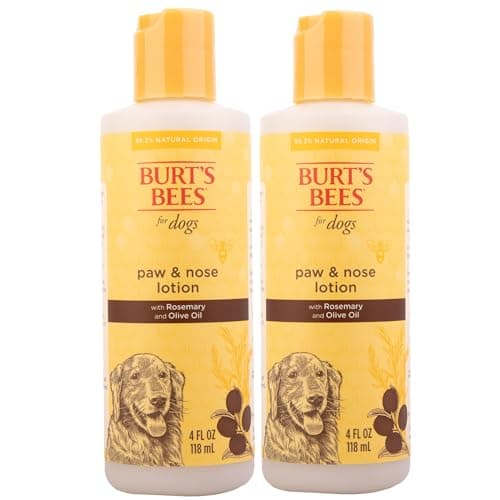
| A dog that will not tolerate thick wax | Dense and tacky by design — that is the mechanism | Burt's Bees for Dogs Paw & Nose Lotion (4 oz) | Most of the protection: this is maintenance, not a barrier |
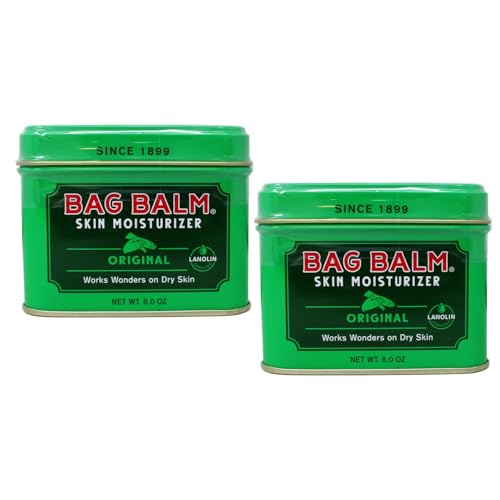
A fifth option is worth knowing about even though it is not a wax: the Bag Balm Pet Paw & Skin Balm (8 oz, 2-pack) is the old-fashioned occlusive — petrolatum, lanolin and paraffin with 0.3% 8-hydroxyquinoline sulfate, no botanicals at all — in tins large enough to last years. It is after-care for cracked pads and chapped noses rather than something to apply before a hike, and it is the cheapest protection per ounce in the category by a wide margin.
Live prices for all five are in the table below with their own "as of" date. We do not print price figures in prose, and the brackets above are deliberately qualitative.
Barrier wax and repair balm are two different products
This is the single most useful thing on the page, and it is the reason the alternatives list is not just "four more waxes".
- A barrier wax goes on before you go out.Musher's, PawTection and the Warren London wax are all this type: a dense film between the pad and hot asphalt, road salt, crusted snow or abrasive grit. Applied to healthy pads, reapplied often.
- A repair balm goes on after you get back. Paw Soother and Bag Balm are this type: softer, oilier, intended to rehydrate skin that is already dry, peeling or split. Applied at night, ideally where the dog cannot immediately lick it off.
- Using one as the other is the common mistake.A barrier wax over a cracked pad seals moisture and debris into a wound; a repair balm on a trail does almost nothing except collect dirt. If your dog's pads are currently damaged, treat them for a week or two first, then go back to a barrier wax before outings — that sequence is the whole answer and it is why we rank both kinds.
If the pads are cracked deeply, bleeding, or the dog is limping, that is a vet visit rather than a shopping decision. Cracked pads can also be a sign of hyperkeratosis or an allergy, and no balm on this page treats the underlying cause.
The five alternatives, and the honest con on each
Natural Dog Company PawTection Stick (2 oz) — the like-for-like swap
Same job, same category of ingredients — carnauba, candelilla and sunflower waxes with mango butter — in a twist-up stick you apply without getting wax under your fingernails. That sounds trivial until you have tried to wax four paws in a windy car park with a dog that wants to go, which is precisely when a barrier wax is supposed to be applied. It is the pick because it is the one that actually gets used.
The con: you are paying a premium for the applicator. A 2 oz stick against a 200 g tin is a large difference in product per dollar, and if your waxing happens at home the night before, the tin is simply better value. Natural Dog Company sells the same wax in a tin too, which is the sensible buy if the stick format is not the reason you are here.
Warren London Paw Defense Wax — the cheapest wax here
A middle-ground formula: more conditioning than a pure barrier wax, more barrier than a repair balm, with beeswax, coconut oil, vitamin E and eucalyptus oil in a 2.1 fl oz jar made in the USA. For a dog that walks on pavement and the occasional trail rather than racking up mountain miles, this covers both jobs adequately at the lowest price of the wax-type picks.
The con:the eucalyptus oil. Essential oils in a product a dog licks off its own feet are the one ingredient class we would flag, and if your dog is a determined pad-licker or you avoid essential oils as a rule, Musher's plain wax blend is the simpler formula. Being a jar rather than a stick, it also has the same trailhead problem as the original.
Natural Dog Company Paw Soother (2 oz Tin) — for pads that are already damaged
The repair half of the pair, and the right product for the single situation where Musher's is actively the wrong choice. Jojoba, hempseed oil, calendula and cajeput in a softer butter base, intended for dry, peeling or cracked pads and for the thickened pads of hyperkeratosis. The maker's own instruction is to apply before bed, which is also the practical way to stop a dog licking it straight off.
The con: it offers very little barrier protection, so it does not replace a trail wax — it is what you use for a week or two until the pads are intact, and then you go back to a barrier product. Buying this as your only paw product leaves a hiking dog unprotected.
Bag Balm Pet Paw & Skin Balm (8 oz, 2-pack) — the plain occlusive
No botanicals, no marketing: petrolatum, lanolin, paraffin wax and 0.3% 8-hydroxyquinoline sulfate, in tins big enough that the listing is sold as a pair. If you want after-care with the shortest possible ingredient list, and you want it to last until the dog is old, this is it — and it is the cheapest protection per ounce in the category by a wide margin. It works on chapped noses and dry elbows as well as pads.
The con: it is greasy, it is not a before-the-hike product, and an 8 oz tin is the worst travel format on this page. Decant some into a small screw-top pot if you want it in a pack.
Burt's Bees for Dogs Paw & Nose Lotion (4 oz) — for a dog that hates balm
A water-based lotion with olive oil, rosemary, honey and beeswax rather than a wax or an ointment — the least greasy thing here and the easiest to get onto a dog that pulls its feet away from anything tacky. It is also the cheapest per ounce of the daily-use options, which makes it a reasonable maintenance product for a dog with chronically dry pads.
The con: it is not protection, and buying it for trail or winter use is the mistake this page exists to prevent. A lotion absorbs; a barrier sits. Keep it for the dry-skin maintenance it is genuinely good at and buy a wax for the walk.
Is Musher's Secret safe for dogs? — the other thing people search
It is one of the autocomplete variants on this query, so it deserves a direct answer based only on what is published. The formula is a blend of food-grade natural waxes — beeswax, carnauba, candelilla — with vitamin E, and dogs will inevitably lick some of it off their pads; that is true of every product on this page and it is the reason the category is built around non-toxic ingredients. Two honest caveats we would apply to any of them: a dog that eats a whole tin is a different situation from a dog that licks a waxed paw, and essential oilsare the ingredient class to look at twice — the Warren London wax publishes eucalyptus oil in its formula, which is why our card for it flags determined pad-lickers and owners who avoid essential oils. Musher's plainer wax blend is the simpler formula of the two barrier options. For anything beyond that — a dog with a known sensitivity, a pregnant dog, a puppy chewing its own feet — ask your vet rather than a product page.
When none of these is the right purchase
Wax is a thin film, and there are two jobs it genuinely cannot do:
- Hot pavement. Wax is a barrier against abrasion and salt, not an insulator against conducted heat. The first line of defence is the ground temperature itself — the back-of-the-hand test on how to protect dog paws on hot pavement — and the hardware answer is a thicker-soled boot, which is on boots under $50.
- Sharp terrain. Scree, lava rock, broken ice and cut glass are puncture and laceration risks, and no wax prevents a cut. That is a boot with a real rubber sole, and a first aid kit with vet wrap in it.
The honest hierarchy for a hiking dog is: choose where and when you walk, then wax the pads as routine maintenance, then boot up for the specific surfaces that warrant it. Most dogs need the first two and never the third — and for winter trips, the winter hiking guide covers salt and snow-balling, which is where a barrier wax earns its place most clearly.