Skip to content
Paw & Passport

HUB 04 · Outdoor & Adventure

Dog Camping Gear: The Campsite Setup

A hike is a route. A campsite is an address you have to make safe for twelve hours, most of them dark. That is a different gear list, and it is shorter than you would think.

By Stephen V.Updated How we research
#ad

We earn a commission when you buy through our Amazon links, at no extra cost to you. It never affects our rankings, and we say so when the cheaper product is the better buy. How this works.

People pack for camping with a dog the way they pack for a long walk with a dog, and then discover at about 9pm that the two have almost nothing in common. On a hike you are moving, the dog is beside you, and the whole thing ends. At a campsite you stop moving, you need both hands for something else, it gets cold, it gets dark, and the dog still has eleven hours to fill.

That reframes the gear list completely. The things that matter at a campsite are the things that let a dog be settled and locatedwhile you are doing something else — somewhere of its own to lie that is off the cold ground, a way to contain it while you cook, a way to see it after dark, and a kit for the injuries that happen a long way from a vet. Four categories. Everything else is a nice-to-have you will carry and not use.

Cold ground is the problem, not cold air

A dog sleeping directly on the ground loses heat by conduction all night, and it loses it far faster than it loses heat to the air. This is why a folded fleece blanket — which feels warm in your hands — does very little at a campsite: it has no loft under compression, so there is nothing between the dog and the ground but fabric. A dog that is restless at 3am, circling and re-settling and standing up, is usually a cold dog rather than an anxious one.

The fix is the same one you already apply to yourself: a pad with insulating structure, not just a soft surface. It is the single highest-return piece of dog camping kit, and it is the one people skip because they brought a blanket and assumed that counted.

You need somewhere to put the dog while you cook

The most predictable friction point of a camping trip with a dog is the forty-five minutes around dinner. You are dealing with fuel, hot pans and food smells; the dog is extremely interested in all three; and holding a leash is not compatible with any of it. Tying a dog to a picnic table works until it doesn't, and a dog tangled around a table leg near a stove is a genuinely bad outcome.

A pop-up pen solves this better than a tether because it gives the dog a defined space it can move around in rather than a radius it fights against, and — on a sunny site — a shaded one. Be honest about what it is, though: containment for a calm dog, not a barrier for a determined one. More on that below.

After dark, you need to be able to find your dog

A campsite at night is darker than anywhere most dogs go, and a dark-coated dog fifteen feet from the fire is genuinely invisible. This matters for two separate reasons: you need to know where the dog is when it is off the leash inside the site, and other people driving through a campground at dusk need to see it. A collar light is a two-ounce solution to a problem that otherwise costs you an hour of walking around a campground calling a name.

The short answer

Quick picks

#ProductBest forScorePrice
01
no image
Ruffwear Highlands Dog Pad

The packable sleeping pad, built the way a human camping pad is built. The pick when it has to go in a pack.

Camping and backpacking
8.0
Check price →
02
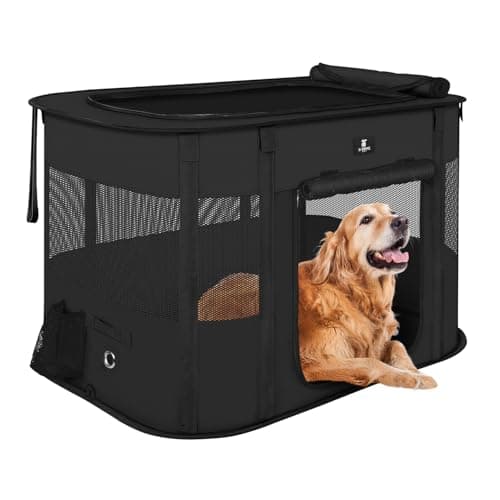
X-ZONE PET X-ZONE PET Portable Foldable Dog Playpen
X-ZONE PET Portable Foldable Dog Playpen

A soft pop-up pen that doubles as shade — the one that behaves like a tent rather than a fence.

Beach days and shaded campsites
7.8
$62.99Amazon
03
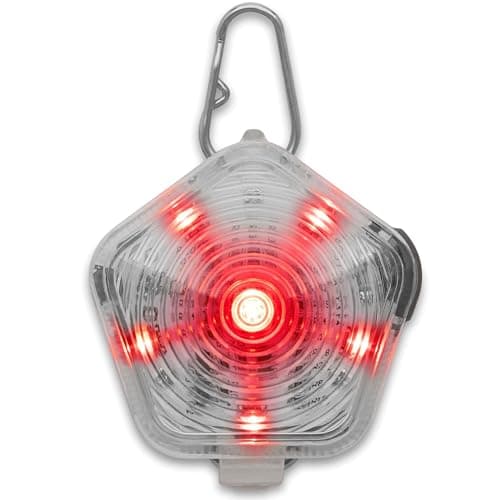
Ruffwear Ruffwear Beacon Safety Light
Ruffwear Beacon Safety Light

The one built to be lost in a river and keep working. Rechargeable, genuinely waterproof, visible a long way off.

Water, weather and real backcountry
8.6
$39.99Amazon
04
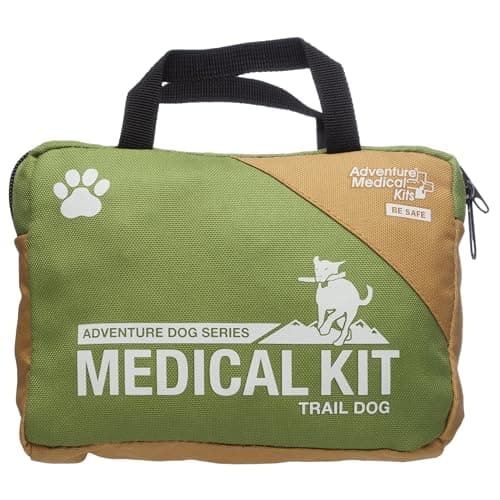
Adventure Medical Kits Adventure Medical Kits Trail Dog Medical Kit
Adventure Medical Kits Trail Dog Medical Kit

The only one here from a company that makes human wilderness kits — and it includes the field guide that makes a kit usable.

Backcountry hiking
8.8
$22.68Amazon

#ad · Live prices from the Amazon Product API, as of Sep 6, 2026. Where we have no verified live price we show none — we would rather leave a gap than print a number that has rotted.

In detail

The picks, in full

01
No image

Camping and backpacking

Ruffwear Highlands Dog Pad

PackableCamping-pad constructionMultiple sizes listedRuffwear trail line
8.0/10

The packable sleeping pad, built the way a human camping pad is built. The pick when it has to go in a pack.

Packability
10
Padding
6
Durability
9
Cleaning
8
Value
7

Pros

  • Rolls down to something you can genuinely strap to a pack, not just squash into a trunk
  • Ruffwear builds for the trail, so the shell fabric is chosen for abrasion rather than for looking soft in a photo
  • Insulates the dog from cold ground, which a folded blanket does not do at all

Cons

  • Thin by design — this is a sleeping pad, not a plush bed, and a dog used to memory foam will notice
  • Premium price for a piece of gear that is mostly foam and fabric

Don't buy this if…

the bed lives in a car and a hotel room. Packability is the whole premium here, and a car has room you are paying not to use.

Check price on Amazon →

We don't have a verified live price for this right now, so we aren't showing one.

#ad · we may earn a commission from this link to Ruffwear Highlands Dog Pad

02
X-ZONE PET X-ZONE PET Portable Foldable Dog Playpen

Beach days and shaded campsites

X-ZONE PET Portable Foldable Dog Playpen

Soft-sided pop-upFoldable45 in size listedIndoor and outdoor
7.8/10

A soft pop-up pen that doubles as shade — the one that behaves like a tent rather than a fence.

Setup speed
10
Containment
6
Packability
9
Durability
6
Value
8

Pros

  • Pops up in seconds with no panel assembly, which is the whole appeal after a long drive
  • Fabric sides and a covered top give shade that a bare wire pen cannot, and shade is the real risk on a hot day
  • Collapses into a flat disc that slides behind a seat rather than filling the trunk

Cons

  • Soft sides are chewable and a determined dog will get through them
  • Light enough to be moved by wind if it is not staked or weighted

Don't buy this if…

your dog chews fabric. A soft pen is a comfortable place for a calm dog and a puzzle for a destructive one.

$62.99View on Amazon

Price as of Sep 6, 2026. Prices change — Amazon's at checkout is the one that counts.

#ad · we may earn a commission from this link to X-ZONE PET Portable Foldable Dog Playpen

03
Ruffwear Ruffwear Beacon Safety Light

Water, weather and real backcountry

Ruffwear Beacon Safety Light

USB rechargeableWaterproof rating publishedMultiple modesClips to collar or harness
8.6/10

The one built to be lost in a river and keep working. Rechargeable, genuinely waterproof, visible a long way off.

Visibility
10
Runtime
8
Attachment
8
Weatherproofing
10
Value
7

Pros

  • A published waterproof rating rather than a vague water-resistant claim, which is the difference for a swimming dog
  • Bright enough to track a dog across a dark field, not just to be seen by a car at ten yards
  • Clips to a collar or a harness ring and stays put through a shake

Cons

  • The most expensive option here for what is a single LED
  • A clip-on light swings and can end up under the dog's chin where you cannot see it

Don't buy this if…

you just want to be visible on a suburban pavement. A cheap collar light does that fine.

$39.99View on Amazon

Price as of Sep 6, 2026. Prices change — Amazon's at checkout is the one that counts.

#ad · we may earn a commission from this link to Ruffwear Beacon Safety Light

04
Adventure Medical Kits Adventure Medical Kits Trail Dog Medical Kit

Backcountry hiking

Adventure Medical Kits Trail Dog Medical Kit

Includes a dog field guideWilderness-focused contentsCompact pouchAdventure Medical Kits line
8.8/10

The only one here from a company that makes human wilderness kits — and it includes the field guide that makes a kit usable.

Contents
8
Organization
8
Pack size
9
Documentation
10
Value
9

Pros

  • Contents are chosen for wilderness problems — ticks, paw lacerations, foreign bodies — rather than a generic bandage assortment
  • The included guide is the part people underrate: a kit you do not know how to use is a bag of gauze
  • Packs small enough to actually live in a day pack rather than the car

Cons

  • Fewer total items than the big box kits, because it is curated rather than padded
  • No hard case, so it needs to sit somewhere it will not be crushed

Don't buy this if…

you want a large home-and-car kit. This is deliberately a trail kit and the item count reflects that.

$22.68View on Amazon

Price as of Sep 6, 2026. Prices change — Amazon's at checkout is the one that counts.

#ad · we may earn a commission from this link to Adventure Medical Kits Trail Dog Medical Kit

What a pen honestly does and does not do

A soft pop-up pen contains a dog that has already accepted being contained. It is a place to be, not a cage. A dog that is anxious, that chews fabric, or that has decided it is leaving, will leave — the sides are fabric and the whole structure is light enough to be shifted by weather.

Three rules make one work:

  • Stake or weight it. The same low weight that makes it packable makes it a sail. An empty pop-up pen will cross a campsite in a gust.
  • Never leave a dog in one unattended. Not while you walk to the toilet block, and not overnight. Pens get escaped, tipped, and visited by other animals, and a campground is full of both. Most campgrounds explicitly prohibit leaving a pet unattended in any case.
  • Shade is the real safety feature. A covered soft pen keeps sun off a dog in a way an open wire pen cannot. On a hot afternoon that is not a comfort question.

If containment is the whole point of your trip — a dog that will bolt, or a long stay in one place — a pen is the wrong tool and a travel crate is the right one. The full comparison goes into where each one wins; the short version is that a crate contains and a pen accommodates.

Food, water and the wildlife problem

A dog bowl of kibble left outside a tent is a wildlife feeder. This is the campsite-specific rule that has no hiking equivalent, and it applies in far more places than bear country: raccoons, coyotes, rodents and, in some areas, bears will all investigate. Feed the dog, then pick the bowl up and store the food the same way you store your own — sealed, and wherever the site's rules say human food goes.

Water is the other one. Campsite water sources vary from a tap to a stream, and a dog will drink from anything including standing water it should not. Carry your own and offer it regularly rather than letting the dog self-serve from a puddle — a collapsible bowl and a portable bottle handle both the drive in and the site itself, and keeping a dog hydrated on the move is its own small discipline on a hot trip.

For food, a sealed travel food container beats a ziplock bag: it keeps the smell down, it does not spill in a pack, and it makes measuring straightforward when you are doing it in the dark.

The rules, which are stricter than most people expect

If you are camping on public land, the leash rule is usually specific rather than general. The National Park Service standard is a leash no longer than six feet, and it applies in developed areas and campgrounds, not just on trails. A retractable lead extended to twenty feet is not compliant, and a dog under voice control is not compliant either.

The Park Service packages the whole expectation as the B.A.R.K. Rangerprinciples — bag your pet's waste, always leash your pet, respect wildlife, and know where you can go. That last one does real work: pets are welcome in developed areas, campgrounds and many trails, but restrictions vary enormously park to park and a trail that allows dogs in one park will not in the next. Check the specific park's page rather than assuming, and check it again if your trip crosses from national park land onto national forest land, where the rules are often different.

Waste is not optional and it is not biodegradable in any useful sense at volume. Pack it out. A bag dispenser on the leash is the difference between doing this reliably and doing it when convenient.

The full campsite pack list

Sleeping and settling

  • Insulated pad or packable bed — the thing between the dog and the ground
  • Something that smells like home: an old t-shirt beats a new blanket
  • Pop-up pen or crate, staked or weighted
  • A towel that lives in the car for the wet, muddy return

Containment and control

  • Six-foot leash — the compliant length, not a retractable
  • A second leash or a spare, because one will get wet, chewed or lost
  • Well-fitted harness — a hiking harness with a handle is worth it for scrambles and for lifting a dog into a car at the end
  • Stakes and a mallet if your pen or tie-out needs them

Light and visibility

  • Collar or harness light, charged
  • Your own headlamp, which you will use for the dog more than for yourself
  • A GPS trackerif the dog has any history of bolting — unfamiliar terrain plus wildlife scent is the exact combination that produces a runner

Food, water, waste

  • Measured food in a sealed container; bowl picked up after every meal
  • Collapsible bowl and a bottle you can carry on a walk
  • Poop bags, more than you think, plus a way to carry full ones out

Health and weather

  • Trail-appropriate first-aid kit, and having read the guide in it before you need it
  • Tick remover, and a tick check every single evening — do it by hand, not by eye
  • Paw protection if the terrain is sharp, hot or icy — see sizing boots properly, because boots that fall off on day one are worse than none
  • A cooling mat for hot-weather car camping, where shade and airflow are the only cooling available
  • Vaccination records and a current ID tag; a recent photo of the dog on your phone

What to leave at home

Camping gear lists for dogs get padded with things that sound reasonable and never come out of the bag. Skip the dog sleeping bag unless your dog reliably stays inside one, which most do not — a pad plus your own spare layer over the top is more adaptable. Skip the elevated cot for backpacking; it is excellent for hot-weather car camping and impossible to carry. Skip the collapsible fabric "travel kennel" sold at the same price as a real pen — it does the same job worse. And skip the second set of bowls; one bowl gets rinsed.

The trip is better the less you brought and the more of it you used. Pad, pen, light, kit, water, waste. Everything else earns its place or stays in the car.
How we picked

We do not test the gear

We compiled the manufacturers' published dimensions and specs, cross-checked them against airline under-seat limits and published safety certifications, read the owner reviews, and scored each product against a published rubric. The scores are judgments from that research — they are not measurements we took, because we do not own a lab and we are not going to pretend we do. Where we could not verify a fit or a claim, we say so on the page.

Questions

Frequently asked

Do dogs need a sleeping pad when camping?
A dog sleeping directly on the ground loses heat by conduction faster than it loses it to the air, and a folded blanket compresses to nothing useful. An insulated pad is the single most effective piece of dog camping gear, and restlessness at 3am is usually cold rather than anxiety. In warm weather on dry ground it matters less; on cold, wet or rocky ground it changes the night entirely.
Can I leave my dog in a playpen at a campsite while I go for a walk?
No. A soft pen contains a dog that has accepted being contained, and it does nothing against a determined dog, weather, or another animal arriving. Most campgrounds also prohibit leaving a pet unattended outright. A pen is for keeping a dog settled and out of the way while you are there — cooking, eating, packing up — not for leaving it behind.
What is the leash rule for dogs in national parks?
The National Park Service standard is a leash no longer than six feet, and it applies in campgrounds and developed areas as well as trails. A retractable lead run out long does not comply. Pets are welcome in developed areas, campgrounds and many trails, but which trails varies a great deal park to park, so check the specific park's page. The B.A.R.K. Ranger principles summarize the whole expectation: bag the waste, always leash, respect wildlife, know where you can go.
Where should I put my dog's food at a campsite?
Sealed, and stored wherever the site's rules say human food goes. A bowl of kibble left out is a wildlife feeder, and that is true well beyond bear country — raccoons, coyotes and rodents all investigate. Feed the dog, then pick the bowl up. A sealed container also keeps the smell down in a tent and stops a bag splitting in a pack.
Is a crate or a playpen better for camping?
A pen if the dog is calm and the trip is mostly outdoors — it packs smaller, sets up in seconds, and gives shade. A crate if the dog is a bolter, a chewer, or the stay is longer and more static. The honest distinction is that a crate contains and a pen accommodates, so the answer follows from your dog rather than from the campsite.

Keep reading

Receipts

Sources

We do not run a testing lab, and we do not pretend to. Product dimensions and safety claims come from the manufacturer's own listing; airline limits come from the airline's published policy, with the date we checked it. Where we could not verify something, we say so on the page rather than quietly leaving it out. Read our full method.