"Pet-friendly" is a filter on a booking site, not a description of an experience. It tells you the hotel accepts dogs. It does not tell you the fee, whether it is per night, whether there is a weight limit, whether your dog may be left in the room alone, or whether the pet rooms are the ones next to the ice machine on the ground floor.
Those five things decide the night. Ask them on the phone before you book - not through the booking site, which will not know - and the rest of this is straightforward.
The five questions
- What is the pet fee, and is it per night or per stay? A modest-sounding fee that turns out to be nightly changes the math on a four-night stay considerably.
- Is there a weight or dog-count limit? Common, and commonly buried. Two medium dogs is where policies most often say no.
- Can the dog be left in the room unattended? Many hotels say no outright, and some allow it only if the dog is crated. This is the answer that determines whether you can go out for dinner.
- Where are the pet rooms? Ask for ground floor near an exit if your dog is old or nervous, and away from the lift and ice machine if it barks at noise.
- Where is the nearest grass? Two minutes on the phone saves you walking a desperate dog around a car park at 6am looking for something that is not asphalt.
The five-minute setup
Do this before you unpack anything of your own. The goal is to make one corner of a strange room smell and feel like a place the dog already knows.
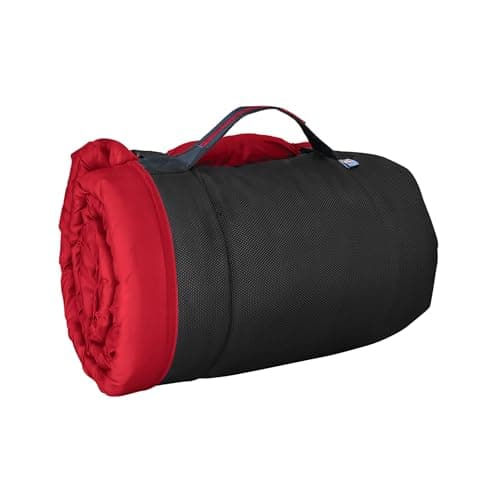
- Bed down first.The dog's own bed or mat, unwashed, in a corner away from the door. If you brought a crate, put it up now and put the bed inside it.
- Water down second, in the same spot you would put it at home relative to the bed. Small consistencies do real work.
- Walk the dog around the room on a leash once, then let it off. Thirty seconds of guided investigation beats ten minutes of anxious patrolling.
- Close the bathroom door and check for hazards - dangling cords, a minibar at nose height, chocolate on the pillow, a gap under a bed a small dog can wedge into.
- Put the "do not disturb" sign out immediately. The single most common hotel dog incident is housekeeping opening a door onto a startled dog.
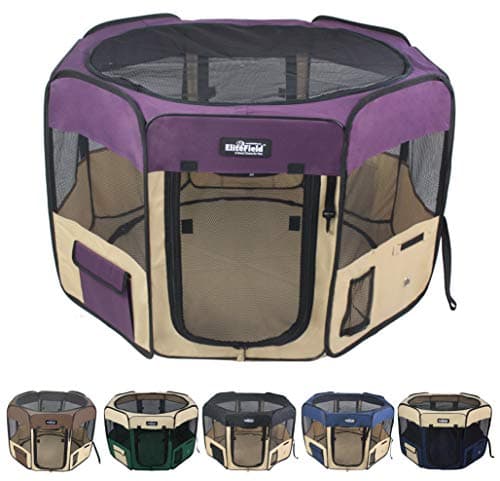
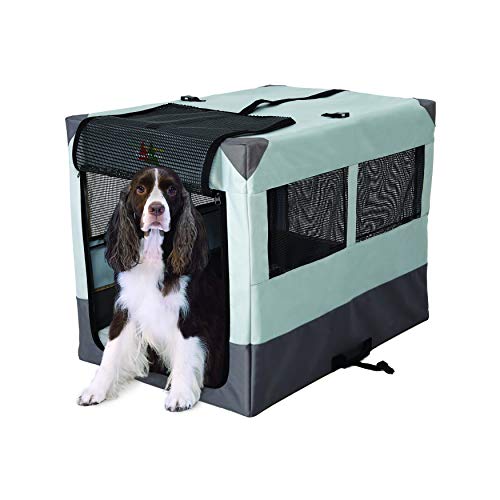
A crate or a soft pen is what makes all of this reliable rather than hopeful. It gives the dog a defined space in a room with no other landmarks, it stops a dog reaching the door when it opens, and at hotels that allow unattended dogs it is usually the condition attached. A collapsible travel crate is the version of this that fits in a car boot with the luggage.
A rented house is a different problem from a hotel room: no housekeeping, no front desk, a deposit, and a host who reviews you afterwards. The kit that protects somebody else's floors - a folding pen, washable pads, a tag silencer - is ranked separately in best dog gear for Airbnbs and vacation rentals.
Arriving tired is the whole trick
The last stop before check-in should be a proper walk - twenty or thirty minutes, not a verge stop. A dog that arrives with energy left over will spend it investigating a room it does not understand, at the exact moment you want it to lie down. Everything else on this page is easier if the dog is tired when it walks through the door.
The barking problem, honestly
Dogs bark in hotels for two reasons: corridor noise, and being left alone somewhere unfamiliar. The first is manageable - a room away from the lift, a television or a fan running for white noise, and a dog that cannot see the gap under the door from its bed.
The second is not something you can solve on the night. If your dog is not already comfortable being left alone in a crate at home, a hotel room is the worst possible place to test it, and you will find out by phone call from reception. Practice at home first, and if it is not solid, plan meals you can bring back to the room. That is a smaller compromise than it sounds and it removes the entire risk.
Housekeeping, deposits and damage
- Decline daily housekeeping for the stay, or arrange a time when you and the dog will be out. This prevents the commonest incident outright.
- Do not let the dog on the bedunless you brought a cover for it. Hair on the bedding is the most frequent reason a "pet fee" quietly becomes a cleaning charge.
- Bring a towel of your own for wet or muddy paws. Using hotel towels on a dog is how a deposit disappears.
- Take a photo of the room when you arrive, the same way you would with a rental car. Existing marks are easier to prove on the first day than on the last.
- Clean up the corner before you leave. Hair on the carpet by the bed is a two-minute job with a damp hand and it materially changes how the next guest with a dog is treated at that hotel.
What to actually pack for the room
Beyond the travel bag basics, the room-specific list is short: the dog's own bed or mat, a crate or pen if that is the routine, a familiar blanket, a chew that occupies the dog for twenty minutes, poop bags, wipes, a towel, and a bowl you can leave down overnight. Bring the food you already use - a hotel stay is not the week to change diet.
On a high floor, add a portable dog potty. The 2am walk to street level is the part of a hotel stay people underestimate, and a disposable bark or grass tray by the bathroom door removes the decision entirely. Put it down when you arrive, not when you need it.
For a multi-night stay, a soft pen is worth the space. It gives an adult dog somewhere to be that is not a crate, keeps it off the furniture, and packs down flat. Our playpen roundup and the crate versus playpen comparison cover which one suits your dog.
Rentals and holiday lets
A private rental usually has more space and fewer corridors, which suits a nervous dog, but it also has no staff and no policy - so the responsibility for the sofa, the garden fence and the neighbors is entirely yours. Check the fence at dog height before you let the dog out, ask the host directly about leaving the dog alone rather than assuming, and cover any furniture your dog is used to lying on at home.
Either way, the pattern is the same as the rest of dog travel: the dog is fine with a strange room, as long as one corner of it is familiar and the routine around it has not changed.