The working answer is every two to three hours, for about fifteen minutes. That is the schedule most healthy adult dogs travel well on, and it is close enough to what human drivers need that you are not sacrificing much time to it.
The more useful answer is that a stop is not primarily a toilet break. It is a reset: the dog gets to empty its bladder, drink, move its joints, sniff something, and stop being in a moving box. Skip the stop and you do not just risk an accident in the back - you get a dog that arrives wound up, stiff and dehydrated, and a dog like that behaves worse at the other end for the rest of the day.
Who needs to stop more often
- Puppies: every 45-60 minutes. Small bladder, no training to fall back on, and a limit on how long they can be interested in anything.
- Senior dogs: every 90 minutes to 2 hours. Not because of the bladder alone, though that is often part of it, but because stiffness sets in when an arthritic dog holds one position for hours. A short walk resets it. See traveling with a senior dog.
- Dogs on medication, or with kidney or bladder conditions: whatever your vet says, which will usually be more often.
- Any dog in hot weather. More frequent, shorter, shadier stops, and water at every one.
- Dogs that are prone to car sickness: stop before the dog feels ill, not after. Once a dog has been sick, the rest of the drive is harder.
What a good fifteen-minute stop looks like
- Leash on before the door opens. Every year, dogs are lost at highway rest stops in the first three seconds of a door opening. Clip the leash to a harness inside the car, then open the door.
- Toilet first, in the designated area, and pick it up. A dispenser on the leash means you always have a bag.
- Water, offered rather than assumed. A lot of dogs will not drink in a car and will drink freely at a stop. Bring your own water: rest-stop puddles and standing water are how dogs pick up gastrointestinal bugs on holiday.
- Five to ten minutes of actual walking. Not standing on a verge - moving, sniffing, using the legs. This is what stops arrival stiffness.
- Back in, restrained, before you sort your own coffee. A dog tied to a picnic table while you queue is a dog that can be stolen or can slip a collar.
None of this needs a service station. A quiet exit, a verge with a footpath, or a small town park is usually better - less traffic, fewer other dogs, and no crowded forecourt to navigate with a lead in one hand.
How long a dog can hold it, honestly
Adult dogs can physically go longer than three hours, and plenty do. The question is not what a dog can tolerate but what leaves it comfortable and healthy at the far end. Holding urine for very long stretches is not good practice as a routine, and a dog that has been asked to hold it for six hours will often not drink for the same six hours - which is how dogs arrive dehydrated after a day in the car.
The practical rule: if you are stopping for yourself, take the dog out. If you have not stopped in three hours, stop.
Water discipline on a long drive
Offer water at every stop, in small amounts, rather than leaving a full bowl sloshing in the back. A dog that gulps a liter at a rest area and then gets back into a moving car is a dog that is about to be sick. Small and frequent beats large and occasional.
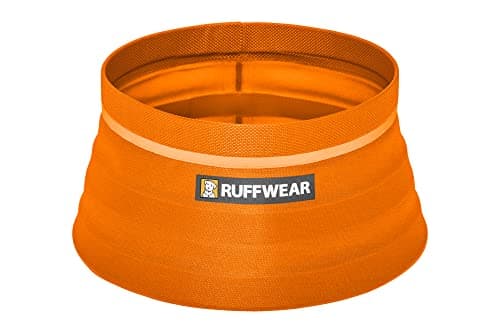
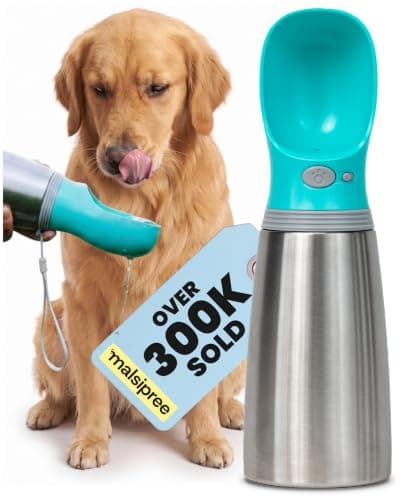
A squeeze bottle with an integrated trough is the tidiest solution because it lets you offer a mouthful without unpacking anything, and unused water goes back in the bottle rather than on the verge. If you prefer a bowl, a collapsible one that clips to the door pocket is quicker to reach than one in a bag in the boot. Our full guides on keeping a dog hydrated while traveling and the portable bottle rankings go deeper.
Feeding around stops
Feed a light meal three or four hours before you leave, and hold the main meal until you arrive. A dog traveling on a full stomach is more likely to be sick and more likely to need an unscheduled stop. On a multi-day drive, keep the feeding times roughly consistent with home, which matters more to a dog's gut than the exact hour does. There is more on this in feeding a dog on the road.
Hot weather changes everything
In summer, stops get shorter and more frequent, and where you stop matters more than when. Shade, not a sunlit car park. Grass, not asphalt that has been baking since noon. And the dog does not stay in the car while you eat - a parked car's interior can rise roughly 20 degrees Fahrenheit in ten minutes, and cracked windows do not change that. The full heat protocol is in keeping a dog cool in the car.
The overnight version
On a drive long enough to need a hotel, the last stop before check-in is the most useful one of the day: a proper walk, so the dog arrives tired rather than fizzing in an unfamiliar room. Our guide to staying in a hotel with a dog covers the rest of that evening.