Most adult dogs that hate the car learned it as puppies, and they usually learned it the same way: their first few trips were long, they felt sick, and the destination was the vet. Three data points is all it takes for a young dog to conclude that the car means nausea followed by a stranger with a thermometer.
The good news is that the reverse is just as easy to build. A puppy that has done a dozen short, pleasant, uneventful journeys before it ever does a long one becomes a dog you can take anywhere - which is the entire point of getting the travel habit right early.
Restraint first, and it changes as they grow
A loose puppy in a car is a genuine hazard - to itself in a stop, and to you when it climbs into the footwell at 60 mph. You have two workable options and one that is not.
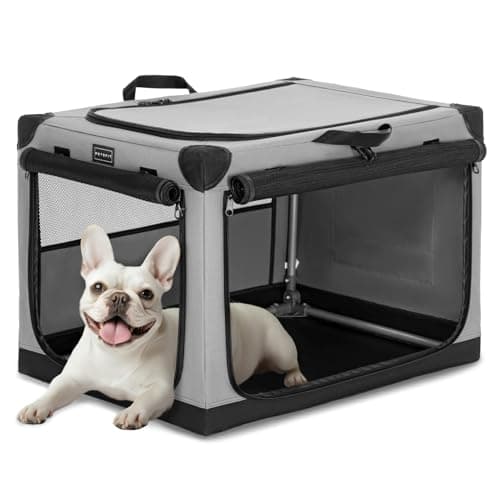
- A crate, secured. The best option for most puppies. It contains chewing and accidents, it doubles as the tool you are already using for house training, and a crate that is anchored properly does not become a projectile. Our guide to securing a crate in a car covers the anchoring, which is the part people skip.
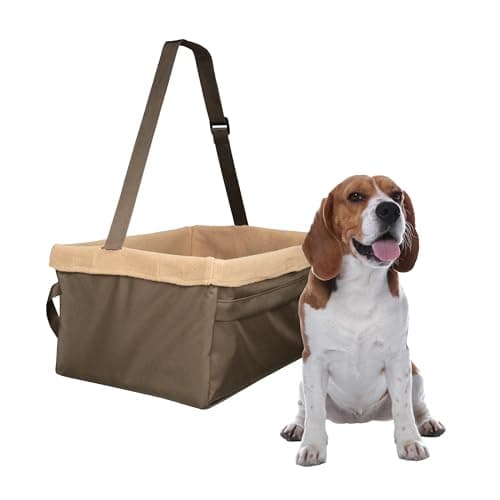
- A booster seat with a harness tether, for small breeds. It raises the puppy enough to see out - which genuinely helps with car sickness - and the tether stops it climbing. The harness does the restraining; the booster does the containing. Never clip a tether to a collar.
- Not a lap, and not the front seat. An airbag deploys with enough force to kill a small dog, and a puppy on your lap is the definition of a distracted driver.
Puppy-specific problem: a harness that fits at twelve weeks will not fit at six months. Buy cheap and re-measure monthly rather than buying the expensive crash-tested harness now - a crash-tested harness that no longer fits provides none of the protection it was certified for. Buy the good one when the dog stops growing.
The vaccination question, answered practically
Riding in your own car is not a disease risk. What carries risk is where the puppy's paws go at the other end, before its vaccination course is finished: rest stops, verges, dog-heavy parking areas and other people's gardens. Your vet sets the timeline for your puppy and your area, and that conversation is worth having before you plan a trip rather than after.
Meanwhile you can do all the car work you need without the puppy ever touching the ground somewhere unknown: sit in the parked car, drive around the block, carry the puppy from door to car. Socialization to the vehicle does not require a destination.
The crate is the one purchase worth getting right first time, because a puppy outgrows anything that fits it today - the best travel crates for puppies ranks them on whether they grow with the dog.
Flying a puppy is a different set of rules from driving one: airlines publish minimum ages, the European Union requires 15 weeks because of the rabies schedule, and the CDC sets six months for any dog entering the US. We lay the gates out in order in flying with a puppy.
The short answer
Quick picks
#ad · Live prices from the Amazon Product API, as of October 21, 2026. Where we have no verified live price we show none — we would rather leave a gap than print a number that has rotted.
In detail
The picks, in full
A soft crate that holds its shape
Petsfit Portable Soft Dog Crate
Patented spiral-iron frameSoft-sidedRemovable washable padCarry handle
A sturdier-than-average soft crate — a patented frame that stays put better than the flimsy ones.
- Portability
- 7
- Durability
- 7
- Setup ease
- 8
- Chew resistance
- 5
- Value
- 7
Pros
- +The reinforced spiral frame keeps the walls from caving the way the cheapest soft crates do
- +Removable, washable pad — the detail that matters after a muddy weekend
- +Sits between the throwaway soft crates and the premium hard crates on both build and price
Cons
- −Still fabric and mesh — sturdier than most soft crates, but not chew-proof
- −Heavier than the lightest packable crates because of that frame
Don't buy this if…
…you want the lightest possible pack weight. The frame that makes it sturdy also makes it heavier than a bare-bones soft crate.
A reliable everyday booster
PetSafe Happy Ride Dog Booster Seat
Up to ~12 lbInterior safety tetherMachine-washableSeatbelt strap
A no-nonsense booster from a brand with a real support line. The safe default for a small dog.
- Containment
- 7
- Fit range
- 6
- Build quality
- 7
- Ease of install
- 8
- Value
- 8
Pros
- +PetSafe is an established brand with actual customer support if a buckle fails — not a given at this price
- +Whole thing goes in the wash, which matters more than any spec after a beach day
- +Simple seatbelt-loop install that's hard to get wrong
Cons
- −Small weight ceiling — this is a genuinely small-dog seat, not a medium-dog one
- −Plain, lightweight build; it's practical rather than plush
Don't buy this if…
…your dog is over about 12 pounds. It's rated for little dogs, and an over-weight dog defeats the tether geometry.
Occasional trips and rental cars
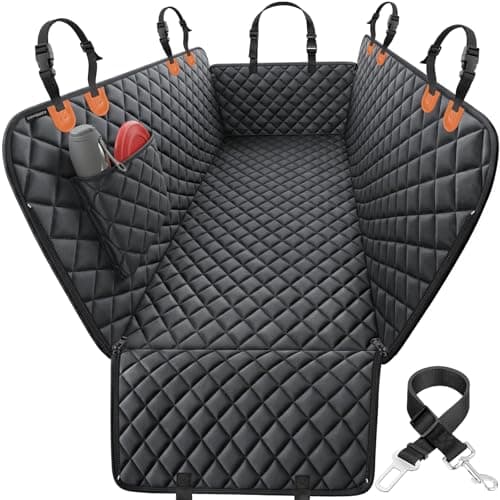
URPOWER Waterproof Dog Car Hammock
Waterproof layerHammock styleBack-seat fit
The budget entry. It does the one job — keep hair and mud off the bench — and does not pretend to more.
- Coverage
- 7
- Waterproofing
- 8
- Anchoring
- 6
- Cleaning
- 8
- Value
- 9
Pros
- +Cheap enough to keep a spare folded in the trunk for unplanned muddy days
- +Waterproof layer is the feature that matters most, and it is present
- +Light and quick to fit, which is what you want in a car you do not own
Cons
- −Thin material — this is a cover with a service life, not a permanent fixture
- −Straps and anchors are the first thing to give up under a heavy dog
Don't buy this if…
…the dog rides daily. At that frequency you will replace this twice before a heavy-duty cover needs washing.
Muddy paws before a hotel lobby
Earth Rated Dog Wipes
100 per packUnscented optionPlant-based fibersLarge sheet size
Big, thick, unscented and 100 to a pack. The default, and hard to argue with.
- Cleaning power
- 9
- Skin gentleness
- 9
- Sheet size
- 10
- Low scent
- 10
- Value
- 9
Pros
- +Sheet size is genuinely large, so one wipe does a paw instead of three
- +Unscented version avoids the perfume that makes some dogs shake themselves inside out
- +100 per pack means a resealable tub lives in the car for a whole trip
Cons
- −Thicker sheets mean the pack is bulkier than a travel-size tub
- −Resealable lid is the weak point; once it stops sealing the pack dries out fast
Don't buy this if…
…you want something pocket-sized. This is a car-and-bag pack, not a walk pack.
The six-trip schedule
Build the habit in this order. Do not move to the next step until the current one is boring.
- Engine off. Puppy in its crate or seat, doors open, a few minutes, a treat, out. Twice a day for two or three days.
- Engine on, not moving. Same again. The engine noise and vibration are new information; let them be boring before you add motion.
- Around the block. Two minutes. End somewhere good - home, and a game.
- Ten minutes to somewhere nice.A field the puppy is allowed on, a friend's house. The destination is the reward.
- Thirty minutes, with a stop. Now you are practicing the actual road-trip pattern: drive, stop, water, walk, drive.
- A real trip. Anything longer, broken into the same rhythm.
If any step goes badly, go back one and repeat it until it does not. This costs a fortnight and pays for a decade.
Car sickness in puppies is usually developmental
Young dogs get carsick more than adults do, partly because the inner-ear structures involved in balance are still maturing. A lot of puppies simply grow out of it by about a year old. That is not a reason to do nothing, because a puppy that vomits on every trip is learning to dread the car even while its ears are catching up.
What helps: travel on a light stomach rather than a full one, keep the puppy facing forwards, get some fresh air into the cabin, keep the car cool, and stop before the dog feels sick rather than after. What does not help: a big meal beforehand, a hot car, or long trips with no breaks. Our full guide on stopping dog car sickness covers the rest, including when it is worth asking a vet about medication.
Accidents, chewing and the interior
Assume accidents. A puppy that has been in a car for forty minutes has been holding it for forty minutes plus however long it was before you left, and puppy bladders are small. Stop more often than you would for an adult dog - every forty-five minutes to an hour on a long drive is reasonable at this age.
A waterproof seat cover or hammock protects the upholstery from all three puppy hazards at once: accidents, muddy paws and chewing at the seat edge. It is the cheapest insurance in this article. Wipes in the door pocket handle the rest. If you would rather see the whole category, the hammock and seat cover roundup ranks them properly.
The things that actually go wrong
- Every trip ends at the vet. Fix by making four out of five trips end somewhere good.
- The puppy is left alone in the car. Never - and in warm weather never for any length of time at all. A parked car heats fast enough to be lethal well before it feels hot to you; see keeping a dog cool in the car.
- ID is not sorted yet. Puppies escape at rest stops. A collar tag with a working phone number, and a microchip registration you have actually completed, before the first trip out of town.
- Too much, too soon. A four-hour drive at ten weeks teaches a lesson you will spend a year undoing.
Get this right and the payoff is a dog that treats the car as a place it sleeps. That makes every future trip - the road trips, the holidays, eventually the flights - dramatically easier than it would otherwise have been.
How we picked
We do not test the gear
We compiled the manufacturers' published dimensions and specs, cross-checked them against airline under-seat limits and published safety certifications, read the owner reviews, and scored each product against a published rubric. The scores are judgments from that research — they are not measurements we took, because we do not own a lab and we are not going to pretend we do. Where we could not verify a fit or a claim, we say so on the page.
Questions
Frequently asked
How old does a puppy have to be to travel in a car?+
A puppy can ride in your own car as soon as it comes home - the risk is not the journey but where its paws go at the other end before vaccinations are complete. Keep early outings short, restrain the puppy in a secured crate or a booster with a harness tether, and ask your vet when it is safe for your puppy to be on the ground in public places.
Should a puppy travel in a crate or a car seat?+
A secured crate for most puppies: it contains chewing and accidents, doubles as the house-training tool you are already using, and cannot become a projectile if it is anchored properly. A booster seat plus harness tether suits small breeds and has the advantage of letting the puppy see out, which helps with car sickness. Never a lap, and never the front seat.
Why does my puppy get car sick?+
Young dogs are more prone to motion sickness because the inner-ear structures involved in balance are still developing, and many grow out of it around a year old. Travel on a light stomach, keep the puppy facing forward with fresh air and a cool cabin, and stop before it feels sick rather than after. If every trip ends in vomiting, ask your vet - untreated nausea teaches a dog to fear the car.
How often should I stop when driving with a puppy?+
Every 45 minutes to an hour, more often than for an adult dog. Puppy bladders are small and a puppy has usually been holding it since before you left. A stop is also a chance to break the trip up mentally, which matters as much as the toilet break at this age.
Can I leave my puppy alone in the car for a few minutes?+
No. A parked car's interior can rise about 20 degrees Fahrenheit in 10 minutes and around 30 degrees in 20, and cracking the windows makes no measurable difference. A puppy has less heat tolerance than an adult dog, and in many states leaving an animal in a hot car is also an offense.
Receipts
Sources
We do not run a testing lab, and we do not pretend to. Product dimensions and safety claims come from the manufacturer's own listing; airline limits come from the airline's published policy, with the date we checked it. Where we could not verify something, we say so on the page rather than quietly leaving it out. Read our full method.