Skip to content
Paw & Passport

HUB 04 · Outdoor & Adventure

K9 Sport Sack vs Kurgo G-Train

One is sized to the dog and one is built around your hips. That single difference decides which of them is right, and it is not a price question.

By Stephen V.Updated How we research
#ad

We earn a commission when you buy through our Amazon links, at no extra cost to you. It never affects our rankings, and we say so when the cheaper product is the better buy. How this works.

K9 Sport Sack K9 Sport Sack Urban 3

Our top pick #ad

K9 Sport Sack Urban 3

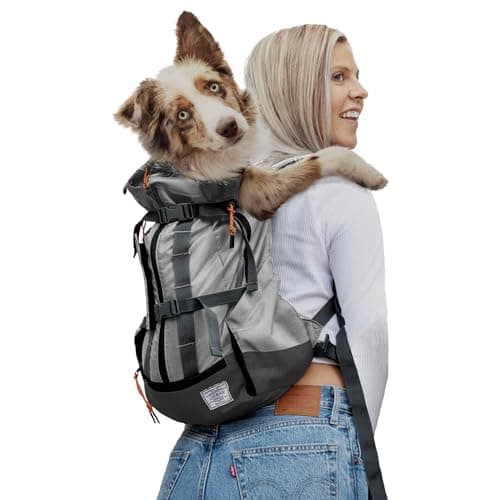
For most people the K9 Sport SackUrban 3 is the one to buy: it is sized to the dog's back length rather than a weight band, and that is why the fit works where generic packs do not.

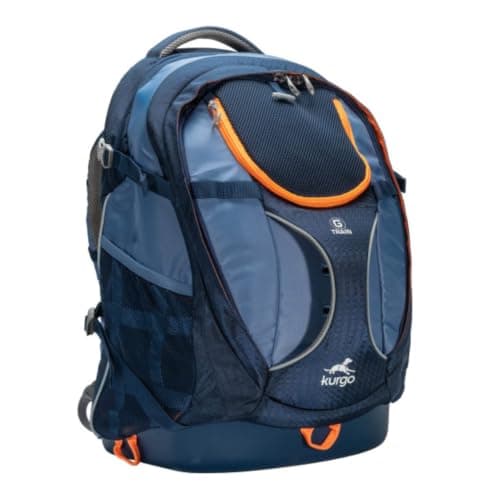
Buy the KurgoG-Train instead if you are carrying the day's kit as well as the dog - it has a real hip belt and storage, and it is the heavier pack empty.

The verdict: buy the K9 Sport Sack Urban 3unless you are also carrying the day's gear, in which case buy the KurgoG-Train. The Urban 3 wins on the thing that decides whether a dog backpack is usable at all - it is sized by the dog's back length rather than by a vague weight band, and K9 Sport Sack publishes a sizing chart you fit the dog against before you order. The G-Train wins on the thing that decides whether you last six miles instead of two: a genuine hip belt, plus compartments for the water, bowl and treats so there is no second bag.

Both are legs-out-of-the-question different from an airline carrier, and that distinction matters before you spend anything: neither of these is an under-seat bag, and a legs-out hiking pack is not something you can take through a gate. We separate the two product classes on carrier vs backpack for flying. This page is about carrying a dog on foot, which is what these two are for.

We have not load-tested either pack in a lab, and nobody buying one can. What a buyer can compare is how each pack decides it fits, where the weight lands, and what else the pack does - all of which the makers publish. That is the comparison below.

The difference that actually decides it

Fit: back length vs weight band

K9 Sport Sack sizes by the dog's back length - measured along the spine - with a published chart per model. That is the single reason these packs fit properly: two 18 lb dogs can be shaped completely differently, and a weight band cannot tell them apart. The trade-off is that the fit is dog-specific, so the pack does not carry over to a second, taller or longer dog. If you have two dogs of different builds, you are buying two packs or compromising on one.

The G-Train is the more conventional fit: a ventilated carrier body you fit the dog into, with the engineering spent on your side of the straps rather than the dog's. For a dog in the middle of the range that is fine. For an unusually long or unusually leggy dog, the back-length method is worth the premium.

Suspension: shoulders vs hips

This is the one owners underestimate. A 16 lb dog is not heavy; a 16 lb dog an hour into a climb is a different number. The Urban 3 has hiking-grade shoulder straps and a back panel built to spread that load, and it is genuinely bearable for hours. The G-Train goes further and puts a hip belt on it, which is how every backpacking pack over about 25 lb transfers weight off the shoulders and onto the pelvis. If your carries are measured in hours, the belt is the single biggest comfort feature on this page.

The cost of that belt is weight and bulk. The G-Train is the heaviest pack of the three empty - you notice it before the dog is in it - and on a ten-minute city carry the suspension is dead weight you are wearing for nothing.

What the dog sees

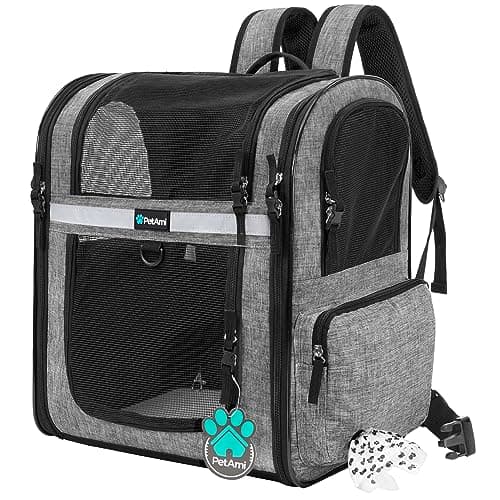
The Urban 3 is a legs-out design: the dog's front legs come through the patented arm holes, so it sits up and looks around rather than being folded into a bag. For most dogs that is better - it is a natural posture and the view is the point. For an anxious dog it can be worse, because a legs-out pack gives it nowhere to hide. The enclosed designs, including the budget PetAmi pack, suit the dog that would rather settle down and not watch.

Side by side

K9 Sport Sack Urban 3Kurgo G-Train Pet Carrier BackpackPetAmi Ventilated Dog Backpack Carrier
How it is sizedPublished chart, by the dog's back lengthCarrier body, fit the dog to the packListed to 18 lb
Dog's postureLegs out, sitting upEnclosed, ventilated panelsEnclosed, four-way entry
Load carried onShoulders, hiking-grade straps and back panelHips - a real hip beltShoulders, padded, no hip belt
Carries your kit tooConverts to an everyday daypackYes - storage compartmentsMinimal
Empty weightModerateHeaviest hereLightest here
Best forSerious carrying — trails and long daysCarrying the dog and the day's kitFirst-timers and city use

Live prices for all three are under the table below, stamped with the date they were pulled. The price gap between the budget pack and either premium one is large enough that it should be part of the decision rather than an afterthought.

How to choose, in one question each

  • Is the dog unusually long, short-legged or barrel-chested? Urban 3. The back-length chart is the only fit method here that accounts for shape.
  • Are you carrying water, food and a jacket as well as the dog? G-Train. One pack beats a pack plus a bag.
  • Are your carries longer than an hour? G-Train, for the hip belt - or the Urban 3 if the dog is at the light end and the fit matters more.
  • Is this a few times a year, in a city? Neither. The PetAmi pack is the sensible first backpack carrier and it publishes an 18 lb ceiling, which the cheap end of this category usually omits.
  • Does the dog hate being looked at? An enclosed pack, not a legs-out one.

The limit both of them share

Every backpack carrier in our registry is listed to roughly 18 lb or less, and that is not a gap in our research - it is the category. A 40 lb dog that cannot walk far is not a backpack problem, it is a stroller or a support-harness problem, and we would rather tell you that than rank a pack that cannot honestly hold your dog. Whatever you buy, build up to it: a pack is a strange posture for a dog, and the first outing should be ten minutes in the garden rather than a summit.
The short answer

Quick picks

#ProductBest forScorePrice
01
K9 Sport Sack K9 Sport Sack Urban 3
K9 Sport Sack Urban 3

The category standard. Sized to the dog's back length rather than a vague weight band, which is why the fit works.

Serious carrying — trails and long days
8.6
$99.95Amazon
02
Kurgo Kurgo G-Train Pet Carrier Backpack
Kurgo G-Train Pet Carrier Backpack

The most gear-like pack here — a proper hip belt and storage, for people who carry more than the dog.

Carrying the dog and the day's kit
8.4
$144.95Amazon
03
PetAmi PetAmi Ventilated Dog Backpack Carrier
PetAmi Ventilated Dog Backpack Carrier

Four-way entry and a stated 18 lb ceiling at a budget price — the sensible first backpack carrier.

First-timers and city use
8.0
$39.99Amazon

#ad · Live prices from the Amazon Product API, as of October 10, 2026. Where we have no verified live price we show none — we would rather leave a gap than print a number that has rotted.

In detail

The picks, in full

01
K9 Sport Sack K9 Sport Sack Urban 3

Serious carrying — trails and long days

K9 Sport Sack Urban 3

Sized by back lengthLegs-out designPadded shoulder strapsDual-use daypack
8.6/10

The category standard. Sized to the dog's back length rather than a vague weight band, which is why the fit works.

Carry comfort
10
Ventilation
9
Dog security
9
Weight capacity
8
Value
7

Pros

  • Sizing by back length rather than weight is the single reason these fit properly where generic packs do not
  • Legs-out design lets the dog sit naturally instead of being folded into a bag
  • Shoulder straps and back panel are built like a hiking pack, so the load is bearable for hours rather than minutes

Cons

  • Premium price, and the size-specific fit means it does not carry over to a second, different dog
  • Legs-out means a dog that wants to hide has nowhere to hide

Don't buy this if…

…you need it twice a year for a city errand. The comfort engineering is for hours under load, and you are paying for it either way.

$99.95View on Amazon

Price as of October 10, 2026. Prices change — Amazon's at checkout is the one that counts.

#ad · we may earn a commission from this link to K9 Sport Sack Urban 3

02
Kurgo Kurgo G-Train Pet Carrier Backpack

Carrying the dog and the day's kit

Kurgo G-Train Pet Carrier Backpack

Hip beltStorage compartmentsVentilated panelsKurgo travel line
8.4/10

The most gear-like pack here — a proper hip belt and storage, for people who carry more than the dog.

Carry comfort
9
Ventilation
8
Dog security
9
Weight capacity
9
Value
7

Pros

  • A real hip belt moves the load off your shoulders, which is the difference between two miles and six
  • Storage compartments mean the water, bowl and treats travel in the same pack rather than a second bag
  • Kurgo hardware and fabrics are the same ones on its car and trail gear, which is a known quantity

Cons

  • The most expensive carrier in this group, and the hip belt is wasted on short trips
  • Heavy empty — you feel the pack before the dog is in it

Don't buy this if…

…you only carry the dog for short bursts. The suspension is built for distance and costs accordingly.

$144.95View on Amazon

Price as of October 10, 2026. Prices change — Amazon's at checkout is the one that counts.

#ad · we may earn a commission from this link to Kurgo G-Train Pet Carrier Backpack

03
PetAmi PetAmi Ventilated Dog Backpack Carrier

First-timers and city use

PetAmi Ventilated Dog Backpack Carrier

Four-way entryVentilated mesh panelsListed to 18 lbPadded straps
8.0/10

Four-way entry and a stated 18 lb ceiling at a budget price — the sensible first backpack carrier.

Carry comfort
7
Ventilation
9
Dog security
8
Weight capacity
7
Value
9

Pros

  • Four entry points means you can load a reluctant dog the easy way instead of the designed way
  • A published weight ceiling, which the cheap end of this category usually omits
  • Mesh on multiple faces keeps airflow up, which is the main welfare issue in an enclosed carrier

Cons

  • Shoulder straps are padded but there is no real hip belt, so long carries land on your shoulders
  • Enclosed shape suits a dog that settles; an anxious dog gets less to look at than in a legs-out pack

Don't buy this if…

…you are hiking miles with a heavy dog. Without a hip belt the load is all on your shoulders and you will feel it.

$39.99View on Amazon

Price as of October 10, 2026. Prices change — Amazon's at checkout is the one that counts.

#ad · we may earn a commission from this link to PetAmi Ventilated Dog Backpack Carrier

Loading either pack without a fight

  • Measure before you order.For the Urban 3 that means back length against the published chart; for the G-Train, the dog's weight against the listed ceiling.
  • Put the pack on the floor and feed in it. Same routine as a carrier - see getting a dog used to a carrier.
  • Load the dog with the pack on the ground, then stand up. Lifting a loaded pack onto your back one-handed is how straps get twisted and dogs get startled.
  • Tighten the hip belt before the shoulder straps. On the G-Train that is the whole point of the belt; done the other way round the load stays on your shoulders anyway.
  • Check the dog every ten minutes early on. Panting, ears back and a rigid posture are the signals to stop, not to push through.

The detailed review of the Urban 3 on its own is at our K9 Sport Sack review, and the full ranked field is on best dog backpack carriers.

How we picked

We do not test the gear

We compiled the manufacturers' published dimensions and specs, cross-checked them against airline under-seat limits and published safety certifications, read the owner reviews, and scored each product against a published rubric. The scores are judgments from that research — they are not measurements we took, because we do not own a lab and we are not going to pretend we do. Where we could not verify a fit or a claim, we say so on the page.

Questions

Frequently asked

K9 Sport Sack or Kurgo G-Train - which should I buy?
Buy the K9 Sport Sack Urban 3 if the fit matters most: it is sized to the dog's back length against a published chart, which is why it fits dogs that generic packs do not. Buy the Kurgo G-Train if you are carrying the day's kit as well as the dog, because it has a real hip belt and storage compartments. The G-Train is the heavier pack empty and the Urban 3 is the one that converts to an everyday daypack.
What size K9 Sport Sack do I need?
Measure the dog's back length along the spine and check it against K9 Sport Sack's published sizing chart for the model you want - the brand sizes by back length rather than by weight, which is the point of it. Do not buy up a size for a growing puppy: a loose pack is the one that fails.
Does the Kurgo G-Train have a hip belt?
Yes, and it is the main reason to choose it. A hip belt transfers weight off your shoulders onto your pelvis, which is the difference between a comfortable six miles and an uncomfortable two. On a ten-minute errand it is bulk you are carrying for no benefit.
How big a dog can go in a dog backpack carrier?
Smaller than most people hope. Every backpack carrier in our registry is listed to roughly 18 lb or less, including both packs on this page. For a larger dog that cannot walk far, a travel stroller or a support harness is the honest answer rather than a pack.
Can I take a dog backpack carrier on a plane?
Not a legs-out hiking pack - the dog's legs come out through the sides and it is not an under-seat carrier. Some enclosed backpack carriers are built to airline dimensions and we rank those separately; the distinction between the two product classes is the thing to get right before you buy.
Is a dog backpack carrier safe for the dog?
It is a strange posture rather than a dangerous one, and the risks are practical: overheating in an enclosed pack, a bad fit that lets the dog shift, and too much too soon. Build up from ten minutes, keep the ventilation panels clear, watch for heavy panting, and stop when the dog tells you to.

Keep reading

Receipts

Sources

We do not run a testing lab, and we do not pretend to. Product dimensions and safety claims come from the manufacturer's own listing; airline limits come from the airline's published policy, with the date we checked it. Where we could not verify something, we say so on the page rather than quietly leaving it out. Read our full method.