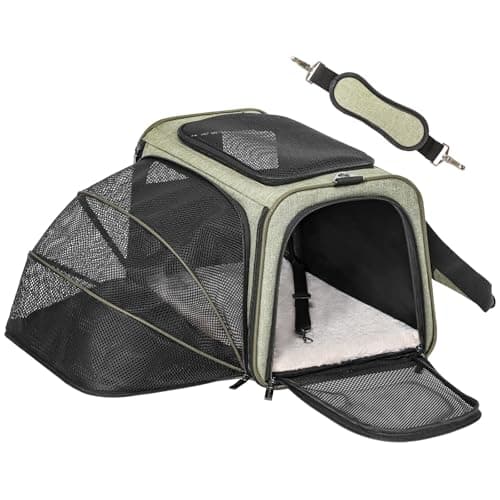
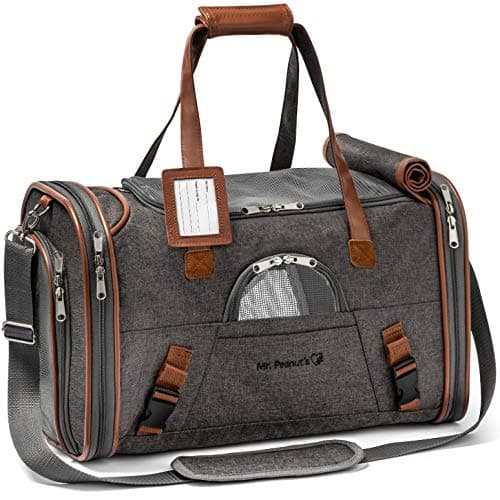
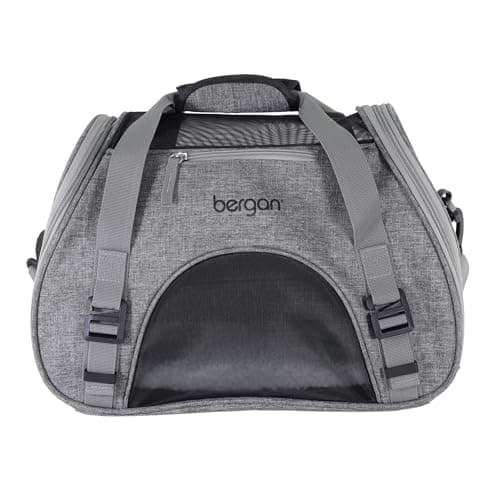
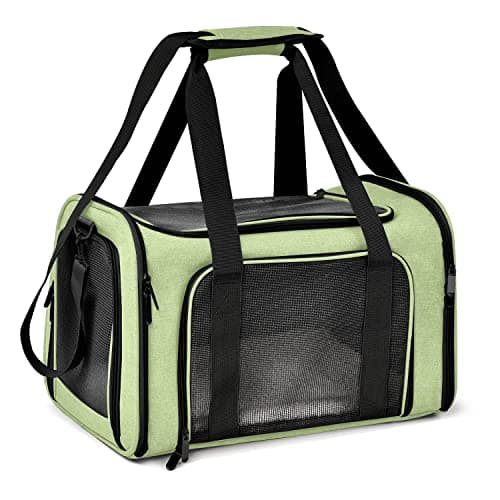
Almost every mistake people make buying a flight carrier is a fit mistake. The carrier fits the dog but not the seat; or it fits one airline's seat but not the airline they actually booked. The gate agent finds out for you, at the worst possible moment. So this ranking starts from the number that decides it — the under-seat opening — and works back to the carriers that clear it.
The trap is height. A carrier that's 11 inches tall sails under a United or Delta seat and gets turned away at Southwest or JetBlue, where the opening is only about 8.5 inches high. Before you buy any carrier, check your airline's actual limit in our under-seat dimensions matrix, and measure your dog with the measuring method. The soft carriers below have a squish advantage a hard case doesn't — but only within reason.
Two follow-ups to this page, both newer than it. If your dog is long rather than heavy, the fit question changes shape entirely - see carriers for dachshunds, where listed length does the deciding instead of weight. And whichever bag you buy, the dog has to be comfortable in it before the airport: getting a dog used to a carrier is a two-week job, not a day one. Our long-form write-up of the premium pick is the Sleepypod Air review.
Still deciding between a shoulder bag and a backpack rather than between models? Settle the form first on carrier vs backpack for flying, then come back here for the pick.
How to choose a flight carrier
Height is the binding constraint — check it first
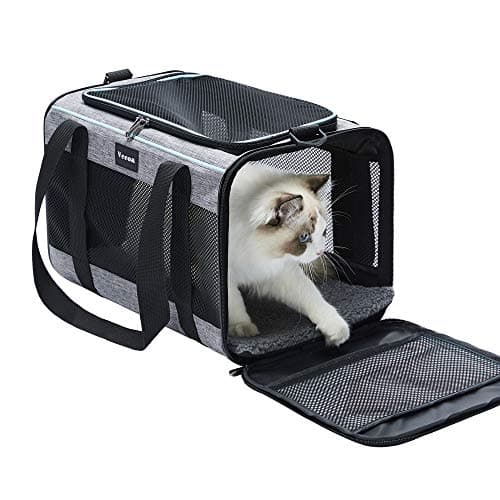
US airlines mostly agree the under-seat footprint is around 18 x 11 inches, but they disagree on height, and height is what gets carriers rejected. United and Delta allow roughly 11 inches; Southwest and JetBlue are nearer 8.5. A soft carrier flexes an inch or two under the seat, which is its real advantage over a hard case — but don't rely on squashing four inches away. Match the carrier to your airline's number in the dimensions matrix.
Size the dog, not the breed
Carriers are rated by weight, but weight lies — a long dog needs length, a tall dog needs height. Measure the dog and buy so it can stand, turn around and lie down inside. Our measuring guide walks through it. When a dog is at the very top of a size band, size up: a cramped dog is a stressed dog, and a carrier that fits the dog but not the seat is the classic failure.
The one carrier that de-risks the gate
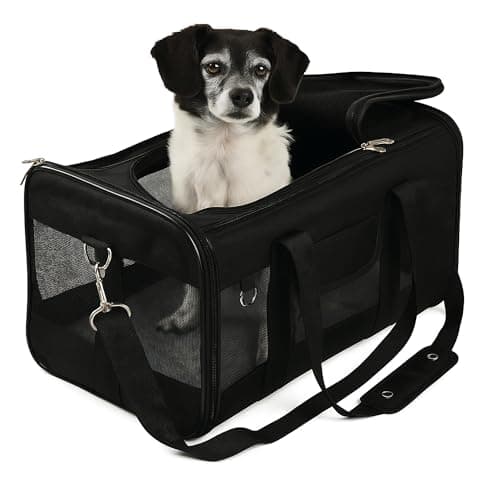
The SherpaOriginal Deluxe carries a "Guaranteed On Board" program: for a list of participating airlines, if you follow the sizing and an airline denies boarding, they reimburse your ticket. No other carrier here offers that backstop, which is why it leads the list. Confirm your airline is on Sherpa's current participating list — the program is specific, not universal, and Sherpa limits it to flights within and between the US and Canada.
Expandable if you have a layover, plain if you don't
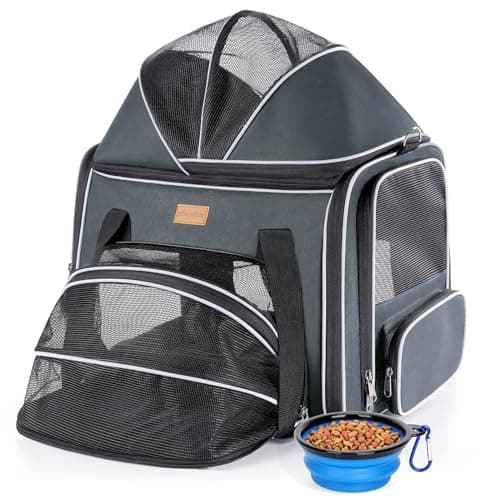
Expandable carriers (Petsfit, Morpilot) collapse to the under-seat footprint for the flight, then unzip into extra room for a long layover — genuinely worth it on a connection, pointless on a 90-minute hop. The zips are the wear point, so on an expandable, hardware quality matters more than usual.
What "airline-approved" actually means
No airline "approves" a specific carrier brand — the phrase means the carrier is built to the standard under-seat dimensions. The airline's gate agent, not the label, has the final say, and they're judging whether it fits under the seat and your dog can stand and turn inside it. The label is a starting point; the airline's published limit is the rule.