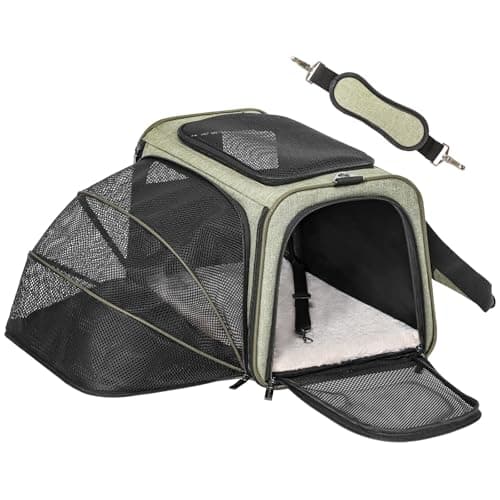
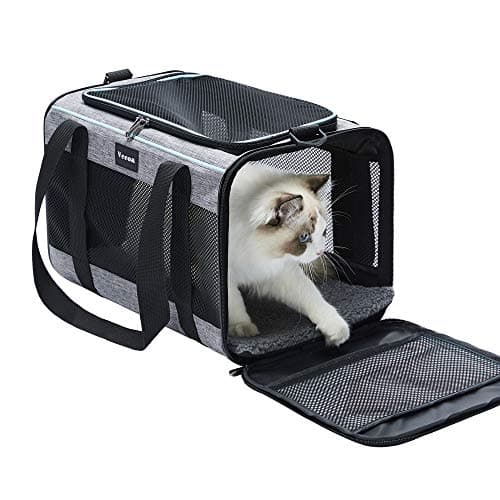
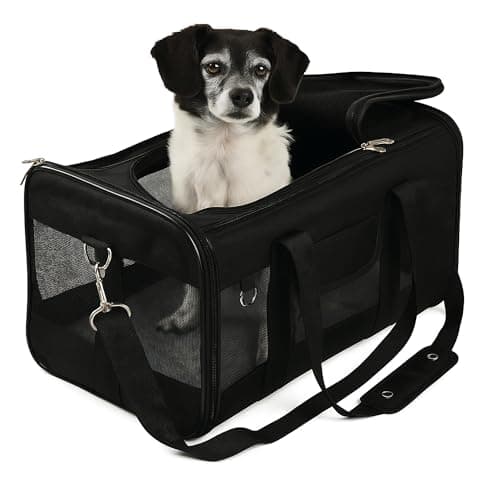
The question behind every "flying with two dogs" search is whether the two can share one carrier, and for adult dogs the answer is almost always no. Where airlines permit two animals in a single kennel, they permit it for puppies: Delta allows two pets of the same breed and size between 8 weeks and 6 months in one kennel if they are small enough and compatible, charged as one pet, and American Airlines permits two pets in one kennel if they are the same species, similar size, under 20 lb each, and between 8 weeks and 6 months old. Two grown dogs fall outside both rules.
Which turns this into an arithmetic problem rather than a shopping one. Most airlines cap in-cabin pets at one carrier per passenger, and each carrier occupies the footwell of one seat. Two adult dogs in the cabin therefore usually means two passengers - you and another adult, each responsible for one carrier, each paying a pet fee. If you are travelling alone with two adult dogs, the realistic options are to fly with one and arrange other transport for the second, to split the dogs across two trips, or to drive. We cover the drive on gear for traveling with two dogs, which is a far simpler problem.
These numbers come from the two airlines that publish them most clearly. Policies differ by carrier and change without much notice, and the cabin pet count on a given flight is also capped in total - so two seats does not guarantee two pet slots. Confirm with your airline on the phone, for your specific flight, and get the pet reservation in writing. Our standing advice on this has not changed: the fee structure varies with the rule, and a second animal is usually a second fee even where one carrier is permitted.
Working out whether this trip is possible
1. How old are the dogs
If both are between 8 weeks and 6 months, same species and similar size, a shared kennel is genuinely on the table with Delta and American, and on Delta they are charged as one pet. This is the one scenario where two dogs fly cheaply. It is also narrow, and the window closes on the dog's six-month birthday rather than on your travel date, so a trip booked for a five-month-old puppy that flies at six months and a week is a trip booked under the wrong rule.
2. How many passengers are in your party
One adult, one carrier, on most airlines. Two adult dogs therefore needs two adults, and both need their own pet reservation. Children in your party do not generally count as the responsible passenger for a pet - check, because it changes the booking.
3. Is there room on the aircraft at all
Airlines cap the total number of in-cabin pets per flight, and on smaller aircraft that number is low. Two of those slots on the same flight is a real constraint, especially on popular routes and at holidays. Book early and book the pets at the same time as the seats, not afterwards.
4. Will both dogs actually settle
This is the part no policy covers and the part that ruins flights. Two dogs that are fine together at home can wind each other up in adjacent carriers in a cabin they cannot see out of. A dog in distress in a cabin is a problem you cannot solve at 35,000 feet. If either dog is a barker or a panicker, read how to calm a dog for flying first, and be honest with yourself about whether two is twice the risk.
5. What the total cost actually is
Two pet fees each way, plus two carriers, plus - if you needed a second adult to make the booking legal - a second ticket you might not otherwise have bought. Run the real number before you commit; our cost of flying with a dog page does the single-dog version and doubling it is a fair first estimate. For a lot of two-dog households this is the calculation that turns the flight into a road trip.
6. What about the hold
Cargo is a separate decision with separate rules and real risk, and two dogs do not share a cargo kennel either. Read flying with a dog in cargo and cargo crate requirements before treating it as the overflow option for the second dog.
If the dogs are puppies and can share
Size the shared kennel for the pair, which is not the same as sizing for the larger of the two. Both must be able to stand, turn and lie down in natural positions at the same time, and that is the test a gate agent applies by eye. Our measuring guide covers the method; do it with both puppies in the carrier at once, on the floor, not on a table. And remember the shared-kennel allowance is still bounded by the under-seat footprint - a bag big enough for two puppies may not fit the gap, which is the contradiction at the heart of this rule.