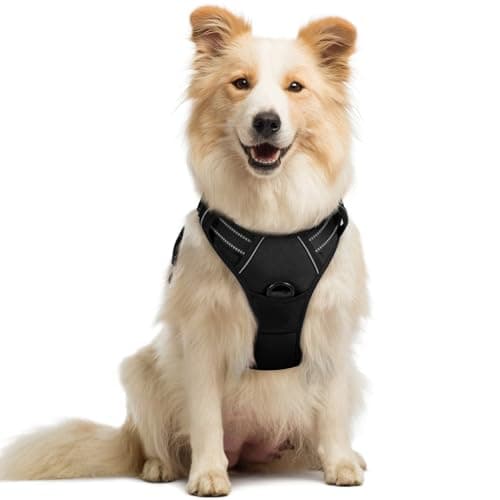
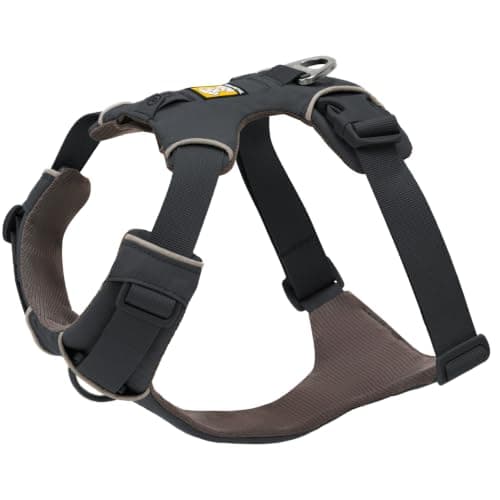
A hiking harness has a harder job than a walking harness, and the difference shows up late. A strap that's fine on a ten-minute walk chafes raw on a five-hour hike; a harness with no handle is fine until your dog needs lifting over a boulder. Trail harnesses earn their price on the long day, not the short one.
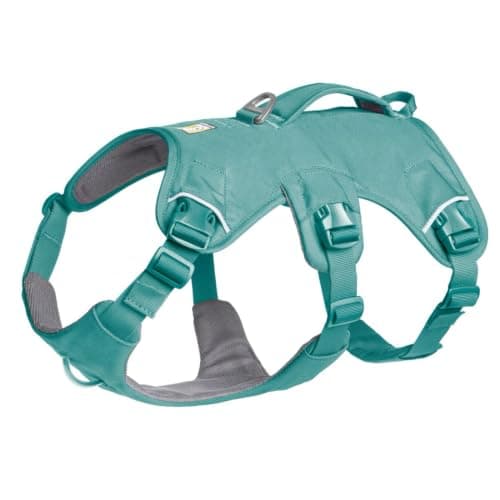
Three things separate a real trail harness from a walking harness with adventure marketing: genuine padding that spreads load, a control handle you can actually grab, and a fit secure enough that a lunging dog can't back out of it. The Ruffwear Front Range is the default most experienced hikers land on for good reason; where you need a lifting handle for real scrambles, the Web Master steps up. We rank the field below.
One thing this ranking does not sort on: whether a determined dog can back out of the harness. On a trail with your hand on the leash that rarely matters; in an unfamiliar car park 600 miles from home it is the only thing that matters. We re-rank the same class on containment, with the Web Master's third strap doing the deciding, in best escape-resistant dog harnesses - and the model-level version of that comparison is Front Range vs Web Master.
Two of these harnesses have pages of their own. The head-to-head is Front Range vs Web Master, and the long-form look at the technical pick - the published specs, the fit sequence, and the load rating Ruffwear does not publish for its lifting handle - is our Ruffwear Web Master harness review.
What a hiking harness needs
Padding where the load sits
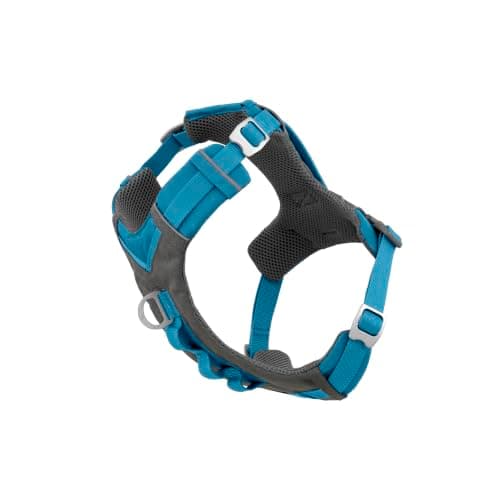
On a long hike, pressure points become sores. Look for foam-padded chest and belly panels (Ruffwear) or breathable mesh padding (Kurgo for hot days) — not a thin nylon strap that cuts in under a pulling dog.
A handle you can actually use
A reinforced top handle is the trail feature people underrate until they need it — lifting a dog over an obstacle, spotting it on a scramble, or hauling a swimmer out of current. If your hikes involve any of that, the RuffwearWeb Master's rated handle and third strap are worth the step up. Flat, easy trails don't need it.
A fit a lunging dog can't escape
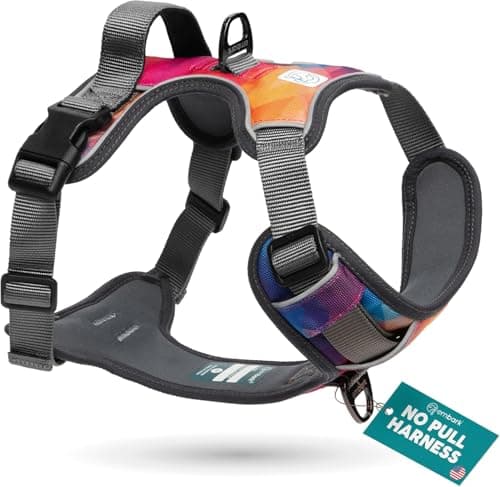
Wildlife happens. A harness with multiple adjustment points and (ideally) a third belly strap is much harder for a twisting, lunging dog to back out of than a simple two-strap design. Fit it snug — two fingers under the straps — and re-check it on the trail after the first mile.
Front clip for a puller, back clip for a hauler
A front leash ring redirects a dog that pulls; a back ring is better once your dog walks nicely or is carrying a light pack. Most harnesses here offer both — use the one that matches your dog's trail manners.
Building out a full kit? See the hiking-with-your-dog checklist, and if you're adding boots, read how to size dog boots before you buy — sizing is where most boot purchases go wrong.
One caveat on how we rank: our lens is the travel-and-trail job — a harness that packs into a bag, fits a dog again after a long drive, and stays comfortable over a five-hour day. Hard field use is a different axis, judged on what fails first rather than what carries best. If your dog works in brush and water rather than riding out to a trailhead, Hound & Field ranks the same harnesses on materials, hardware and published load ratings.