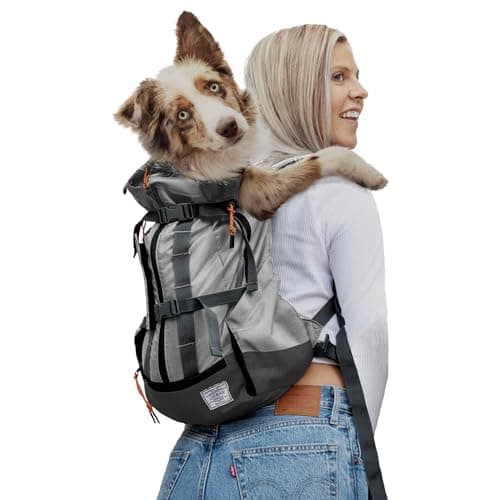
A backpack carrier is for the gap between a dog that can walk the whole trail and a dog that should not be on it at all. Small breeds on long days, short-legged dogs on rocky sections, seniors who can still enjoy an outing but not finish one, puppies before their joints are ready — all of them are better served by walking most of it and riding the rest.
The thing that separates a good pack from a bad one is not the dog compartment. It is the suspension: shoulder straps, back panel and, on the better packs, a hip belt that transfers weight to your legs. Carrying 15 pounds on your shoulders for two hours is a completely different experience from carrying it on your hips.
The K9 Sport Sacktops the list for one specific reason: it is sized by the dog's back length rather than a vague weight band, which is why it actually fits. Weight tells you nothing about whether a dog is long or compact, and that is precisely what determines fit.
The two packs at the top of this list are the ones people actually shortlist against each other, so we gave them a page of their own: K9 Sport Sack vs Kurgo G-Train decides it on fit method and on where the load sits on your body. The Urban 3 on its own is in our K9 Sport Sack review.
One thing a pack cannot fix is the weight ceiling: every carrier on this page is listed to about 18 lb or less, so a 40 lb dog that cannot walk the distance needs wheels rather than straps. Dog bike baskets and trailers covers the towed version, which takes a published 75 lb, and travel dog strollers covers the pushed one.
The ceiling this page keeps running into - roughly 18 lb across every pack in our registry - is the start of a different question for anyone with a bigger dog. The options above that weight are a support harness, a ramp or a stroller with a published capacity, and we compare all five mechanisms side by side in how to carry a large dog that cannot walk far.
The short answer
Quick picks
#ad · Live prices from the Amazon Product API, as of October 21, 2026. Where we have no verified live price we show none — we would rather leave a gap than print a number that has rotted.
In detail
The picks, in full
Serious carrying — trails and long days
K9 Sport Sack Urban 3
Sized by back lengthLegs-out designPadded shoulder strapsDual-use daypack
The category standard. Sized to the dog's back length rather than a vague weight band, which is why the fit works.
- Carry comfort
- 10
- Ventilation
- 9
- Dog security
- 9
- Weight capacity
- 8
- Value
- 7
Pros
- +Sizing by back length rather than weight is the single reason these fit properly where generic packs do not
- +Legs-out design lets the dog sit naturally instead of being folded into a bag
- +Shoulder straps and back panel are built like a hiking pack, so the load is bearable for hours rather than minutes
Cons
- −Premium price, and the size-specific fit means it does not carry over to a second, different dog
- −Legs-out means a dog that wants to hide has nowhere to hide
Don't buy this if…
…you need it twice a year for a city errand. The comfort engineering is for hours under load, and you are paying for it either way.
Carrying the dog and the day's kit
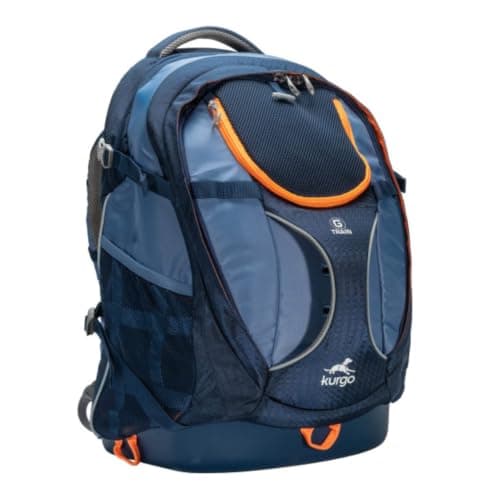
Kurgo G-Train Pet Carrier Backpack
Hip beltStorage compartmentsVentilated panelsKurgo travel line
The most gear-like pack here — a proper hip belt and storage, for people who carry more than the dog.
- Carry comfort
- 9
- Ventilation
- 8
- Dog security
- 9
- Weight capacity
- 9
- Value
- 7
Pros
- +A real hip belt moves the load off your shoulders, which is the difference between two miles and six
- +Storage compartments mean the water, bowl and treats travel in the same pack rather than a second bag
- +Kurgo hardware and fabrics are the same ones on its car and trail gear, which is a known quantity
Cons
- −The most expensive carrier in this group, and the hip belt is wasted on short trips
- −Heavy empty — you feel the pack before the dog is in it
Don't buy this if…
…you only carry the dog for short bursts. The suspension is built for distance and costs accordingly.
First-timers and city use
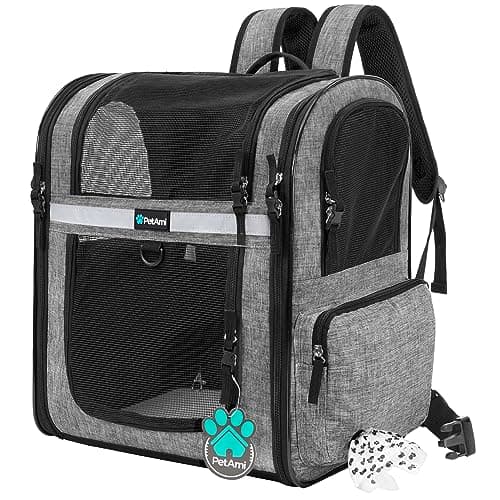
PetAmi Ventilated Dog Backpack Carrier
Four-way entryVentilated mesh panelsListed to 18 lbPadded straps
Four-way entry and a stated 18 lb ceiling at a budget price — the sensible first backpack carrier.
- Carry comfort
- 7
- Ventilation
- 9
- Dog security
- 8
- Weight capacity
- 7
- Value
- 9
Pros
- +Four entry points means you can load a reluctant dog the easy way instead of the designed way
- +A published weight ceiling, which the cheap end of this category usually omits
- +Mesh on multiple faces keeps airflow up, which is the main welfare issue in an enclosed carrier
Cons
- −Shoulder straps are padded but there is no real hip belt, so long carries land on your shoulders
- −Enclosed shape suits a dog that settles; an anxious dog gets less to look at than in a legs-out pack
Don't buy this if…
…you are hiking miles with a heavy dog. Without a hip belt the load is all on your shoulders and you will feel it.
One bag that covers every carry mode
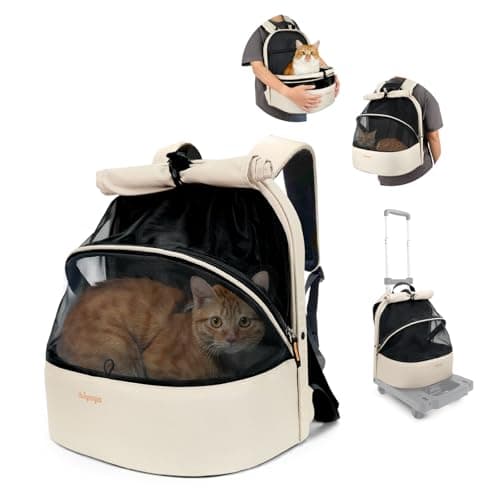
ibiyaya 3-in-1 Travel Backpack Carrier
Backpack, front pack and optional wheelsZipper-free closureFoldableListed as airline approved
Backpack, front pack or wheels, and zipper-free so a paw or a tail cannot get caught in a zip.
- Carry comfort
- 8
- Ventilation
- 8
- Dog security
- 8
- Weight capacity
- 7
- Value
- 7
Pros
- +Three carry modes from one bag means the same purchase covers the airport, the trail and the vet run
- +Zipper-free closure removes the pinch risk that makes some owners nervous about enclosed carriers
- +Folds down for storage rather than living permanently assembled in a hallway
Cons
- −A three-way convertible is by definition not the best at any single mode
- −Small brand presence in the US, so replacement parts and sizing advice are thin on the ground
Don't buy this if…
…you know which mode you need. A dedicated backpack out-carries this on the trail, and a dedicated roller out-rolls it in a terminal.
Anxious small dogs and puppies
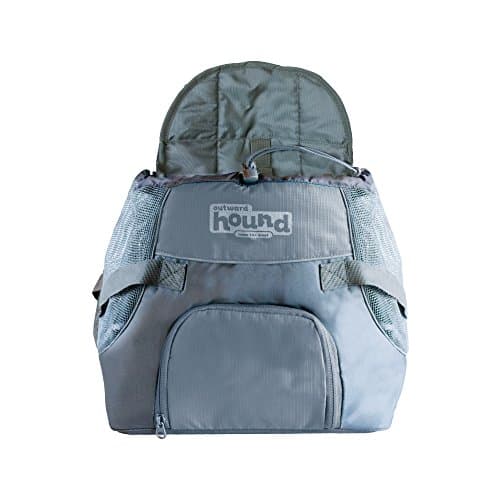
Outward Hound PoochPouch Front Carrier
Front-wornSmall size listedAdjustable strapsLegs-out opening
Front-worn, so you can see the dog and the dog can see you. The right shape for an anxious small dog.
- Carry comfort
- 6
- Ventilation
- 8
- Dog security
- 7
- Weight capacity
- 5
- Value
- 9
Pros
- +Front carry means constant eye contact, which settles an anxious dog in a way a back-worn pack cannot
- +You can see and adjust the dog without taking the pack off, which matters on a busy street
- +Cheapest way into carrying a small dog, by a wide margin
Cons
- −Front-loading throws your balance backwards and gets tiring far faster than a back-worn pack
- −Small sizing only — this is genuinely for little dogs and puppies
Don't buy this if…
…your dog is over about 10 lb or you are walking distance. Front carry is for short, calm outings with a small dog.
Choosing a dog backpack carrier
Measure the dog's back, not its weight
Back length is the measurement from the base of the neck to the base of the tail. Two 18 lb dogs can differ by four inches in back length, and the long one will not fit a pack sized for the compact one no matter what the weight chart says. Measure first, then shop.
Legs-out or fully enclosed
Legs-out packs (K9 Sport Sack) let a dog sit in a natural posture with its head up, which most dogs prefer and which makes for a more stable load on your back. Enclosed packs (PetAmi) contain the dog completely, which suits a nervous dog that would rather not see the world go by — and is the safer choice in a busy street or a crowded trail head.
Front carry has a narrow, real use case
A front-worn carrier (Outward Hound) keeps constant eye contact, which genuinely settles an anxious small dog. It also throws your balance backwards and gets tiring fast. Buy it for short outings with a nervous dog, not for distance.
Look for a hip belt if you are going far
This is the single feature that determines how far you can comfortably go. A pack with a proper hip belt (Kurgo) moves the load off your shoulders in a way that turns two miles into six. Without one, a heavy dog becomes uncomfortable much sooner than you expect.
Ventilation is a welfare issue
A dog in an enclosed pack on a warm day is in a small hot space with limited airflow, and panting is its only cooling mechanism. Multiple mesh panels are not optional in summer. Check the dog regularly, stop in shade, and pair with a cooling vest or plenty of water on hot days. The cold-weather equivalent of that check is best dog winter coats — a dog riding in a pack is a stationary dog in moving air, which is the case insulation is for.
Respect the published weight limit
Where a maker publishes a ceiling, treat it as real — it reflects the stitching, the strap anchors and the frame. Where none is published, be conservative. And remember the limit is about the pack, not about you: a 20 lb dog plus water plus your own kit is a serious load over distance.
What we would actually buy
Distance hiking: the K9 Sport Sack. Carrying the dog and the day's gear: the Kurgo. A first pack on a budget: the PetAmi. One bag that also rolls through an airport: the ibiyaya. A nervous small dog on short outings: the Outward Hound.
How we picked
We do not test the gear
We compiled the manufacturers' published dimensions and specs, cross-checked them against airline under-seat limits and published safety certifications, read the owner reviews, and scored each product against a published rubric. The scores are judgments from that research — they are not measurements we took, because we do not own a lab and we are not going to pretend we do. Where we could not verify a fit or a claim, we say so on the page.
Questions
Frequently asked
How do you size a dog backpack carrier?+
By back length — the measurement from the base of the neck to the base of the tail — not by weight. Two dogs of the same weight can differ by several inches in back length, and that is what determines whether the dog fits. Measure the dog, then check the maker's back-length chart before looking at weight ranges.
How much weight can you carry in a dog backpack?+
Most packs publish a ceiling somewhere between about 15 and 30 lb depending on the model, and you should treat that as a real limit rather than a suggestion — it reflects the stitching and strap anchors. Separately, consider your own limits: a 20 lb dog plus water and gear is a serious load over several miles.
Are dog backpack carriers safe for hiking?+
Yes, used sensibly. The main risks are heat in an enclosed pack, a dog that is not secured to the internal tether, and overloading a pack past its rating. Check the dog regularly, stop in shade, keep the internal leash clipped, and never use a pack that lets the dog shift enough to unbalance you on uneven ground.
Can you fly with a dog backpack carrier?+
Some are designed for it and some are not — a backpack carrier still has to fit under the airline seat, which is a size question rather than a style question. If flying is the main use, shop from our airline carrier roundup instead, where fit against published under-seat limits is the ranking criterion.
Legs-out or enclosed dog carrier backpack?+
Legs-out suits confident dogs and makes for a more stable load with the dog's head up. Enclosed suits nervous dogs that would rather not watch the world, and is safer around traffic and crowds. Ventilation matters more in the enclosed style, so check the mesh panel coverage before buying one for summer.
Receipts
Sources
We do not run a testing lab, and we do not pretend to. Product dimensions and safety claims come from the manufacturer's own listing; airline limits come from the airline's published policy, with the date we checked it. Where we could not verify something, we say so on the page rather than quietly leaving it out. Read our full method.