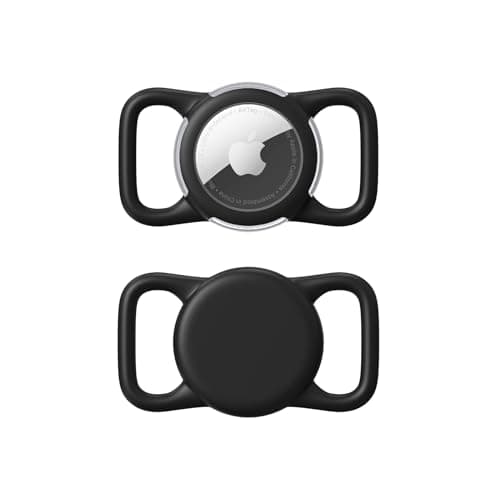
An AirTag on a dog collar is a cheap, sensible piece of travel insurance — and the thing that most often goes wrong with it is not the tag, the battery or the app. It is the holder. A stretched silicone case in long grass is the single most common way people lose an AirTag off a dog.
So this roundup ranks holders on three things: whether the tag stays in when a dog shakes hard, whether water gets to it, and how much bulk it adds to a collar a dog has to wear all day. Price barely features — everything here is inexpensive, and buying the cheapest one is a false economy measured against replacing a tag.
Before you buy anything, be clear about what you are buying. An AirTag is not a GPS tracker. It has no live location of its own; it is found when a nearby iPhone reports it. In a town that is fast and effective. In empty countryside — where a lost dog most needs finding — it can do nothing at all. Our GPS versus AirTag comparison covers that trade-off properly, and it is worth reading before you rely on one.
Once you have picked a holder, the setup matters as much as the mount - pairing before you fit it, Lost Mode, where on the collar it goes and the annual battery job are all in how to put an AirTag on a dog collar.
Choosing an AirTag collar holder
Retention beats every other feature
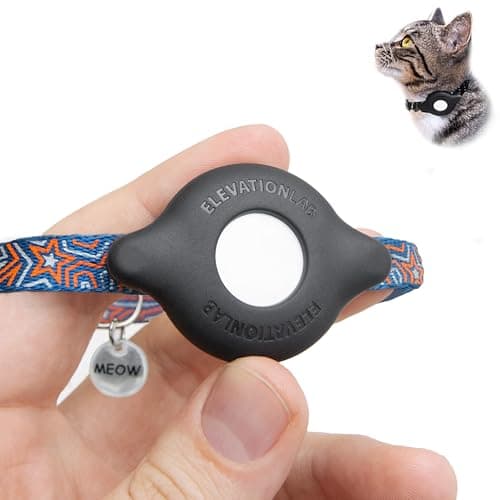
A holder that loses the tag has failed completely, regardless of how good it looked. Rigid mounts with a screw or clip closure (Elevation Lab) hold better than stretch silicone, which loosens over months of being pulled on and off. If you only take one thing from this page: silicone slip-on cases are convenient and they are the ones that lose tags.
Check your collar width before you order
Rigid mounts are cut for a specific strap width range and simply will not fit outside it. Measure your collar — most dog collars are between three-quarters of an inch and an inch and a half — and check the listing. This is the most common reason a well-reviewed holder gets returned.
Waterproof matters if the dog swims, and only then
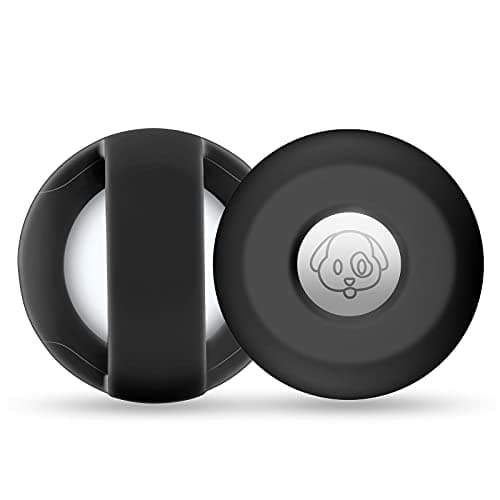
An AirTag is water resistant, not waterproof, and a holder that lets water pool around it is asking for trouble on a dog that swims. A sealed slide-on case is the right answer there. For a dog that never goes near water, weatherproofing is a non-issue and you should optimize for retention and low bulk instead.
Dangle versus flat
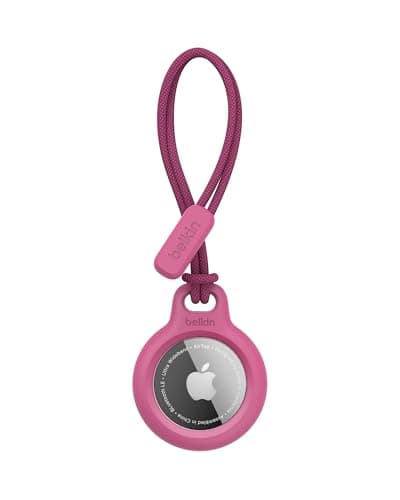
Strap-hung holders (Belkin) swing, click against tags, and catch on things. Flat collar mounts sit against the strap and stay quiet. On a small dog, where the tag is a bigger proportion of the collar, flat mounting is not a preference — it is the difference between a dog that tolerates the collar and one that scratches at it.
Buy a spare
These cost very little and they are consumable. A second holder in the glovebox means a failed one on day two of a trip is an annoyance rather than the end of your tracking plan. Same logic as a spare collapsible bowl.
What we would actually buy
For most dogs: the Elevation Lab mount, because retention is the whole job and it sits flat. For a dog that swims: the sealed slide-on holder. For an all-purpose holder that also works on a bag or a harness: the Belkin. And if you want two spares in a drawer, the Cibaabo silicone case is fine for that — just do not make it your only one.