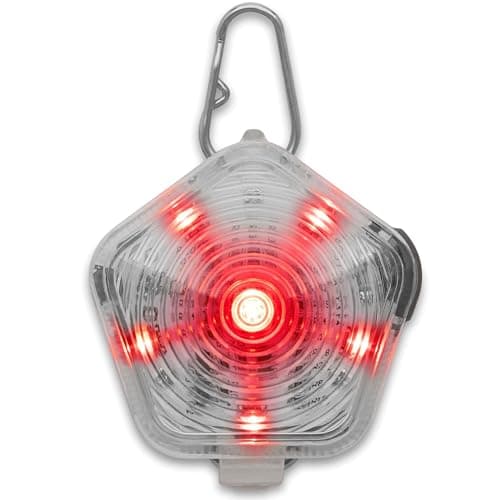
Travel puts dogs in dark unfamiliar places more than home life does: a rest stop off a highway at 10pm, a campsite with no lighting, an unfamiliar street on the last walk of the day. A black or brown dog off-leash at a campsite is genuinely invisible at ten feet, and drivers at a rest area are not expecting one.
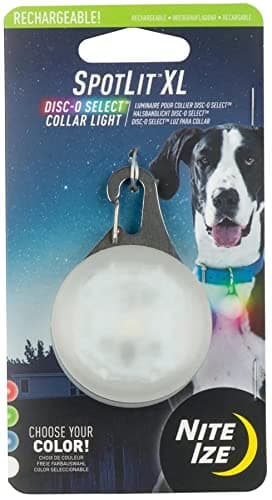
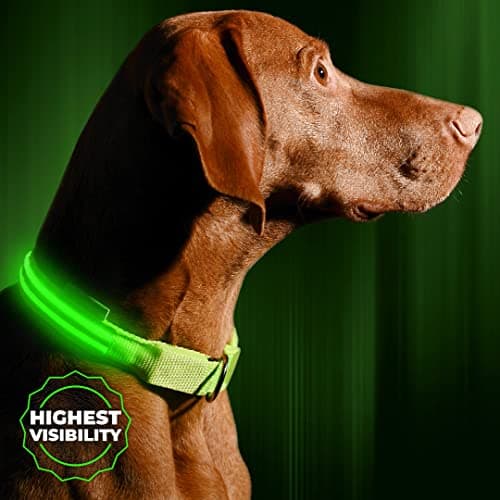
There are two shapes of solution. A clip-on light attaches to the existing collar or harness, which means the dog keeps its tags and any AirTag holder where they are. A lit collar replaces the collar with an illuminated band, which is visible from every angle including the side — the angle that matters to a car and the one a single point of light misses.
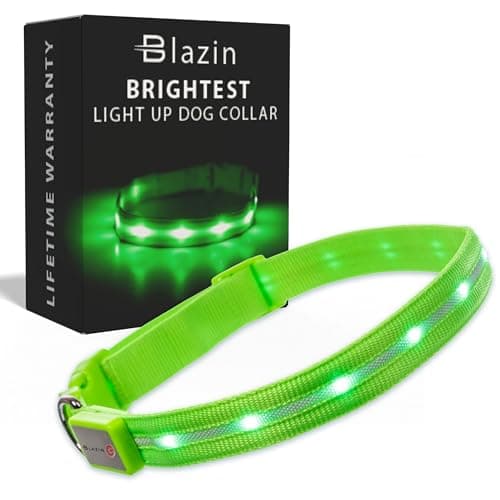
The Ruffwear leads on outright quality and a published waterproof rating; the Blazin is the brightest band if being seen from a distance is the whole point.
Choosing a dog safety light
Clip-on or lit collar
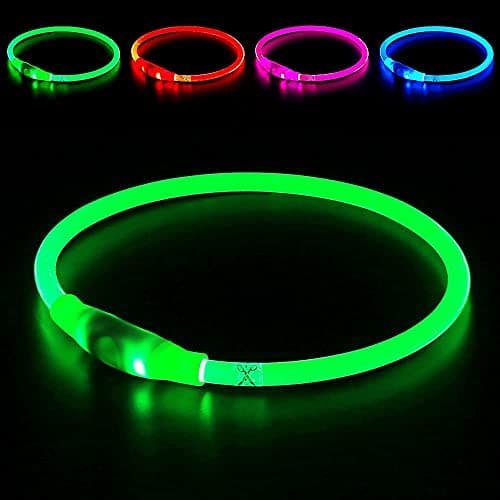
Clip-on (Ruffwear, Nite Ize) keeps your existing collar and everything already on it, which matters if the dog wears a tracker and engraved tags you would rather not move. Lit collars (Illumiseen, Blazin, BSEEN) are visible from the side and give a much clearer sense of the dog's shape and direction. If a car is the hazard, buy the band. If a tracker is on the collar, buy the clip.
Waterproof rating, not "water resistant"
These are electronics on an animal that swims, rolls in wet grass and stands in rain. A published waterproof rating (Ruffwear) is a different claim from a vague water-resistant note, and the charging port cover is where the cheap ones let water in. If your dog goes near water at all, this is the specification to pay for.
Brightness costs runtime — pick the trade deliberately
The brightest lit collars run down fastest. On an unlit rural road you want maximum output and you will charge more often. In a lit town or a campsite you want a modest steady glow that lasts the whole trip. Both are correct answers to different questions; the mistake is buying maximum brightness and then finding it flat on night three.
Steady beats flashing for judging distance
Flashing catches attention better at range, which is why it suits roadside walking. Steady light makes it much easier for you to judge where the dog actually is and how far away, which is what you want at a campsite. Get a light with both modes and use them for different jobs.
Rechargeable, essentially always
Coin-cell lights are cheap and you will not have the right battery in a motel at 11pm. Every light here is USB rechargeable, which means it charges from the same source as your phone. Charge it on the drive.
Attachment: check it survives a shake
Dogs shake hard and often. A clip that opens under that is a light lost in long grass on night one. Prefer a positive closure over a friction fit, and check it after the first shake rather than discovering the problem later.
A light is not a leash
Worth saying plainly: being visible is not the same as being under control. A lit dog on an unfenced campsite near a road is still a dog near a road. Use the light alongside a leash or a long line, not instead of one.
What we would actually buy
A dog that swims or a genuinely wet climate: the Ruffwear. One light for the dog and the tent zip: the Nite Ize. Roadside walking where side visibility matters: the Illumiseen. Unlit rural roads: the Blazin. A cheap second one for the other dog: the BSEEN.