Skip to content
Paw & Passport

HUB 02 · Car Travel Safety

Traveling With a Senior Dog

Most old dogs travel perfectly well. What changes is the margin - for stiffness, for heat, for bladder, and for how long they can be somewhere unfamiliar.

By Stephen V.Updated How we research
#ad

We earn a commission when you buy through our Amazon links, at no extra cost to you. It never affects our rankings, and we say so when the cheaper product is the better buy. How this works.

Old dogs are often better travelers than young ones. They sleep more, they are less reactive, and they have done this before. What changes with age is not the willingness - it is the margin. A stiff dog cannot hold one position for four hours. A dog with a weaker bladder cannot wait as long. And a dog whose heat tolerance has dropped will get into trouble on a day that would not have troubled it at four years old.

Adjust for those four things and most senior dogs travel as well as they ever did.

Stop more, and walk at every stop

Move from the usual two-to-three-hour rhythm to roughly every 90 minutes to two hours, and make the stop a walk rather than a stand. The point is not only the toilet break: arthritic joints stiffen when they are held still, and five minutes of slow walking undoes an hour of it. A dog that goes from car to hotel room with no walking in between is a dog that struggles to get up the next morning.

Ask your vet about pain relief timing before a long trip, especially if your dog is already on medication for joints. Getting a dose in before a driving day rather than after it is often the difference, and it is exactly the sort of question a vet answers in one phone call.

Nobody jumps into anything

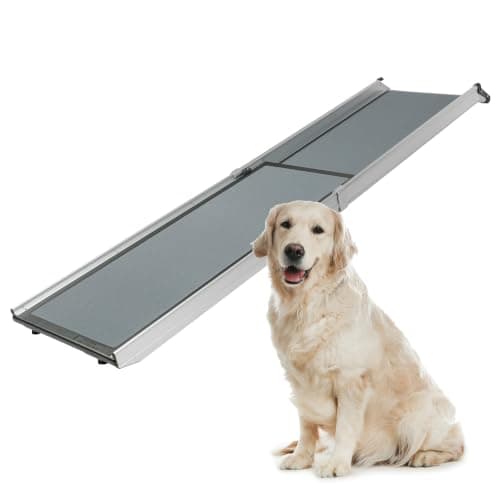
The jump into a car boot is a repeated high-impact landing on front legs, and it is one of the most avoidable sources of pain in an older dog. A ramp fixes it, and a ramp is worth more than any other single item on this page.

Two practical notes. First, train it before the trip - a ramp a dog has never seen is a wobbly plank at a service station, and dogs refuse it. Ten minutes a day for a week, flat on the ground first, gets you a dog that walks up it without thinking. Second, a telescoping ramp with a grippy surface and a decent width is worth the extra over a narrow folding one, because an unsteady dog needs room for error. Our ramp roundup ranks the category properly.

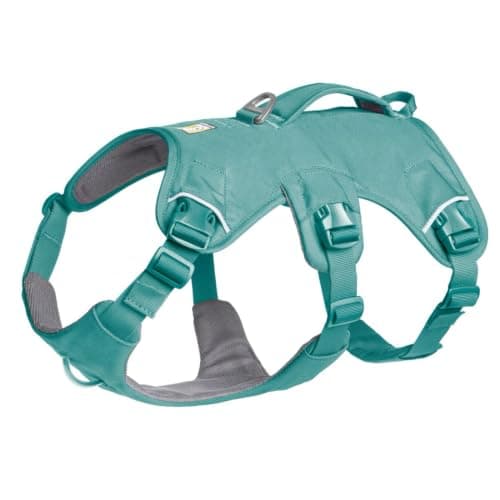
For the lifts a ramp cannot solve - a high tailgate, a step at a hotel entrance, a slippery floor - a support harness with a solid handle over the shoulders lets you take weight off the front end without hauling on a collar or a chest strap.

The short answer

Quick picks

#ProductBest forScorePrice
01
PetSafe PetSafe Happy Ride Extra Long Telescoping Dog Ramp
PetSafe Happy Ride Extra Long Telescoping Dog Ramp

The long one. Length is what makes a ramp gentle enough for a dog with bad hips to actually use.

Tall vehicles and arthritic dogs
8.2
$152.96Amazon
02
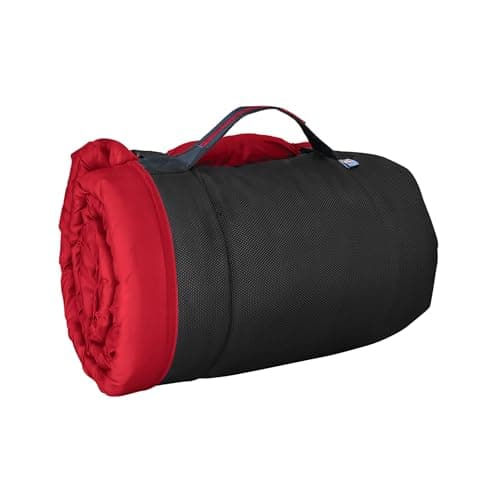
Kurgo Kurgo Loft Wander Dog Bed
Kurgo Loft Wander Dog Bed

The best balance here: enough loft to be a real bed, still folds into a trunk without a fight.

Road trips and hotel rooms
8.0
$60.99Amazon
03
Ruffwear Ruffwear Web Master Support Harness
Ruffwear Web Master Support Harness

The one with a real lifting handle and a third strap — for technical terrain and dogs you sometimes carry.

Scrambles, lifts and mobility support
8.6
$79.99Amazon

#ad · Live prices from the Amazon Product API, as of Sep 6, 2026. Where we have no verified live price we show none — we would rather leave a gap than print a number that has rotted.

In detail

The picks, in full

01
PetSafe PetSafe Happy Ride Extra Long Telescoping Dog Ramp

Tall vehicles and arthritic dogs

PetSafe Happy Ride Extra Long Telescoping Dog Ramp

TelescopingExtra longHigh-traction surfacePetSafe Happy Ride line
8.2/10

The long one. Length is what makes a ramp gentle enough for a dog with bad hips to actually use.

Grip
9
Weight capacity
9
Packed size
7
Setup ease
8
Value
8

Pros

  • Extra length means a shallower angle, and angle is the whole reason a dog refuses a ramp
  • Telescoping collapses to roughly half its extended length, so it still fits a trunk
  • High-traction surface rather than smooth plastic, which is what stops a nervous dog slipping once and never trying again

Cons

  • Priciest ramp here, and heavy enough that lifting it in and out is its own small chore
  • Telescoping sections collect grit and need occasional cleaning to slide properly

Don't buy this if…

your vehicle is low. A long ramp on a sedan is a shallow slope taking up an unnecessary amount of trunk.

$152.96View on Amazon

Price as of Sep 6, 2026. Prices change — Amazon's at checkout is the one that counts.

#ad · we may earn a commission from this link to PetSafe Happy Ride Extra Long Telescoping Dog Ramp

02
Kurgo Kurgo Loft Wander Dog Bed

Road trips and hotel rooms

Kurgo Loft Wander Dog Bed

Padded loftFoldableTravel lineLarge size listed
8.0/10

The best balance here: enough loft to be a real bed, still folds into a trunk without a fight.

Packability
7
Padding
9
Durability
8
Cleaning
8
Value
8

Pros

  • Actually padded, so a dog settles on it the way it settles on a bed at home — which is the point on night two of a trip
  • Folds without needing to be rolled and strapped, so it goes back in the car in seconds
  • Kurgo's travel focus shows in a shell that wipes clean rather than absorbing everything

Cons

  • Too bulky to backpack with — this is car-and-hotel gear
  • Costs more than the roll-up mats for comfort you only notice on longer trips

Don't buy this if…

you need it for a single overnight. A cheap roll-up mat covers one night; the loft earns out over a week.

$60.99View on Amazon

Price as of Sep 6, 2026. Prices change — Amazon's at checkout is the one that counts.

#ad · we may earn a commission from this link to Kurgo Loft Wander Dog Bed

03
Ruffwear Ruffwear Web Master Support Harness

Scrambles, lifts and mobility support

Ruffwear Web Master Support Harness

Reinforced grab handleFive-point fitThree chest/belly strapsReflective
8.6/10

The one with a real lifting handle and a third strap — for technical terrain and dogs you sometimes carry.

Fit & adjust
9
Durability
9
Control/handle
10
Comfort
8
Value
7

Pros

  • The padded top handle is built for actual lifting — over a boulder, into a kayak, up a ladder
  • A third belly strap makes it very hard for a twisting dog to back out of
  • Doubles as mobility support for older dogs who need a hand on steep ground

Cons

  • More harness than a mellow trail walk needs — and priced accordingly
  • The extra strap takes a minute longer to fit than a two-strap harness

Don't buy this if…

your hikes are flat and your dog is young and sure-footed. You're paying for a handle and a strap you won't use — the Front Range is the better-value everyday trail harness.

$79.99View on Amazon

Price as of Sep 6, 2026. Prices change — Amazon's at checkout is the one that counts.

#ad · we may earn a commission from this link to Ruffwear Web Master Support Harness

Bedding is not a comfort item any more

For a young dog, a travel bed is a nice-to-have. For an arthritic one it is the difference between sleeping and lying awake shifting position. What matters is thickness that survives compression - a thin fleece pad flattens under a bony hip and does nothing - and a non-slip base, because a bed that slides on a hotel floor is a bed an unsteady dog will not settle on.

Bring the dog's own bedding if you can fit it, and its own blanket if you cannot. The familiar smell does real work in an unfamiliar room, and for a dog with any cognitive decline it does more work still. The travel bed roundup covers the packable options.

Heat, cold and slippery floors

  • Heat tolerance drops with age. An older dog, especially an overweight or heavy-coated one, has less margin than it used to. The whole hot-weather protocol in keeping a dog cool in the car applies with less slack.
  • So does cold tolerance. Thin old dogs get genuinely cold in a car overnight or in an air-conditioned hotel room. Pack a coat and a blanket even in summer.
  • Hotel floors are a hazard. Hard tile and polished wood are where old dogs slip. Lay a towel or a yoga mat along the route from the bed to the door, and pick a ground-floor room if you can - stairs and an unfamiliar lift are both harder than they look.

Medication, records and the vet at the other end

Take more medication than the trip needs - a delay is not the moment to discover you packed exactly enough. Keep it in the original labeled packaging, carry a copy of the prescription, and take a photograph of the label in case the bottle goes missing.

Before you leave, look up the nearest 24-hour emergency veterinary clinic to where you are staying and save it in your phone. For a senior dog this is a five-minute task that removes the worst version of a bad night - searching for an emergency vet in an unfamiliar town at 2am, on a phone, with a sick dog.

If your dog has a chronic condition, ask your own vet before booking whether the trip is sensible at all, and specifically whether flying is. Air travel is harder on older dogs than driving, and the AVMA's guidance on senior pets is worth reading with your own dog's health record in front of you.

The same thinking applies once you arrive. An older dog that manages a 20-minute walk is not going to manage a day of sightseeing, and the usual fix is wheels: our travel dog stroller picks are ranked on folded size and listed weight capacity, which are the two numbers that decide whether one actually comes on the trip.

The honest question

Sometimes the right answer is that the dog does not come. A dog with advanced cognitive decline, one that becomes distressed away from home, or one whose mobility makes hotel rooms and rest stops genuinely painful may be better with a familiar sitter in its own house than with you in a strange one.

That is not giving up on traveling with your dog. It is the same judgment you have been making its whole life about what it actually enjoys - applied honestly to a dog whose answer has changed. Plenty of thirteen-year-olds still love a road trip. Some do not, and they tell you if you are watching.
How we picked

We do not test the gear

We compiled the manufacturers' published dimensions and specs, cross-checked them against airline under-seat limits and published safety certifications, read the owner reviews, and scored each product against a published rubric. The scores are judgments from that research — they are not measurements we took, because we do not own a lab and we are not going to pretend we do. Where we could not verify a fit or a claim, we say so on the page.

Questions

Frequently asked

How often should a senior dog stop on a road trip?
Every 90 minutes to two hours, and every stop should include five to ten minutes of slow walking rather than just a toilet break. Arthritic joints stiffen when held in one position, and short walks undo it. Ask your vet about timing joint medication around driving days - a dose before a long leg often makes the difference.
Should I use a ramp for my older dog?
Yes, if the dog jumps into a car boot or a high back seat. The jump is a repeated high-impact landing on the front legs and it is one of the most avoidable sources of pain in an older dog. Train the ramp at home before the trip - flat on the ground first - because a dog meeting a wobbly ramp for the first time at a service station will refuse it.
Is it safe to fly with an old dog?
It depends entirely on the individual dog, and it is a question for your own vet with the health record in front of them. Air travel is harder on older dogs than driving: less control over timing, more time in a carrier, and no ability to stop. If your dog has heart, kidney or respiratory disease, or significant cognitive decline, the honest answer is often to drive or to leave them with a familiar sitter.
What bedding does a senior dog need for travel?
Something thick enough to stay padded under a bony hip - thin fleece pads compress to nothing - with a non-slip base so it does not slide on a hotel floor. Bring the dog's own bedding or at least its own blanket: the familiar smell settles an unfamiliar room, which matters more for older dogs than younger ones.
When should I leave my senior dog at home instead?
When the trip would cost the dog more than it gains. Advanced cognitive decline, real distress away from home, or mobility that makes rest stops and hotel rooms painful are all reasons a familiar sitter in the dog's own house is the kinder plan. It is the same judgment you have always made about what your dog enjoys, applied to a dog whose answer has changed.

Keep reading

Receipts

Sources

We do not run a testing lab, and we do not pretend to. Product dimensions and safety claims come from the manufacturer's own listing; airline limits come from the airline's published policy, with the date we checked it. Where we could not verify something, we say so on the page rather than quietly leaving it out. Read our full method.