RV travel is the best format there is for a dog. The bed comes with you, the routine barely changes, there is no hotel policy to negotiate, and the dog is with you for the whole trip rather than waiting somewhere. It also concentrates two risks that road trips normally spread out: what happens to a loose dog when you brake, and what happens to a dog left in a parked vehicle.
Moving: the dog is not furniture
The most common RV setup - dog loose in the living area while you drive - is the one that does not survive a hard stop. Everything unsecured in an RV becomes a projectile, and a 65 lb dog is the heaviest unsecured thing in most of them. The dog also has nothing to brace against on a slippery floor at highway speed.
Two workable options:
- A crate, strapped down.Anchored to a fixed point with ratchet straps or proper tie-downs, positioned low and against a wall rather than free-standing. This is the standard setup and it doubles as the dog's bedroom at the campsite. The anchoring method is the same problem as in a car - see securing a crate.
- A crash-tested harness on a fixed belt, if your RV has a seating position with a genuine seat belt anchor. Class B vans usually do; larger motorhomes often do not have a usable one in the living area.
What is not an option is a dog riding in a towed trailer. There is no climate control, no way to check on the animal, and no way to respond if something goes wrong. Towable trailers are for the gear, not the dog.
Parked: the heat problem is the whole problem
An RV parked in the sun behaves like a car with more insulation and more glass - slower to heat, but it still gets there, and it holds heat longer once it has. The AVMA's figures for vehicles are the right mental model: interior temperatures climb roughly 20 degrees Fahrenheit in ten minutes and over 40 in an hour, and opening windows does not fix it.
If you want to leave the dog in the RV while you go out - which is most of the reason people take a dog in an RV at all - you need three things, and all three, not one:
- Air conditioning that will run unattended, which usually means shore power at a campsite or a generator you are content to leave running.
- A temperature monitor that alerts your phone, and cell signal to receive the alert. Without the second half, the first is decoration.
- A hard ceiling on how far you go and for how long. If you cannot get back in fifteen minutes, the plan is not a plan.
Many campgrounds also prohibit leaving a pet unattended in an RV or on a site outright. Check the rules for your specific site rather than the general policy of the chain.
The short answer
Quick picks
#ad · Live prices from the Amazon Product API, as of October 21, 2026. Where we have no verified live price we show none — we would rather leave a gap than print a number that has rotted.
In detail
The picks, in full
Beach days and shaded campsites
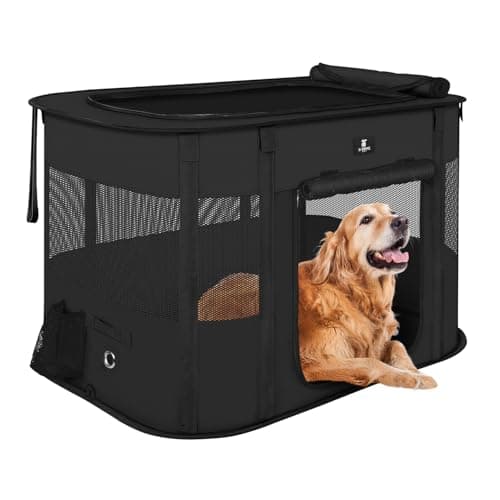
X-ZONE PET Portable Foldable Dog Playpen
Soft-sided pop-upFoldable45 in size listedIndoor and outdoor
A soft pop-up pen that doubles as shade — the one that behaves like a tent rather than a fence.
- Setup speed
- 10
- Containment
- 6
- Packability
- 9
- Durability
- 6
- Value
- 8
Pros
- +Pops up in seconds with no panel assembly, which is the whole appeal after a long drive
- +Fabric sides and a covered top give shade that a bare wire pen cannot, and shade is the real risk on a hot day
- +Collapses into a flat disc that slides behind a seat rather than filling the trunk
Cons
- −Soft sides are chewable and a determined dog will get through them
- −Light enough to be moved by wind if it is not staked or weighted
Don't buy this if…
…your dog chews fabric. A soft pen is a comfortable place for a calm dog and a puzzle for a destructive one.
Crate liners and spares
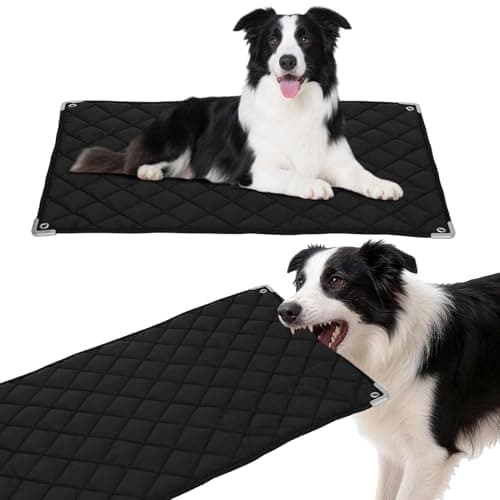
Brobear Chew Proof Crate Pad
Bite- and scratch-resistant fabricWaterproof leak-proof layerWipe or rinse clean35 x 22 in listed
Bite-resistant fabric over a waterproof layer, half an inch thick. The pad that lives in the crate and survives the dog that digs at it.
- Packability
- 8
- Padding
- 3
- Durability
- 8
- Cleaning
- 9
- Value
- 8
Pros
- +Built for the digging and chewing that shreds plush crate bedding, which is the usual reason a travel pad lasts exactly one trip
- +The leak-proof layer keeps an accident off the crate tray and the motel carpet, and it wipes down where it happened
- +Sized to a standard medium crate floor and folds flat, so it drops in without trimming and travels without a repack
Cons
- −Half an inch of pad — this is a liner, not a bed, and an old dog with sore joints needs more
- −Wipe or rinse only; Brobear lists no machine wash, so a properly soiled pad is a sink job
Don't buy this if…
…your dog is elderly or arthritic. Half an inch over a hard crate floor is the wrong surface for aching joints.
Car back seats and hotel floors
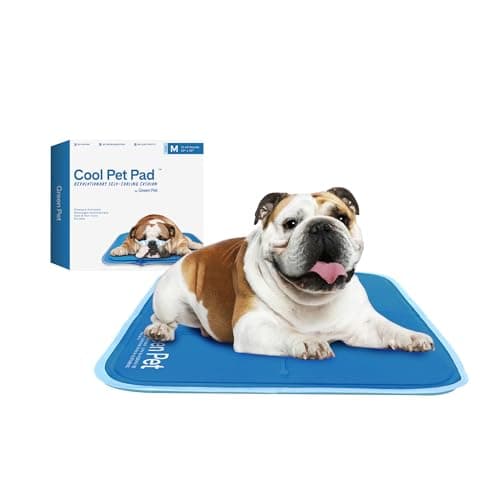
The Green Pet Shop Cool Pet Pad
Pressure-activated gelNo refrigeration neededRecharges when unusedMultiple sizes
Pressure-activated gel: no water, no freezer, no power. Put it down and it works.
- Cooling effect
- 8
- Durability
- 6
- Portability
- 8
- Cleaning
- 9
- Value
- 9
Pros
- +Needs nothing — no freezer, no soaking, no power — which is exactly right for a car or a hotel room
- +Recharges itself after about twenty minutes off the mat, so it works in cycles all day
- +The category original, with the longest owner-report record of anything here
Cons
- −Gel mats puncture, and a puncture ends the mat — not one for a digger or a chewer
- −The cooling is noticeable rather than dramatic; it takes the edge off, it does not chill a dog
Don't buy this if…
…your dog scratches at bedding. One claw through the gel layer and it is finished.
Actual live GPS location
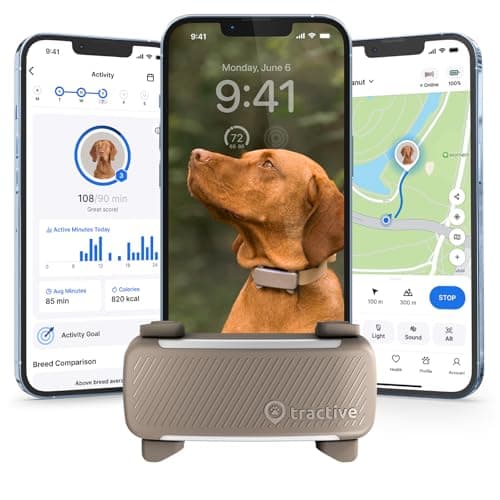
Tractive Smart Dog GPS Tracker
LTE + GPSUnlimited rangeWaterproofSubscription required
The real GPS pick. Unlimited range and live tracking — as long as you accept it needs a subscription.
- Location accuracy
- 9
- Battery life
- 8
- No subscription
- 2
- Size/weight
- 8
- Value
- 7
Pros
- +True cellular GPS: it reports live location anywhere there's a mobile signal, not just within Bluetooth range
- +Waterproof and light enough to ride on a collar all day
- +Live tracking and virtual fences are the features an escape-prone dog actually needs
Cons
- −Requires a paid subscription — the device price is not the real cost of ownership
- −Battery is measured in days or weeks, not months — Tractive lists up to two weeks with Power Saving Zones, and about six days without them
Don't buy this if…
…you won't pay a monthly fee. Without the subscription a cellular tracker is a paperweight — if you refuse the fee, an AirTag is the honest alternative.
The campsite setup
Outside the RV, the containment problem is the same as it is for tent camping and it has the same solutions. A pop-up pen gives the dog a defined outdoor space while you are cooking or setting up, and it is much better than a tether at a picnic table for the same reason a room is better than a radius. Stake it or weight it - a light pen is a sail in a gust - and never leave a dog in one unattended. If you do use a tether, buy for the ground you park on rather than the dog: most RV pads are gravel, where a screw-in stake barely holds, and best dog tie-outs for camping sorts the field by what each one needs to anchor to.
Inside, the dog needs a fixed spot rather than the run of a small space. A crate pad or a mat in the same place every night gives an RV the one thing it otherwise lacks: a corner that is the dog's in a room that keeps changing what it looks out onto. Our campsite gear guide covers the rest of the outdoor list, and the playpen roundup ranks the pens.
Floors, steps and small-space living
- RV floors are slippery. Vinyl plus dog claws plus movement is how older dogs hurt themselves. A runner or a couple of rubber-backed mats along the main route fixes it for very little money.
- The entry steps are steep. Steeper than a house, often metal, often wet. A ramp or a solid step is worth having for any dog that hesitates, and essential for a senior dog.
- Everything is at nose height. Counters in an RV are lower and closer. Assume anything left out will be investigated.
- Slide-outs are a crush risk. Know where the dog is before you operate one, every single time.
Water, waste and the bits people forget
Carry more water than you think, and offer it more often than at home - RV interiors are dry and dogs drink more on the road. A weighted or non-tip bowl saves you mopping a floor that is already small. Keep the food sealed rather than in an open bag: an RV that smells of kibble attracts exactly the wildlife a campsite already has too much of, and the sealed food container roundup covers the options.
An RV is the one trip where a heavy reusable portable dog potty beats a disposable tray: you are parked, you have water, and a draining unit gets a permanent corner instead of a slot in a suitcase. It matters most for overnight stops in lots with no grass and for a dog that will not go on gravel.
Take a tracker. RV parks are unfenced, full of unfamiliar smells and other dogs, and doors get left open while people load and unload. This is one of the situations where a live GPS unit rather than a Bluetooth tag genuinely earns its subscription - see the tracker rankings and, if the worst happens, what to do if your dog gets lost while traveling.
The honest summary
An RV is a great way to travel with a dog, provided you treat it as a vehicle when it moves and as a vehicle when it is parked in the sun. The people who get into trouble are the ones who treat it as a house in both states - a loose dog on a highway, or a dog left in a hot box because it felt like leaving a dog at home.
How we picked
We do not test the gear
We compiled the manufacturers' published dimensions and specs, cross-checked them against airline under-seat limits and published safety certifications, read the owner reviews, and scored each product against a published rubric. The scores are judgments from that research — they are not measurements we took, because we do not own a lab and we are not going to pretend we do. Where we could not verify a fit or a claim, we say so on the page.
Questions
Frequently asked
Can a dog ride loose in an RV while driving?+
It is legal in most places and it is not safe. Everything unsecured in an RV becomes a projectile in a hard stop, and a dog on a slippery floor has nothing to brace against at highway speed. Use a crate strapped to a fixed point, or a crash-tested harness on a genuine seat belt anchor if your RV has one in the living area.
Can I leave my dog alone in an RV?+
Only with air conditioning running on shore power or a generator, a temperature monitor that alerts your phone, cell signal to receive the alert, and a hard limit on how long you are away. Many campgrounds also prohibit leaving pets unattended, so check the rules for your specific site. Without all of those, the answer is no.
How hot does an RV get with a dog inside?+
Like a car, only slower to heat and slower to cool. The AVMA's vehicle figures are the right model: interiors climb about 20 degrees Fahrenheit in 10 minutes and more than 40 in an hour, and opening windows does not meaningfully change it. Extra insulation buys you minutes, not safety.
Should my dog sleep in a crate in an RV?+
It is the simplest arrangement. A crate strapped down for driving becomes the dog's bedroom at the campsite, which gives it one fixed, familiar spot in a small space that keeps changing location. If your dog does not use a crate, a mat in the same position every night does much of the same work.
Can my dog ride in a towed travel trailer?+
No. There is no climate control, no way to check on the animal while moving, and no way to respond if something goes wrong. The dog travels in the tow vehicle or in the motorhome cabin, restrained.
Receipts
Sources
We do not run a testing lab, and we do not pretend to. Product dimensions and safety claims come from the manufacturer's own listing; airline limits come from the airline's published policy, with the date we checked it. Where we could not verify something, we say so on the page rather than quietly leaving it out. Read our full method.