Skip to content
Paw & Passport

HUB 04 · Outdoor & Adventure

Hiking Harness vs Walking Harness

Four features separate them, and only one of those - the handle - is obvious from a photograph. Here is what changes when the walk becomes eight miles.

By Stephen V.Updated How we research
#ad

We earn a commission when you buy through our Amazon links, at no extra cost to you. It never affects our rankings, and we say so when the cheaper product is the better buy. How this works.

Most dogs need one harness, and for most dogs a good no-pull walking harness is that harness. The trail versions cost two to four times as much, and the honest question is what the extra money buys - because the marketing photographs are all the same dog on the same ridgeline regardless of what is actually on it.

There are four real differences. Two matter enormously on a long day and are invisible in the shop; one is obvious and is the reason most people upgrade; one is a nice-to-have that gets oversold.

1. Where the load goes when a dog pulls for six hours

A walking harness only has to be comfortable for forty minutes at a time, so it can afford narrow straps and a simple Y or H shape. Over a long day, narrow webbing concentrates load into a line across the chest and behind the front legs, and that is exactly where you find the rub marks on a dog that has done a big hike in a pavement harness.

Trail harnesses spread load with wider padded panels across the chest and under the belly, and they position the straps to clear the armpit. That is not comfort marketing - the armpit is where friction injuries actually happen, and they happen at hour four, not hour one.

2. Whether it stays put on uneven ground

A dog scrambling, jumping down off rock, or being pulled sideways by a slope loads a harness in directions a pavement walk never does. Cheaper harnesses rotate: the chest plate ends up under one leg and the back attachment ends up on a shoulder. That is uncomfortable, it makes a fitted harness suddenly loose, and a loose harness is the one a frightened dog backs out of.

Trail designs resist rotation with a fifth strap, a wider back panel, or a chest plate shaped to sit rather than slide. It is the difference you notice on the descent.

3. The handle

The obvious one, and it is genuinely useful. A solid handle over the shoulders lets you steady a dog on a narrow ledge, help it over a stile or a boulder step, and lift it into a car boot at the end of the day without hauling on a collar. For an older dog, a heavy dog, or anywhere with scrambles, it is the single feature worth paying for.

The caveat: a handle is not a lifting system. Harnesses designed for genuine vertical lifting - full support, wide belly panel, load-rated hardware - are a distinct category, and the difference matters if you are hoisting a dog rather than steadying one. Our Front Range versus Web Master comparison is exactly that distinction, in two products.

4. Gear loops, lights and attachment points

Trail harnesses tend to add a second leash point, a loop for a light, and sometimes attachment for saddlebags. Useful, but the least important of the four - and if you actually want the dog to carry weight, buy a purpose-built pack rather than a harness with loops on it.

The short answer

Quick picks

#ProductBest forScorePrice
01
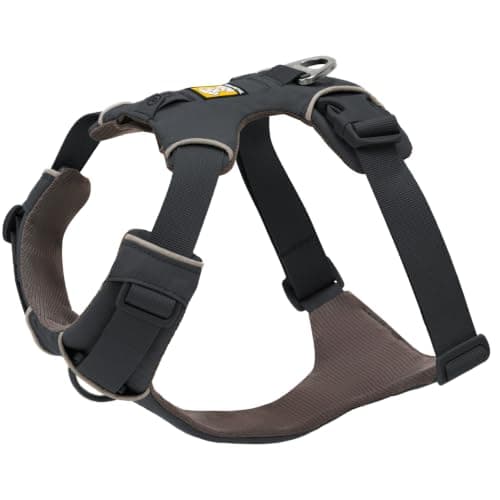
Ruffwear Ruffwear Front Range Dog Harness
Ruffwear Front Range Dog Harness

The default trail harness. Comfortable, well-made, and the one most experienced hikers land on.

Most hiking dogs
8.2
$59.99Amazon
02
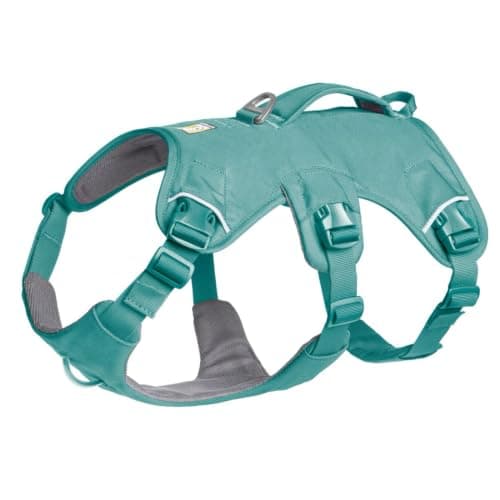
Ruffwear Ruffwear Web Master Support Harness
Ruffwear Web Master Support Harness

The one with a real lifting handle and a third strap — for technical terrain and dogs you sometimes carry.

Scrambles, lifts and mobility support
8.6
$79.99Amazon
03
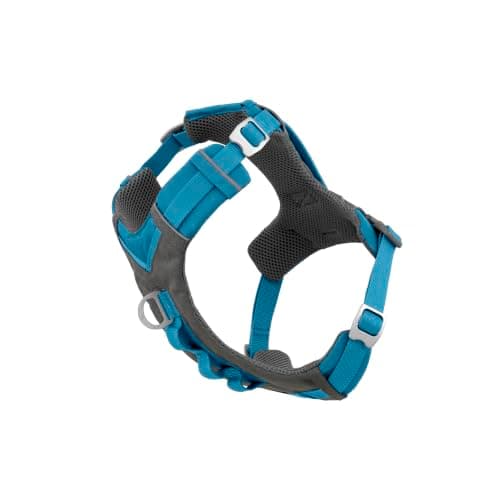
Kurgo Kurgo Journey Air Dog Harness
Kurgo Journey Air Dog Harness

The breathable warm-weather harness — mesh where the Ruffwear is foam, at a friendlier price.

Hot-weather hiking
7.8
$37.49Amazon
04
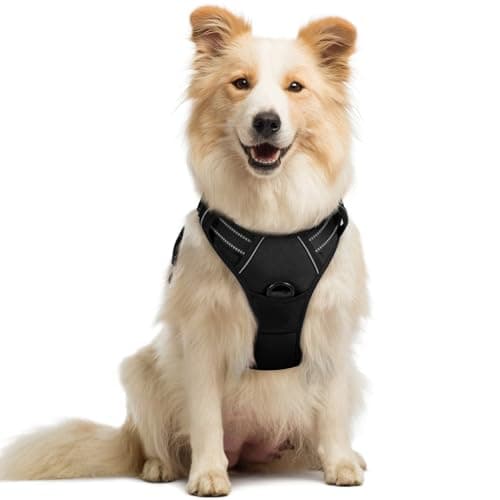
rabbitgoo rabbitgoo No-Pull Dog Harness
rabbitgoo No-Pull Dog Harness

The value no-pull harness — not a technical trail piece, but a lot of harness for very little money.

Budget everyday and light trails
7.4
$21.98Amazon

#ad · Live prices from the Amazon Product API, as of Sep 6, 2026. Where we have no verified live price we show none — we would rather leave a gap than print a number that has rotted.

In detail

The picks, in full

01
Ruffwear Ruffwear Front Range Dog Harness

Most hiking dogs

Ruffwear Front Range Dog Harness

Padded chest + bellyTwo leash pointsReflective trimID pocket
8.2/10

The default trail harness. Comfortable, well-made, and the one most experienced hikers land on.

Fit & adjust
9
Durability
8
Control/handle
7
Comfort
9
Value
8

Pros

  • Foam-padded chest and belly panels spread load comfortably over a long day out
  • Front and back leash points — the front ring genuinely helps with a puller
  • Ruffwear's fit and durability are the reason it's the trail-community default, not the price

Cons

  • No rigid grab handle — for lifting a dog over obstacles you want the Web Master instead
  • Costs more than the no-name harnesses that look similar in a photo

Don't buy this if…

you need to physically lift or spot your dog on scrambles. The Front Range is a walking-and-hiking harness; for hand-of-God lifts, step up to the Web Master's handle.

$59.99View on Amazon

Price as of Sep 6, 2026. Prices change — Amazon's at checkout is the one that counts.

#ad · we may earn a commission from this link to Ruffwear Front Range Dog Harness

02
Ruffwear Ruffwear Web Master Support Harness

Scrambles, lifts and mobility support

Ruffwear Web Master Support Harness

Reinforced grab handleFive-point fitThree chest/belly strapsReflective
8.6/10

The one with a real lifting handle and a third strap — for technical terrain and dogs you sometimes carry.

Fit & adjust
9
Durability
9
Control/handle
10
Comfort
8
Value
7

Pros

  • The padded top handle is built for actual lifting — over a boulder, into a kayak, up a ladder
  • A third belly strap makes it very hard for a twisting dog to back out of
  • Doubles as mobility support for older dogs who need a hand on steep ground

Cons

  • More harness than a mellow trail walk needs — and priced accordingly
  • The extra strap takes a minute longer to fit than a two-strap harness

Don't buy this if…

your hikes are flat and your dog is young and sure-footed. You're paying for a handle and a strap you won't use — the Front Range is the better-value everyday trail harness.

$79.99View on Amazon

Price as of Sep 6, 2026. Prices change — Amazon's at checkout is the one that counts.

#ad · we may earn a commission from this link to Ruffwear Web Master Support Harness

03
Kurgo Kurgo Journey Air Dog Harness

Hot-weather hiking

Kurgo Journey Air Dog Harness

Air-mesh panelsTwo leash pointsPadded handleReflective stitching
7.8/10

The breathable warm-weather harness — mesh where the Ruffwear is foam, at a friendlier price.

Fit & adjust
8
Durability
7
Control/handle
8
Comfort
8
Value
8

Pros

  • The air-mesh back panel breathes better than foam padding on a hot climb
  • Has a control handle and dual leash points at a real discount to the Ruffwear
  • Light enough that a dog barely notices it

Cons

  • The mesh padding is thinner, so it's less cushioned under a loaded day pack
  • Not as rugged as the Ruffwear over years of hard use

Don't buy this if…

you hike in cold, wet, abrasive conditions year-round. The airy build that wins in summer is the one that wears faster in the rough stuff — the Front Range is the more durable all-season pick.

$37.49View on Amazon

Price as of Sep 6, 2026. Prices change — Amazon's at checkout is the one that counts.

#ad · we may earn a commission from this link to Kurgo Journey Air Dog Harness

04
rabbitgoo rabbitgoo No-Pull Dog Harness

Budget everyday and light trails

rabbitgoo No-Pull Dog Harness

Front + back clipsFour adjustment pointsPaddedReflective
7.4/10

The value no-pull harness — not a technical trail piece, but a lot of harness for very little money.

Fit & adjust
8
Durability
6
Control/handle
6
Comfort
8
Value
9

Pros

  • Front and back clips plus four adjusters — features that used to cost three times as much
  • Padded and reflective, so it covers the everyday-walk basics well
  • The easiest harness here to recommend to someone on a tight budget

Cons

  • The hardware is plastic where the premium harnesses use metal — fine for walks, not for hard trail use
  • No lifting handle rated for a dog's full weight

Don't buy this if…

you tackle real backcountry terrain. The plastic clips and lighter build are made for sidewalks and easy trails, not scrambles — for those, spend up to a Ruffwear.

$21.98View on Amazon

Price as of Sep 6, 2026. Prices change — Amazon's at checkout is the one that counts.

#ad · we may earn a commission from this link to rabbitgoo No-Pull Dog Harness

Which one do you actually need?

Buy the walking harness if

  • Your longest outing is a couple of hours on paths and pavement.
  • Your dog is light enough that you will never need to lift it.
  • The main problem you are solving is pulling on the lead, not chafing on a trail.

A good no-pull harness with a front clip does that job well and there is no reason to spend more. The gap between a $25 harness and a $90 one is invisible on a neighborhood walk.

Buy the hiking harness if

  • You do half-days or full days, repeatedly.
  • Your routes include scrambles, stiles, boulders or steep descents.
  • Your dog is heavy, elderly, arthritic, or you have ever had to lift it into a car - see traveling with a senior dog.
  • You have seen rub marks after a long day. That is the harness telling you.

Buy the support harness if

You need to genuinely lift, not steady - a dog with mobility problems, or terrain where you will be hoisting the dog up or lowering it down. That is a third category and the full roundup is in best dog hiking harnesses.

Fit matters more than category

A badly fitted expensive harness is worse than a well-fitted cheap one. Three checks, repeated every few months because dogs change shape:

  • Two fingers flat under every strap. Tighter chafes, looser rotates.
  • Straps clear the armpit by a good margin with the leg extended forward, not just standing still.
  • No backing out. With the harness on and clipped, a determined backwards pull should not free the shoulders. If it does, the harness is wrong for a dog that spooks near roads or wildlife.

What neither harness does

Neither is a car restraint. A walking or hiking harness is not crash-tested and is not designed to hold a dog against crash forces; using one with a seat belt tether gives you restraint against climbing about, not protection in a collision. If the dog travels to the trailhead by car, that is a separate purchase - see crash-tested harnesses.

And neither replaces a collar with ID on it. Harnesses come off; the tag should be on something that stays on. Our ID tag roundup covers what to put on it when you are away from home.
How we picked

We do not test the gear

We compiled the manufacturers' published dimensions and specs, cross-checked them against airline under-seat limits and published safety certifications, read the owner reviews, and scored each product against a published rubric. The scores are judgments from that research — they are not measurements we took, because we do not own a lab and we are not going to pretend we do. Where we could not verify a fit or a claim, we say so on the page.

Questions

Frequently asked

Do I need a special harness for hiking with my dog?
Only if you hike properly - half-days or full days, on uneven ground, repeatedly. For paths and pavement a good no-pull walking harness is genuinely fine. The trail versions buy you wider load spreading that prevents chafing over hours, resistance to rotation on uneven ground, and a handle for steadying and lifting.
What is the handle on a hiking harness for?
Steadying a dog on narrow or exposed ground, helping it over obstacles, and lifting it into a car at the end of the day. It is not the same as a support harness designed for genuine vertical lifting, which has a wide belly panel and load-rated hardware - if you need to hoist rather than steady, that is a different product.
Can I use a hiking harness in the car?
Not as a safety restraint. Walking and hiking harnesses are not crash-tested and are not built to hold a dog against crash forces. Clipping one to a seat belt stops a dog roaming the cabin but does not protect it in a collision. Use a crash-tested harness for the car and keep the trail harness for the trail.
How should a dog harness fit?
Two fingers should slide flat under every strap - tighter chafes, looser lets the harness rotate. Straps should clear the armpit with the leg extended forward, not just when the dog is standing. And a determined backwards pull should not free the shoulders. Re-check every few months, because dogs change shape.
Is an expensive dog harness worth it?
On the trail, often yes; on the pavement, usually not. The features you pay for - wide load-spreading panels, anti-rotation design, a real handle - only matter over long distances and uneven ground. A well-fitted cheap harness beats a badly fitted expensive one in every setting.

Keep reading

Receipts

Sources

We do not run a testing lab, and we do not pretend to. Product dimensions and safety claims come from the manufacturer's own listing; airline limits come from the airline's published policy, with the date we checked it. Where we could not verify something, we say so on the page rather than quietly leaving it out. Read our full method.