The thing that makes a relocation harder than a holiday is that the dog loses its reference points twice. First the house empties - furniture gone, smells changing, people stressed - and then, days later, a new house appears with none of the smells it knows. The drive in between is the easy part, and it is the only part most people plan.
So plan the drive properly, then plan the two weeks either side of it. That is the whole job.
The box that does not go on the truck
Pack a dog bag that stays in your car, and pack it before the movers arrive rather than from what is left afterwards. It needs:
- Two weeks of the dog's current food - do not change diet during a move - plus bowls, and any medication with a copy of the prescription.
- The dog's bed, unwashed. It is the single most useful object in the whole move: a portable piece of the old house that smells right, in every hotel room and on the first night in the new one.
- An unwashed t-shirt of yours, for the same reason, and one favorite toy - not five.
- Vaccination records, your old vet's contact details, and a recent photo of the dog on your phone.
- Leash, spare leash, harness, poop bags, towel, wipes, and a crate or pen if that is what the dog sleeps in.
The most common relocation mistake is that the dog's bed and bowls go on the truck because they were in the house, and the dog spends four nights on a hotel floor and a fifth on bare boards.
Book the route around the dog
Two rules make the driving days work. Cap them at what the dog can do rather than what you can do - six to eight hours of actual driving is plenty with a dog in the car - and book every night in advance. Improvising a pet-friendly room at 9pm in an unfamiliar town after a long day is the single most stressful thing you can build into a move.
When you book, confirm the pet fee, whether it is per night, the weight limit, and whether the dog can be left in the room at all. Many hotels say no to an unattended dog, which matters when you want dinner. Our hotel guide covers the questions worth asking and how to set the room up when you arrive.
The short answer
Quick picks
#ad · Live prices from the Amazon Product API, as of October 21, 2026. Where we have no verified live price we show none — we would rather leave a gap than print a number that has rotted.
In detail
The picks, in full
Camping and the outdoors
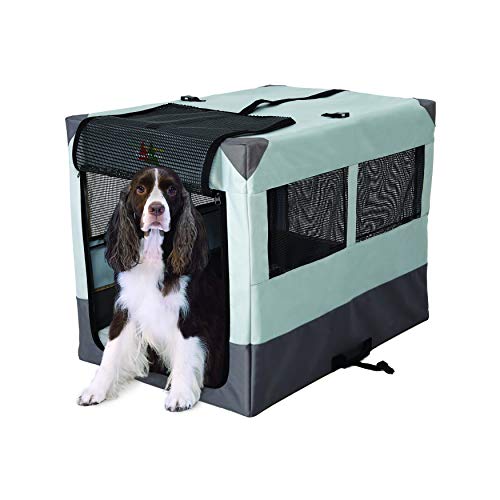
MidWest Canine Camper Sportable Soft Crate
Tent-style setupWeather-resistant fabricCarry bag includedGround stakes
The camping-focused soft crate — a tent for your dog that pitches and strikes in a minute.
- Portability
- 9
- Durability
- 6
- Setup ease
- 9
- Chew resistance
- 4
- Value
- 8
Pros
- +Sets up and breaks down like a pop-up tent — the fastest pitch of the soft crates here
- +Weather-resistant fabric and included stakes for actual outdoor use, not just a living-room corner
- +Rolls into its own bag light enough to strap to a pack
Cons
- −Same soft-crate caveat: fine for a settled dog, hopeless against a chewer
- −The lighter fabric trades some durability for packability
Don't buy this if…
…it's going to live in a hard-use household with a rowdy dog. It's built for the trail and the campsite, where light and packable win — heavy daily home use will wear it faster.
Road trips and hotel rooms
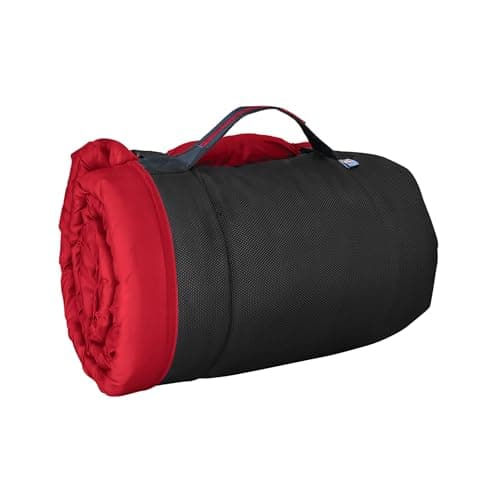
Kurgo Loft Wander Dog Bed
Padded loftFoldableTravel lineLarge size listed
The best balance here: enough loft to be a real bed, still folds into a trunk without a fight.
- Packability
- 7
- Padding
- 9
- Durability
- 8
- Cleaning
- 8
- Value
- 8
Pros
- +Actually padded, so a dog settles on it the way it settles on a bed at home — which is the point on night two of a trip
- +Folds without needing to be rolled and strapped, so it goes back in the car in seconds
- +Kurgo's travel focus shows in a shell that wipes clean rather than absorbing everything
Cons
- −Too bulky to backpack with — this is car-and-hotel gear
- −Costs more than the roll-up mats for comfort you only notice on longer trips
Don't buy this if…
…you need it for a single overnight. A cheap roll-up mat covers one night; the loft earns out over a week.
Actual live GPS location
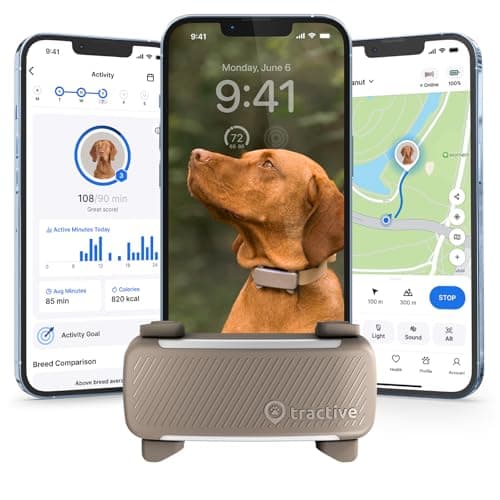
Tractive Smart Dog GPS Tracker
LTE + GPSUnlimited rangeWaterproofSubscription required
The real GPS pick. Unlimited range and live tracking — as long as you accept it needs a subscription.
- Location accuracy
- 9
- Battery life
- 8
- No subscription
- 2
- Size/weight
- 8
- Value
- 7
Pros
- +True cellular GPS: it reports live location anywhere there's a mobile signal, not just within Bluetooth range
- +Waterproof and light enough to ride on a collar all day
- +Live tracking and virtual fences are the features an escape-prone dog actually needs
Cons
- −Requires a paid subscription — the device price is not the real cost of ownership
- −Battery is measured in days or weeks, not months — Tractive lists up to two weeks with Power Saving Zones, and about six days without them
Don't buy this if…
…you won't pay a monthly fee. Without the subscription a cellular tracker is a paperweight — if you refuse the fee, an AirTag is the honest alternative.
The daily rhythm
- Walk before you load. Twenty to thirty minutes of real exercise before the first mile of the day. A dog that starts the day tired travels; one that starts fresh paces.
- Drive in blocks with breaks every two to three hours. The stopping rhythm matters more on day three than on day one, because fatigue is cumulative for the dog as well as for you.
- Arrive before dark. A new hotel room in daylight is a smaller ask than a new hotel room at 10pm.
- Set the room up the same way every night. Bed in the same relative position, bowls in the same corner, crate if that is the routine. Sameness is what you are selling.
- Last walk late, and long enough to matter. This is what buys you a settled night in a building full of unfamiliar noises.
Restraint, on a drive this long
Multi-day drives are exactly where people get lax - the harness comes off on day two because the dog seemed unhappy, and by day four the dog is loose on a pile of coats. Do not. Physics has not changed since day one. Either a crash-tested harness or a properly secured crate, every day of the trip.
A soft crate is the practical compromise for a move: it rides in the car, it comes into the hotel room, and it gives the dog one physical space that is identical in five different buildings. That continuity is worth more on a relocation than on any other kind of trip.
Tracking, because this is when dogs bolt
Relocations produce more lost dogs than holidays do, for obvious reasons: doors propped open for movers, unfamiliar gardens the dog has no attachment to, and a dog that does not yet know its way home because it does not know where home is. Two precautions:
- Update the microchip registration and the tag before you leave, not after you arrive. A chip registered to the address you have just left is a chip pointing the wrong way. See microchip versus GPS tracker.
- Put a live tracker on the collar for the move itself. This is the fortnight it earns its subscription - a real GPS unit tells you where the dog is now, which a microchip cannot. Our tracker rankings explain the difference honestly.
If the worst happens mid-move, the plan is in what to do if your dog gets lost while traveling.
The first week in the new house
- Set up the dog's corner first, before the sofa, before the bed. Old bed, old bowls, old blanket, in a quiet room away from the front door.
- Keep the dog in one or two rooms at first rather than giving it the run of the house on day one. A smaller territory is easier to feel safe in.
- Hold the routine. Same feeding times, same walk times, even when everything else is chaos. Routine is the thing you can give a dog when the environment is unrecognizable.
- Check the garden fence before the dog is in it, at dog height, on foot. New fences fail in ways the previous owners never noticed because their dog never tested that gap.
- Register with a local vet in the first week, and find the nearest emergency clinic before you need it at 2am.
Expect a fortnight of odd behavior - clinginess, a reluctance to eat, sleeping more, a couple of accidents. That is normal adjustment and it usually resolves on its own. What is not normal is a dog that will not settle at all after a few weeks, and that is a conversation with the new vet rather than something to wait out.
How we picked
We do not test the gear
We compiled the manufacturers' published dimensions and specs, cross-checked them against airline under-seat limits and published safety certifications, read the owner reviews, and scored each product against a published rubric. The scores are judgments from that research — they are not measurements we took, because we do not own a lab and we are not going to pretend we do. Where we could not verify a fit or a claim, we say so on the page.
Questions
Frequently asked
How far should I drive in a day when moving with a dog?+
Six to eight hours of actual driving is a sensible ceiling, with a break every two to three hours. On a relocation the days stack up - fatigue is cumulative for the dog as much as for you - so plan the later days shorter rather than longer, and book every night in advance rather than improvising a pet-friendly room after dark.
What should I keep out of the moving truck for my dog?+
Two weeks of the dog's current food, bowls, medication with the prescription, the unwashed bed, one favorite toy, an unwashed t-shirt of yours, leash and spare, harness, poop bags, towel and wipes, plus vaccination records and a recent photo. The bed is the most important item on that list and it is the one most often loaded onto the truck by mistake.
How do I help my dog settle into a new house?+
Set up the dog's corner before your own furniture, using the old bed and bowls, and keep it to one or two rooms at first rather than the whole house. Hold the feeding and walking routine exactly as it was. Expect a couple of weeks of clinginess, reduced appetite or the odd accident - that is normal adjustment, and it usually resolves without intervention.
Should I update my dog's microchip before or after a move?+
Before. A microchip registered to the address you have just left points a finder in the wrong direction, and the days around a move - propped doors, movers, an unfamiliar garden - are when dogs are most likely to bolt. Update the chip registry and the collar tag before the truck arrives, and add a live GPS tracker for the move itself.
Is it better to fly or drive a dog when relocating?+
For most relocations, drive if you reasonably can. You control the schedule and the stops, the dog is with you the whole way, and you avoid size limits, hold restrictions and paperwork. Flying makes sense for very long distances or a small dog that fits in the cabin - the trade-offs are set out in our flying versus driving comparison.
Receipts
Sources
We do not run a testing lab, and we do not pretend to. Product dimensions and safety claims come from the manufacturer's own listing; airline limits come from the airline's published policy, with the date we checked it. Where we could not verify something, we say so on the page rather than quietly leaving it out. Read our full method.