Skip to content
Paw & Passport

HUB 04 · Outdoor & Adventure

K9 Sport Sack Urban 3: Review

The dog carrier backpack everyone compares the others to. The reason is a sizing system, not a fabric — and that is also where its main limitation comes from.

By Stephen V.Updated How we research
#ad

We earn a commission when you buy through our Amazon links, at no extra cost to you. It never affects our rankings, and we say so when the cheaper product is the better buy. How this works.

Most dog backpack carriers are sold by weight range, which is close to useless. Weight tells you how heavy the dog is; it tells you nothing about whether the dog is long and low or short and stocky. Two 18 lb dogs can need completely different packs, and the weight chart cannot see the difference.

The K9 Sport Sack is sized by back length — neck base to tail base — and that single decision is why it fits when others do not. It is the reason this pack tops our backpack carrier roundup, and it is also the source of its one real drawback.

The short answer

Quick picks

#ProductBest forScorePrice
01
K9 Sport Sack K9 Sport Sack Urban 3
K9 Sport Sack Urban 3

The category standard. Sized to the dog's back length rather than a vague weight band, which is why the fit works.

Serious carrying — trails and long days
8.6
$99.95Amazon

#ad · Live prices from the Amazon Product API, as of Sep 6, 2026. Where we have no verified live price we show none — we would rather leave a gap than print a number that has rotted.

In detail

The picks, in full

01
K9 Sport Sack K9 Sport Sack Urban 3

Serious carrying — trails and long days

K9 Sport Sack Urban 3

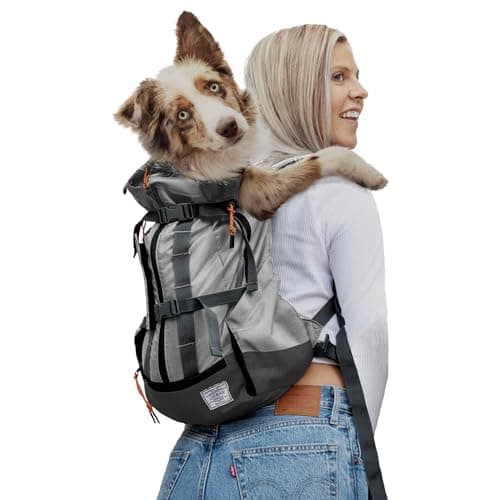
Sized by back lengthLegs-out designPadded shoulder strapsDual-use daypack
8.6/10

The category standard. Sized to the dog's back length rather than a vague weight band, which is why the fit works.

Carry comfort
10
Ventilation
9
Dog security
9
Weight capacity
8
Value
7

Pros

  • Sizing by back length rather than weight is the single reason these fit properly where generic packs do not
  • Legs-out design lets the dog sit naturally instead of being folded into a bag
  • Shoulder straps and back panel are built like a hiking pack, so the load is bearable for hours rather than minutes

Cons

  • Premium price, and the size-specific fit means it does not carry over to a second, different dog
  • Legs-out means a dog that wants to hide has nowhere to hide

Don't buy this if…

you need it twice a year for a city errand. The comfort engineering is for hours under load, and you are paying for it either way.

$99.95View on Amazon

Price as of Sep 6, 2026. Prices change — Amazon's at checkout is the one that counts.

#ad · we may earn a commission from this link to K9 Sport Sack Urban 3

What it gets right

Back-length sizing that actually fits

The Urban 3 is offered in sizes keyed to a range of back lengths, and the fit within a correct size is noticeably better than anything sold by weight band. A properly-sized pack holds the dog against your back rather than letting it swing, which matters for your balance on uneven ground as much as for the dog's comfort. Measure before you order; the size chart is the product.

Legs-out posture

The dog sits upright with its legs through openings and its head above your shoulder. Most dogs settle into this quickly because it is close to how they sit anyway, and it keeps their weight high and close to your spine — the same principle as packing a hiking pack properly. An enclosed carrier sits lower and further out, and you feel it.

Suspension built like a hiking pack

Padded shoulder straps, a structured back panel and a sternum strap put this in a different class from the soft-sided carriers with webbing straps sewn on. Over an hour with a 15 lb dog, this is the difference between a pack you forget about and one you count the minutes in.

It works as an ordinary pack too

The Urban 3 is designed for dual use — dog in, or dog out and everyday gear in. That matters more than it sounds, because a carrier that only works with a dog in it is a bag you own for five percent of your outings.

Where it falls short

Size-specific means dog-specific

The flip side of precise sizing: it does not adapt. A pack bought for one dog will very likely not suit a second dog of a different shape, and it does not grow with a puppy. Households with two differently-shaped small dogs are buying two packs, and that is a real cost.

No hip belt on this model

The suspension is good, but the load still lands mostly on your shoulders. If you routinely carry a heavier dog over several miles, the KurgoG-Train's hip belt does something the Urban 3 does not, and over distance that is the more comfortable pack.

Legs-out is not for every dog

Some dogs want to hide, not to sit up and watch the trail go past. An anxious dog often does better in an enclosed pack where it can curl up out of sight. If your dog is the type that burrows under a blanket, the PetAmi style may suit it better despite being the less refined product.

Heat still applies

Legs-out ventilates better than an enclosed pack, but a dog against your back on a hot day is against a heat source. Check the dog often, stop in shade, and carry water for both of you. On genuinely hot days, consider whether the trail is a good idea at all — our cooling vest roundup covers the heat side.

Who should buy it

Buy it if you have one small-to-medium dog you will carry regularly, you want the fit sorted properly, and you value carry comfort over price. Measure the back length first and buy to the chart.

Do not buy it if you need one pack for two differently-shaped dogs, if your dog is anxious and prefers to hide, or if you will carry it twice a year — in that last case a budget enclosed pack does the job and the difference stays in your pocket.
How we picked

We do not test the gear

We compiled the manufacturers' published dimensions and specs, cross-checked them against airline under-seat limits and published safety certifications, read the owner reviews, and scored each product against a published rubric. The scores are judgments from that research — they are not measurements we took, because we do not own a lab and we are not going to pretend we do. Where we could not verify a fit or a claim, we say so on the page.

Questions

Frequently asked

How do I know what size K9 Sport Sack to buy?
Measure the dog's back length from the base of the neck to the base of the tail, then match it to the maker's back-length chart. Do not buy by weight — weight cannot distinguish a long, low dog from a compact one, and back length is what determines whether the dog sits properly in the pack.
Is the K9 Sport Sack comfortable for long hikes?
For most people carrying a small-to-medium dog, yes — the padded straps, structured back panel and legs-out posture keep the weight high and close to your spine. Over several miles with a heavier dog, though, a pack with a real hip belt transfers load to your legs and is noticeably more comfortable.
Can you fly with a K9 Sport Sack?
It still has to fit under the airline seat, which is a size question each airline answers differently. If flying is the primary use, shop from our airline carrier roundup where fit against published under-seat limits is the ranking criterion, rather than assuming a hiking pack will clear it.
Will a K9 Sport Sack fit two different dogs?
Usually not well. The sizing is keyed to back length, which is exactly what varies most between dogs of similar weight — so a pack fitted to one dog will likely be wrong for another. Households with two differently-shaped dogs should expect to buy two packs or choose a more forgiving enclosed carrier.
Is a dog backpack carrier bad for the dog's back?
A correctly-sized pack supports the dog's body rather than hanging it from any one point, so the dog's spine is not taking the load. The real risks are heat, a dog too large for the pack's rating, and a loose fit that lets the dog shift. Size correctly, respect the weight limit and check the dog regularly.

Keep reading

Receipts

Sources

We do not run a testing lab, and we do not pretend to. Product dimensions and safety claims come from the manufacturer's own listing; airline limits come from the airline's published policy, with the date we checked it. Where we could not verify something, we say so on the page rather than quietly leaving it out. Read our full method.