The leash is the piece of hiking gear nobody researches. You read up on the harness, the boots and the water; the leash is whatever was hanging by the door. Then you arrive at a national park trailhead and discover that the leash is the one thing on the dog that is written into federal law.
The rule is 36 CFR 2.15: a pet must be restrained "on a leash which shall not exceed six feet in length, or otherwise physically confine[d]" at all times. Acadia National Park's pet page puts it more bluntly — a leash no longer than 6 feet, at all times. It applies in the campground as well as on the trail, and our guide to dogs in national parks covers where dogs are allowed in the first place.
Plenty of leashes sold for hiking go past six feet. Bungee leashes stretch past it, rope leashes start past it, and retractables are built to run out beyond it. None of that is wrong on land with different rules. It just means that if your trip includes a national park, the length question comes before the feature list.
So this page is ranked the other way around. Seven leashes, each checked first on its longest possible lengthagainst the six-foot limit, then on how it goes hands-free, how quickly it gives you the dog back at your knee, and how it copes with water, mud, weight and failing light. We have not hiked with these leashes and we do not claim to have. Every figure comes from the manufacturer's own product page or the live retail listing, sourced at the bottom of the page. Where a maker publishes no number — Kurgo lists no width or breaking strength for the Quantum — we say so rather than fill the gap.
What decides a hiking leash
1. Length at its longest, not its shortest
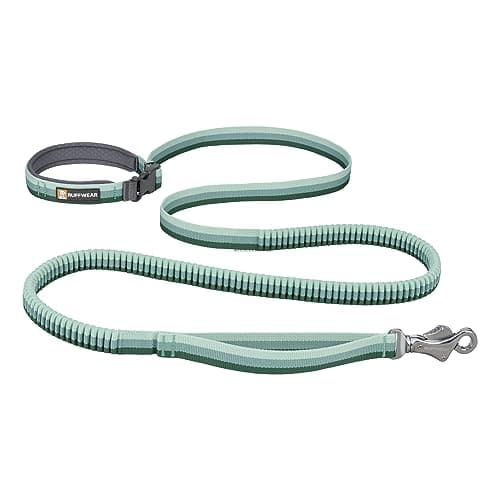
Read the top of the range. An adjustable leash is only as compliant as its longest setting on the day you forget to shorten it, and a bungee is as long as it is stretched, not as long as it hangs. Kurgo lists the Kurgo Quantum at 48-72 inches with the handle included, and Ruffwear lists the Crag EX at 3.5-6 ft — both top out at six. The Roamer we rank is sold as 5.5-7 ft, and the Hitch Hiker carries 12 ft of rope. That does not make those two bad leashes. It makes them leashes you manage, rather than leashes you can forget about.
2. A real hands-free mode
On a trail your hands have other jobs: trekking poles, a rock step, a water bottle for the dog, a phone with the map on it. A waist-worn leash frees them. The trade is that the dog's pull now lands on your hips instead of your arm, which is fine with a dog that walks nicely and uncomfortable with one that lunges. That is where a stretch section earns its place, and why the two bungee picks here are ranked for pullers. Two of the seven have no hands-free mode at all; they are on the list for a different job, and we say which.
3. Close control, fast
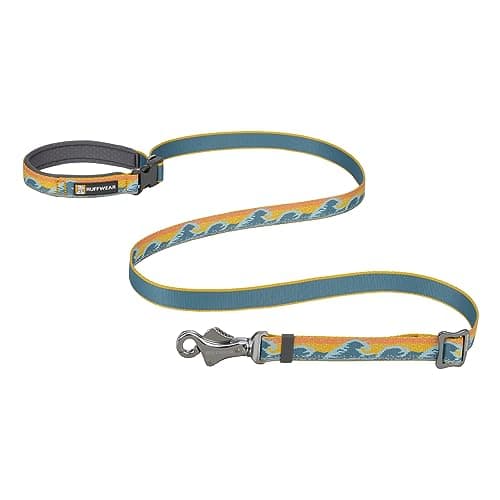
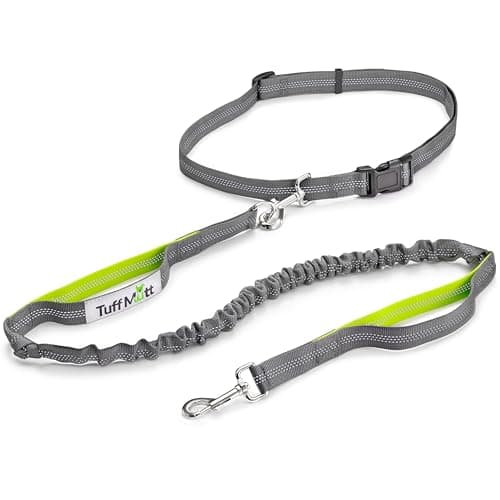
Trails narrow. Horses, bikes, other dogs and people who are frightened of dogs all come around blind corners, and the moment you need the dog at your knee is not the moment to re-clip anything. Look for a traffic handle near the clip — the Ruffwear Roamer and the Tuff Muttboth have one — or a length adjuster you can work on the move, like the Crag EX's slider or the Hitch Hiker's rope lock. The Quantum's 3 ft setting does the same job, but it means re-clipping, so set it before the crowded section rather than during it.
4. The trail itself: water, mud, weight and dusk
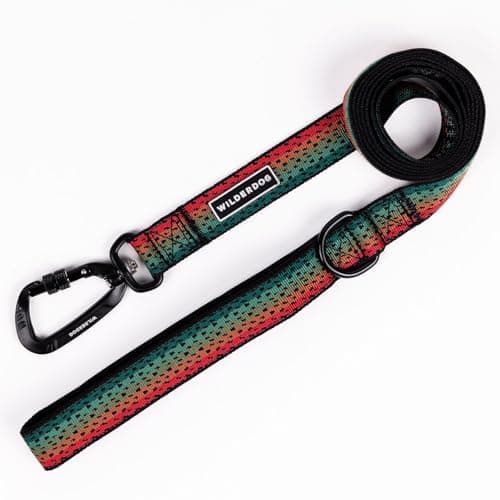
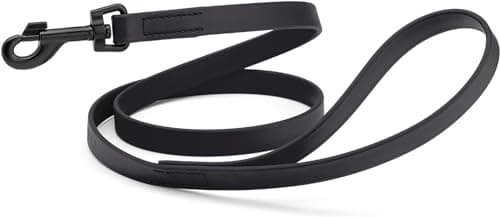
Woven webbing gets soaked on a creek crossing and rides home wet; coated webbing like Dogline's Biothane is sold as waterproof and odor-proof. On a multi-day trip, weight starts to count, and Wilderdog lists its Ultralight at 3.75 oz. And a hike that runs late ends on a road or in a parking lot in poor light, which is where reflective webbing or stitching — listed on the Quantum, the Crag EX, the Tuff Mutt and the Hitch Hiker — is worth having.
5. Hardware that stays shut
A clip rubbing against brush and rock all day should not open. A locking gate — the aluminum carabiner on the Wilderdog, the lockable Crux Clip on the Hitch Hiker — needs a deliberate twist before it will. A swivel stops a circling dog from winding the leash into a knot. And whatever the clip, attach it to a hiking harnessrather than a collar, so a lunge at the end of the line loads the dog's chest instead of its neck.
What we left out: retractable leashes
There is no retractable on this page, on purpose. They are built to run out well past six feet, which puts them outside the federal rule the moment the lock is off, and the rule is about the leash rather than the dog's recall. Our campsite gear guide says the same thing in its pack list: a six-foot leash, not a retractable. On land with no length rule a retractable is a legal choice — it is still a thin line and a bulky handle on terrain where you want both hands free.
Every pick against the six-foot rule
Lengths are the maker's or the live listing's published figures. "Inside 6 ft at its longest" means the leash cannot exceed the federal limit however it is set or stretched.
| Leash | Longest listed length | Inside 6 ft at its longest? | Hands-free | Close control |
|---|
| Kurgo Quantum 6-in-1 | 72 in, handle included | Yes | Waist or over the shoulder | 3 ft setting |
| Ruffwear Crag EX | 6 ft | Yes | Waist | Slide down to 3.5 ft |
| Ruffwear Roamer (5.5-7 ft) | 7 ft stretched | No — 5.5 ft relaxed | Waist | Traffic handle |
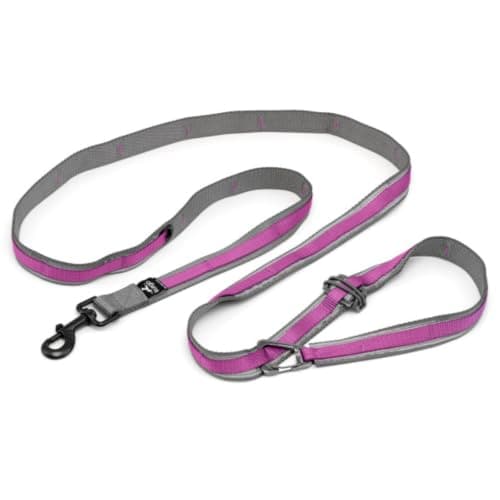
| Tuff Mutt Hands-Free | 60 in stretched | Yes | Waist | Second handle near the collar |
| Wilderdog Ultralight | 6 ft | Yes | No | Choke up on the webbing |
| Dogline Biothane | 6 ft | Yes | No | Choke up on the webbing |
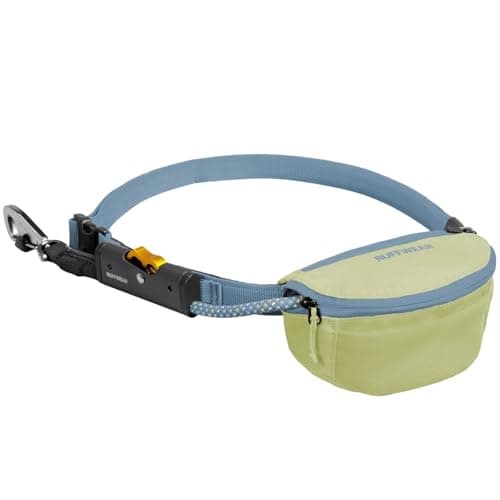
| Ruffwear Hitch Hiker | 12 ft of rope | No — lock it at 6 ft or less | Waist | Rope adjuster |
Which leash for which hiker
Day hikes that include a national park
The Kurgo Quantum, for most people and most dogs. It cannot exceed six feet, it goes on your waist or across your body, and the 3 ft setting is the one you want for a busy trailhead. If you would rather have a padded handle and reflective webbing from a dedicated outdoor brand, the Ruffwear Crag EX does the same job with fewer modes and a slider that changes the length on the move.
A dog that pulls, and you want your hands
The Ruffwear Roamer. Its stretch webbing is the reason a waist leash stays comfortable when the dog sees a squirrel on a descent, and the traffic handle is right where you need it. Inside a national park, keep the dog close enough that the webbing is not stretched out. If the budget is tighter and your dog is 30 lb or more, the Tuff Mutt bungee is inside the rule even at full stretch — but its sliding belt clip lets the dog cross in front of you, so be wary of it on narrow, exposed trail.
Backpacking and long days
The Wilderdog Ultralight, either as the main leash or as the spare that our campsite guide tells you to pack. At a listed 3.75 oz it is an easy leash to justify carrying twice. It is hand-held only, so pair it with a harness that has a handle for the scrambles.
Beaches, lakes and creek-heavy trails
The Dogline Biothane, because a leash that does not soak up water is a leash that does not stink out the car. For anything deeper than wading, the leash is not the safety gear — see swimming and boating with a dog and the life jackets it recommends.
A trail by day and a campsite by night
The RuffwearHitch Hiker is the only pick here sold as a leash and a hitching system in one, with a rope you lock at a working length at camp and then wear on your waist for the walk. The Quantum's tether mode is the cheaper version of the same idea. Both come with the rules in the next section.
Tethering at camp: what the rules actually allow
The same federal rule that sets the six-foot limit, 36 CFR 2.15, also prohibits "leaving a pet unattended and tied to an object", except in designated areas or under conditions set by the park superintendent. Acadia's pet page tells visitors not to leave pets unattended, including at campsites. So a hitch is a way to keep a dog in place while you cook two steps away, not a way to leave it at the site while you walk to the showers.
Two more honest caveats. Whether a hitch longer than six feet at a campsite counts as "otherwise physically confine" under that rule is a question for the park's rangers — we could not find Park Service guidance on it, so ask at the entrance or lock the rope at six feet. And even attended, a tether gives a dog a radius it can wrap around a table leg next to a stove. Our campsite guide explains why a pop-up playpen often does this job better.
Small habits that make any leash work better on a trail
- Learn the hands-free mode at home. A neighborhood walk is the place to discover how the belt sits and which way the dog drifts, not the first switchback.
- Clip to the harness, not the collar. Match the clip point to the dog: front if it pulls, back once it walks nicely. The hiking harness vs walking harness comparison covers which harness is worth it.
- Use the accessory loop. The Quantum, the Crag EX, the Roamer and the Ultralight all list a loop, D-ring or keeper for a bag dispenser, which is what turns packing waste out into a habit.
- Add a light for the walk back. Reflective webbing only works when a light hits it. A clip-on dog light is visible on its own.
- A leash is not a car restraint. At the trailhead, the dog rides home in a crash-tested harness or a secured crate, not clipped to a headrest by its hiking leash.
What we would actually buy
For most hikers, the Kurgo Quantum: inside the rule at every setting, hands-free two ways, and priced in the middle of this page. For the same compliance with a padded handle and aluminum hardware, the Ruffwear Crag EX. For a dog that pulls, the Ruffwear Roamer outside national parks and held close inside them, or the Tuff Mutt if the dog is big and the budget is small. Add the Wilderdog Ultralight for backpacking, the Dogline Biothane for water, and the Hitch Hiker only if the trip genuinely ends at a campsite and you will remember to set it short. Then check the trail-day kit against our hiking with your dog checklist.