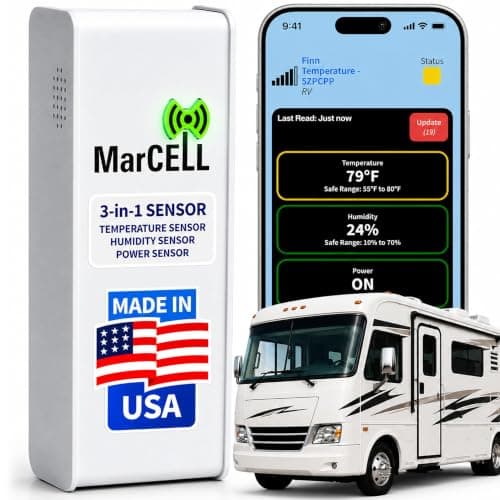
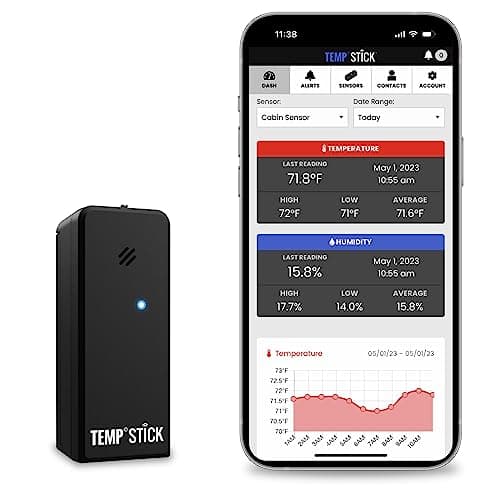
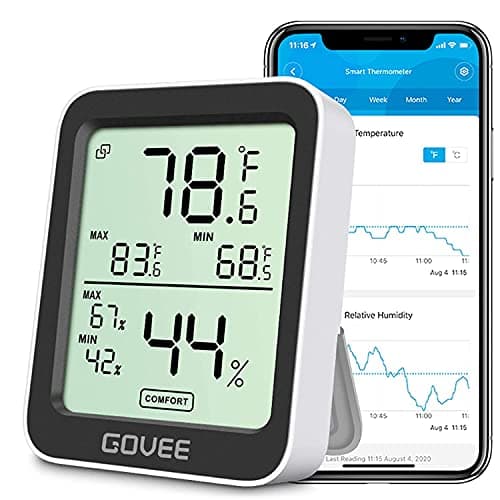
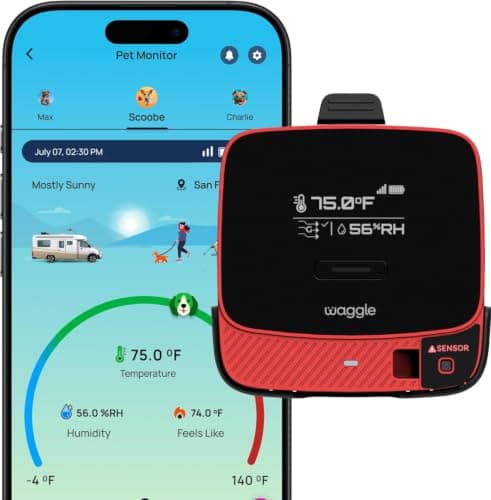
Start with the part the listings bury: a parked car has no WiFi.Most products sold as a "pet temperature monitor" are WiFi or Bluetooth smart-home sensors, and in a vehicle switched off at a trailhead they are silent — the sensor reads 104F and has nothing to tell. Only a cellular monitor with its own SIM can reach you there, which is why the Waggle RV 4G Pet Temperature Monitor wins this page. If you are parked somewhere with a network you control — an RV site, a driveway, a rental — the Temp Stick WiFi Temperature & Humidity Sensor does the same work for no monthly fee and publishes more about itself than anything else here.
And the harder thing, said once and plainly: a temperature monitor is an alarm, not air conditioning. It does not cool the vehicle. It tells a human that the vehicle is already too hot, and then that human has to be close enough, with enough signal, to get back in time. None of these six products makes a hot car a safe place to leave a dog. What they do is turn an invisible risk into a number and a notification — which is genuinely worth buying for an RV on shore power, for a crate in a cargo bay, and for the ten minutes it takes to pay for fuel. It is not worth buying as permission to leave a dog in a car on a summer afternoon. Our guide to keeping a dog cool in the car covers what to do instead, and the laws in fourteen or more states do not care what your monitor said.
The three connection tiers, because the tier decides everything
Every monitor in this category is one of three things, and the specification sheets talk about degrees and humidity when the only question that matters is how the reading gets out of the vehicle.
- Cellular. The monitor carries its own SIM and sends alerts over a mobile network, exactly like a phone. It works in a car with the engine off, in a car park, at a trailhead, at a rest stop — anywhere with a signal and nothing else required. This is the only tier that answers the search. It is also the only tier with a mandatory monthly fee, because somebody is paying for that data.
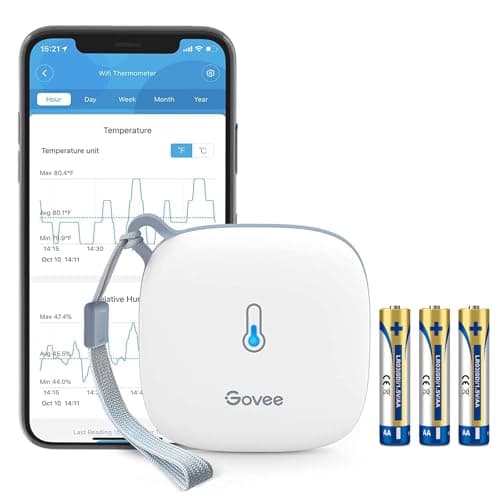
- WiFi. The monitor joins a network and alerts through it. Perfect in an RV on park WiFi, in a driveway, in a rental, in a kennel run behind the house. Useless in a parked car, unless you leave a phone hotspot in the vehicle — which means leaving your phone with the dog and carrying no alert at all. No subscription on any WiFi unit here.
- Bluetooth.The monitor talks to a phone within range — a car park on a good day, not through a shop wall. It is a logging thermometer with an app. It is the right product for finding out what your cargo bay actually reads, and the wrong product for every use the word "monitor" implies.
If you take one thing from this page: buy the tier, then buy the product. A cheap cellular monitor beats an excellent Bluetooth one for a parked car, and an excellent WiFi sensor beats a mediocre cellular one for an RV that has WiFi anyway.
How we ranked them
- Does it work with no WiFi? Weighted highest, and it is not close. A monitor that cannot reach you is not performing the function it was bought for. This is what puts two cellular units at the top.
- What does the maker publish?Ranges, battery life, alert paths, plan pricing. One maker on this page publishes all four and we have said which. Where a figure exists only on a retail listing, the card says "as listed" rather than implying a spec sheet we never read.
- What does it cost to own, not to buy? Three of these need a plan forever and three need nothing. Over three years the plan is usually the bigger number, and a device price on its own is a misleading figure in this category.
- Does it alert on power loss as well as heat? For an RV this is the feature that matters most. If the shore power or the generator drops, the air conditioning stops; the power alert arrives immediately and the temperature alert arrives when the damage is already underway.
- Can it be set up by someone who is not a hobbyist? A monitor you never finished configuring is not a monitor. Pet-specific products win here; smart-home sensors shared with light strips lose.
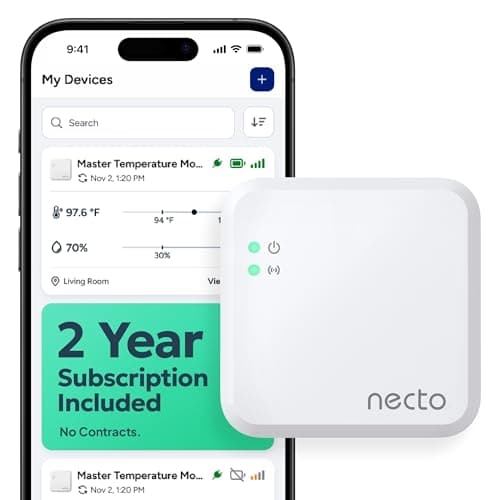
One ranking call is worth stating out loud, because it breaks the tier order: the Temp Stick WiFi Temperature & Humidity Sensor is a WiFi unit and it sits above the Necto Cellular Temperature Monitor, which is cellular. That is deliberate. Temp Stick publishes its ranges, its battery life, its alert paths and the fact that it charges nothing monthly, all on its own site; we could not read a maker spec sheet or an official plan price for the Necto at all on 2026-10-25. This site ranks on what is published, and a better connection tier does not outweigh an unverifiable product.
Where to put the sensor, because the wrong place lies to you
A monitor reports the temperature where it is sitting, and the inside of a vehicle is not one temperature. The air at the dashboard, where the sun lands, can read wildly higher than the footwell. A crate in a rear cargo bay, which is the furthest point from most air conditioning vents and often under a tailgate window, is routinely the hottest place in the car and the exact place the dog is. Tape or clip the sensor inside the crate, at the dog's height, out of direct sun, and you will get the number that matters. Mount it on the dash and you will get an alarming number that tells you nothing about the dog. If your dog rides in a portable crate or behind a cargo barrier, that is the compartment to measure.
Buy two cheap sensors before you buy one expensive one, if you are not sure you have a problem. A fortnight of readings from the crate and the front seat will tell you whether your cargo bay runs five degrees hot or fifteen, and that answer changes what you should buy — and sometimes changes where the dog rides instead of what you spend.
What the subscription actually buys
Cellular monitoring means a SIM, a carrier and a cloud service sending you texts, and that is the whole reason the fee exists — Waggle says as much on its own subscription page, which explains that its 4G devices carry an embedded SIM that connects to T-Mobile, AT&T, Verizon and others with no hotspot and no separate data plan to arrange. What none of these makers does consistently is publish a flat monthly figure where a buyer can find it before checkout. Waggle quotes a from-price for its WI-FI cameras and not for its 4G devices; MarCELL's plan tiers appear on retailer pages rather than on a maker page we could read; Necto's pricing we found only in secondary coverage, so we have printed none of it.
Treat the plan as the real price. A cellular monitor's running cost over three years is typically well above the device, and it is billed whether you travel in February or not — which is why a plan sold in seasonal tiers is a genuine advantage for anyone who only travels with the dog for part of the year. Check the current plan at the maker's checkout before you buy the box, and check whether lapsed service costs anything to restart. The same arithmetic runs through every connected pet product: it is the argument we make about GPS collars on Fi against Tractive, and about trackers in general in the GPS tracker roundup.
What we are not ranking, and why
Pet cameras sold as temperature monitors. Several makers, Waggle included, sell 4G cameras alongside the sensors. A camera is a different product answering a different worry, it costs more to run, and watching a dog overheat on video is not the same as being alerted before it happens. If the camera is what you want, buy it knowingly — but the alert is the safety feature, not the picture.
Meat thermometers, fridge loggers and bbq probes. They flood the search results for this category and several are cheaper than everything here. They are built to read a probe, not to escalate an alert to a human who is not holding the phone.
Unbranded cellular "pet monitors". There are plenty, and a monitoring product with no named manufacturer has nobody standing behind the alert that did not arrive. The same rule kept the unbranded car-step listings off our steps and ramp comparison: a safety claim needs a company attached to it.
Window fans and 12V crate fans as a substitute. Worth owning, and not a monitor. A fan moves air; it does not lower the temperature of a sealed car meaningfully, and dogs do not sweat, so moving hot air past a dog does far less than it does for you. Cooling belongs to shade, airflow, water and a cooling mat or a cooling vest— and in a car, to the air conditioning being on with you in the driver's seat.
Any of this as a reason to leave a dog in a car. We will keep saying it. A closed vehicle in the sun can gain tens of degrees in a quarter of an hour, cracked windows barely change that, and heatstroke in dogs starts doing organ damage well before it looks dramatic. Monitors belong to RVs, to crates at home, to a kennel run, and to the short errand you were going to make anyway. If your plan involves a monitor and a dog alone in a car for an hour in July, the monitor is not the part of the plan that needs fixing.