This is the trip segment nobody plans and everybody needs: getting to the airport, the station or the vet with a dog and no car. The two big platforms handle it completely differently. Uber has a product for it - you select Uber Pet when you book, and the company says you can bring one pet per trip. Lyft does not, by default- unless the animal is a service animal, whether your pet gets in is the driver's decision, and Lyft tells riders to contact the driver after requesting and to cancel and re-request if the driver is not comfortable. Lyft also runs a separate Pet rides mode where available, which fits up to four people and one well-behaved animal for an extra fee that goes to the driver.
Service animals are a different matter entirely and not a loophole. Lyft is explicit that drivers are required by law and by Lyft policy to accommodate service animals, regardless of allergies, objections or fear, and whether or not the driver has opted into Pet rides. Uber says you do not need to select Uber Pet when travelling with a service animal and can request any ride option. Nothing on this page is advice about service-animal status - that is a legal question, not a gear one.
Everything here is what the two companies publish, as we read it on the date on this article and linked in the sources. Availability of Uber Pet and Lyft Pet rides varies by city, so check in your own app before you rely on either.
How to get a ride, and keep it
1. Pick the platform on the policy, not the price
If you need certainty - an early flight, a vet appointment, weather - Uber Pet is the more predictable option, because it is a ride type rather than a request. Uber's own wording is that Uber Pet trips may include an additional fee compared with other ride options. On Lyft, either find Pet rides in your market or accept that you are asking a favour of whoever accepts, and build time in for a cancellation.
2. One pet, per trip
Uber allows one pet per trip. If you have two dogs, this is a two-ride problem or a different mode entirely - see traveling with two dogs.
3. Carrier, leash or harness
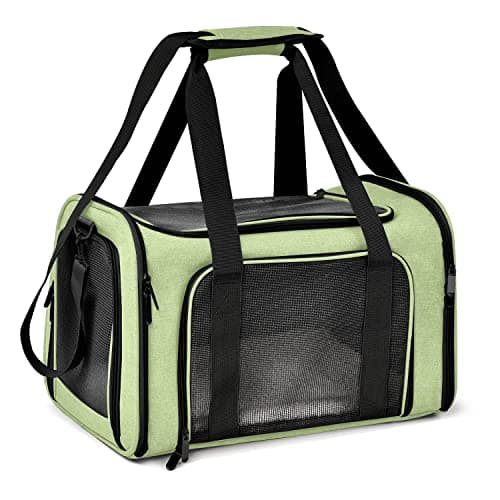
Uber's guidance is to keep your dog or cat safe and secure with a leash, harness or carrier, and that any other pets should travel in a carrier. In practice a carrier is the single most effective thing you can do to not be declined: a driver looking at a contained dog is looking at a much smaller risk than a driver looking at a loose one. For a small dog, the carrier you already own for flying is the right tool here too.
4. Cover the seat before the dog touches it
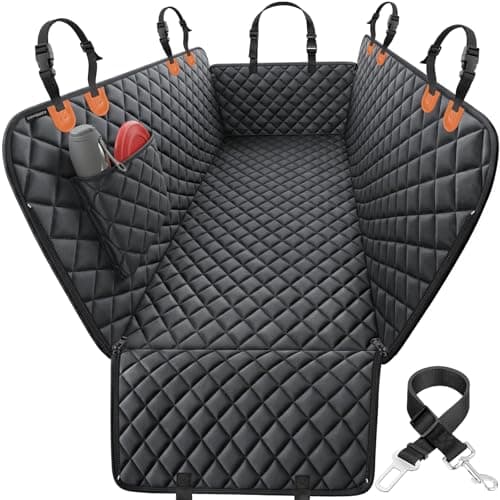
This is where the money is. Uber states that if your pet leaves waste, excessive hair or causes damage to the vehicle, you may be charged a cleaning fee - and a cleaning fee costs multiples of the ride. A packable seat cover that goes down in fifteen seconds is the cheapest insurance in this whole category, and it is also the thing that makes a hesitant driver relax.
5. Arrive with a clean, empty, tired dog
Walk the dog first so it has relieved itself. Wipe the paws before it gets in, especially in wet weather. A dog that is physically clean and already settled is a dog that generates no cleaning fee and no complaint, and this is almost entirely within your control.
6. Message the driver, in both apps
On Lyft it is effectively required: contact the driver after requesting to ask about the pet. On Uber it is still worth doing even on an Uber Pet booking - a short message saying there is a small dog in a carrier and you have a seat cover removes the surprise at the kerb, which is where most refusals happen.
7. Never put the dog in the front, or in the boot
Back seat, contained, with you. Same reasoning as any other vehicle, and it is somebody else's car - the goodwill you are spending is finite. If the dog is large enough that a carrier is not realistic, a harness clipped to nothing is still better than a loose dog, and read crash-tested harnesses for what actually restrains.
What this does not cover
Taxis and local car services. Entirely operator-by-operator; ring and ask. Airport shuttles and hotel shuttles. Often stricter than rideshare, and often carrier-only. Service-animal rights. Real, legally protected, and outside what a gear site should be interpreting for you - go to the primary sources. Non-US markets.Both companies' pet policies differ by country and city.