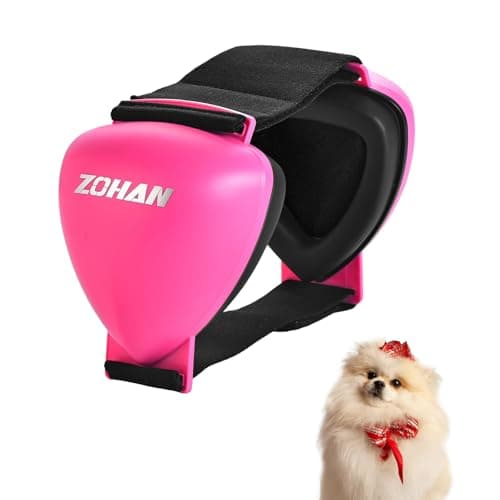
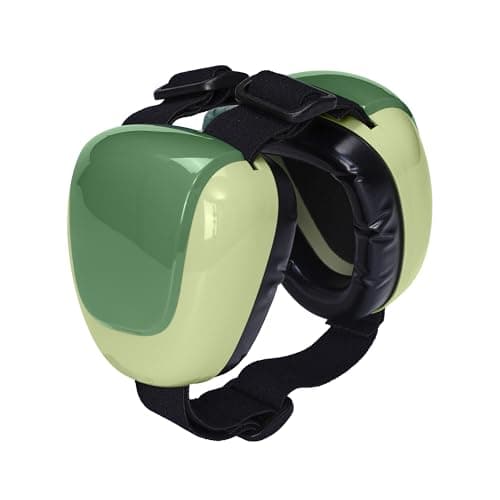
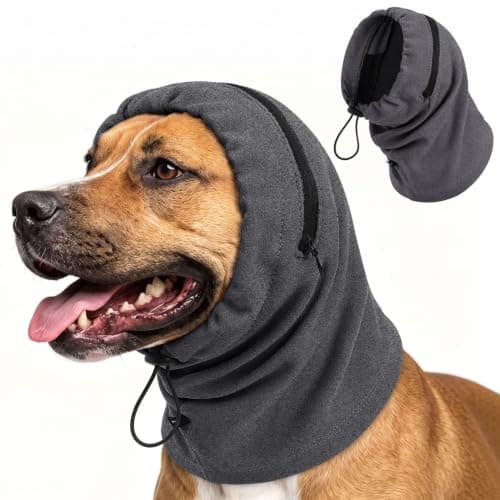
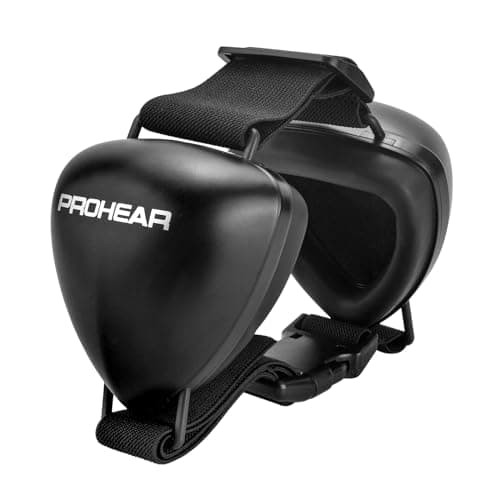
Here is the sentence this whole category is built on, and nobody selling it will say it: a dog ear muff cannot have a real Noise Reduction Rating, because the NRR is measured on people. The rating is defined in federal regulation — 40 CFR Part 211, Subpart B — and has been required on hearing protectors sold in the United States since 1979, with the attenuation behind it measured on human test subjects under ANSI S3.19-1974. There is no dog version of that test, no dog standard, and no body that certifies anything for a dog. So when a listing says NRR 28dB, what you are reading is, at absolute best, a cup measured on a person's head — and at worst a number typed into a title.
We checked that suspicion in the same product pass that resolved these five picks, and the arithmetic is genuinely backwards. PROHEAR also sells human shooting earmuffs: the PROHEAR 016, rated NRR 26dB. ZOHAN sells human electronic shooting earmuffs rated NRR 23dB. Both of those are the products that actually went through the regulated method — and both are rated lowerthan the same brands' dog muffs claim. A rating that goes up when the testing goes away is not a rating.
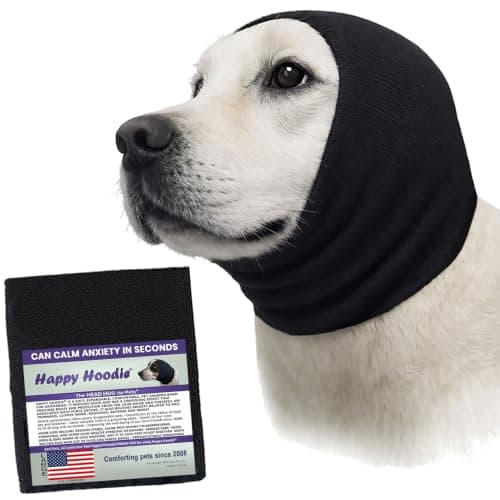
Which leaves a real question with a real answer. Covering a dog's ears is still worth doing on the right trip; it is just that you choose the product on fit, closure and whether the dog tolerates it, because a muff a dog shakes off in five minutes attenuates nothing at all. That is how this page is ranked. The PROHEAR Dog Ear Muffs (Hearing Protection) wins on maker provenance and size range, the ZOHAN DG02 Dog Ear Muffs is the one to buy for a dog that refuses a rigid headband, the derYEP Dog Earmuffs GEN2 exists for heads the other two do not fit, and the Happy Hoodie Calming Band — which claims no decibels, which is the most honest thing any product here does — is where most people should start.
Does a dog actually need ear protection?
Most dogs, on most trips, do not. The case for it is narrow and it is worth being precise about, because this is a product category that sells hardest to the people who need it least.
- Genuinely loud, sustained noise with you present. A piston aircraft cockpit, a running helicopter, a gun range, a motorcycle, a race paddock. For scale, NIOSH sets its recommended exposure limit for people at 85 dBA averaged over eight hours, halving the allowed time for every 3 dBA above that. There is no equivalent published limit for dogs — and a dog's hearing extends well above ours — so the honest position is that loud enough to need protection yourself is loud enough to think about the dog.
- Noise events at home or in a rental. Fireworks, a thunderstorm, a grooming dryer. This is where most of these products are actually bought, and where the cheap compression band earns its keep. Worth pairing with a hard look at what the dog is attached to, because fireworks night is when dogs bolt and get lost — our Ruffwear Front Range review is blunt that an excellent two-strap harness is not an escape-proof one.
- Not a commercial airline cabin, usually. A cabin at cruise is loud and it is louder down at floor level where the carrier sits, but a dog in a zipped bag under a seat is a dog you cannot easily reach, re-fit or supervise closely for several hours. Our ear-pressure guide explains what is and is not happening to your dog's ears up there, and the stressor to prepare for is noise plus confinement — which acclimation and a familiar carrier solve better than hardware does.
- Never in cargo, and never on an unsupervised dog. This one is not a preference. Ear defenders on a dog alone in a crate are a chew hazard and a strap around a head with nobody watching. If your dog is flying in the hold, read our cargo guide and send it with nothing it can dismantle.
The two products everyone searches for, and why neither is ranked here
Mutt Muffs are the reason this category exists. They came out of general aviation — ear defenders for the dog in the right-hand seat of a light aircraft — and they are what most people are actually typing when they search for dog ear protection. They are also, as of 1 November 2026, the hardest thing on this page to buy. Four separate live product queries returned no Mutt Muffs listing on Amazon at all; the only title match was a different maker's product with the words "Travel Mutt Muffs" stuffed onto the end of its own title, which we refused to rank for exactly that reason. The brand's own muttmuffs.com redirected to a domain-for-sale page when we checked. The maker named on retail listings is Safe and Sound Pets and the muffs still turn up at aviation suppliers, so if you want the original, that is where to look — we cannot price it, stock it or rank it honestly through this site, so we have not pretended otherwise.
Rex Specs Ear Prois the premium answer, developed out of military working-dog kit by the company better known for dog goggles. It resolved live at $99.99 with no stock confirmation, and Rex Specs' own page listed it backordered at $92.99 on the day we checked. It is also the only maker in this entire category that publishes a proper sizing method — head circumference at the widest point, just in front of the ears and under the chin, with size 2 covering 13-15 in, size 3 covering 15-17.5 in and size 4 covering 17.5-21 in — and, notably, publishes no dB figure on the product page at all, saying only that it can limit hearing damage over time. That is a more defensible claim than any number on this page. If you can get one and the price does not bother you, it is a good product; it is not one we can rank against in-stock listings.
How we ranked these
Nothing here was tested by us. We do not own an anechoic chamber, we did not take a sound meter into a cabin, and no dog of ours has worn these in a cockpit — our research method page says what we do and do not do in plain terms. What we can do is read what makers publish, verify what the live listings say, and rank on the criteria that survive that scrutiny:
- Mechanism, honestly labeled. Cup-style muffs (picks 1-3) are the only shape that puts a sealed barrier over the ear canal. Compression bands and snoods (picks 4-5) do not, they claim no attenuation figure, and we have not pretended they are hearing protection.
- Retention. Closure design and adjustment points, because the realistic failure mode is a dog removing the product, not the product under-performing by 4dB.
- Fit range.How many sizes actually resolve live. A category this thin is full of one-size products, and a dog's skull is not one size.
- Maker provenance. Does the brand build hearing protection for anyone at all? Two here do, verifiably. That is not proof the dog product works; it is the difference between a company with cup tooling and a company with a listing.
- Published detail. Scored low across the board on purpose: of the five products below, not one had a readable maker spec sheet on 2026-11-01. Everything beyond brand provenance is listing-level, and the cards say so.
- What we refused to rank.A listing that puts a competitor's brand name in its own title, anything that resolved without an explicit in-stock string, and any product whose only distinguishing feature was a bigger dB claim.
Live prices for each pick sit under the cards with the date they were pulled. We do not print a price in the prose, because this category's listings change price by size and colorway, and a number typed into a sentence in November is a lie by February.
The part that actually decides whether this works
Acclimation, weeks in advance, is worth more than any product on this page. A dog meeting ear muffs for the first time at a gate or on a ramp will fight them, and a dog fighting its ear muffs is more stressed than a dog hearing the noise. The sequence that works is the same one we set out for carriers in getting a dog used to a carrier: the object exists at home, then it touches the dog briefly and comes off before the dog objects, then it stays on for a minute, then five, then through something mildly interesting, and you never go up a step on the day that matters.
If the underlying problem is anxiety rather than decibels, ear covers are the wrong lever and we would rather tell you that than sell you one. The drug-free mechanisms that have some evidence behind them are ranked on our calming gear roundup, the pressure-vest evidence specifically is picked apart in our ThunderShirt review, and the behavioral half of a flight is covered in how to calm a dog for flying. Sedation is a conversation with your vet and nothing on this site is a substitute for it.