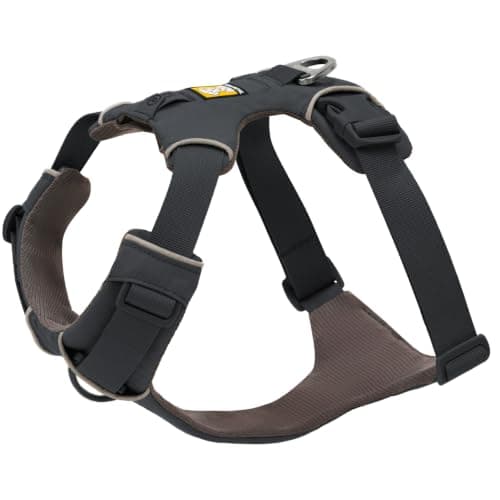
Buy the Ruffwear Front Range Dog Harness in XXS or XS, because it is the only harness here whose maker publishes a girth ladder we have read at the source — 13-17 in at XXS, measured around the widest part of the rib cage, with Ruffwear's own instruction to size up if your dog is between bands. That is the pick for the owner of a 9 to 20 lb dog who travels. The budget pick is the rabbitgoo No-Pull Dog Harness, which costs a fraction as much and is honestly fine for sidewalks, hotel corridors and easy trails. If the harness also has to clip into a seat belt, skip to the Kurgo Tru-Fit Smart Harness, which ships with a tether.
Here is the problem this page exists to solve. "Small" is not a size. It is a word on a label, and no two makers mean the same thing by it. One brand's Small is another's Medium, a "small dog harness" listing might be cut for a 6 lb Chihuahua or a 22 lb terrier, and the only number that actually predicts fit — chest girth in inches — is missing from most listings or buried in an image nobody can zoom. We are not going to invent those numbers. We print the one published ladder we verified at the maker, and for the rest we tell you to measure your dog and check the band on the exact listing you are adding to the basket.
Measure first. It takes thirty seconds
Put a soft tape around the deepest part of the chest, just behind the front legs, and read the number snug but not tight. That is girth, and it is the spec every harness is really sized by. Note your dog's neck circumference too if the harness goes over the head. Weight is the worst predictor of harness fit and it is the number most listings lead with — a 14 lb dachshund and a 14 lb pug are not the same shape in any dimension that matters. Our measuring guide uses the same technique for carriers.
What actually decides a small-dog harness
| Harness | Published sizing we verified | Fitting style | Handle | Car tether |
|---|
| Ruffwear Front Range Dog Harness | Girth ladder from 13-17 in (XXS) to 32-42 in (L/XL), measured at the widest rib cage | Over the head, two straps, four adjustment points | No — padded chest and belly, two leash points | Not a vehicle restraint; Ruffwear makes no crash claim for it |
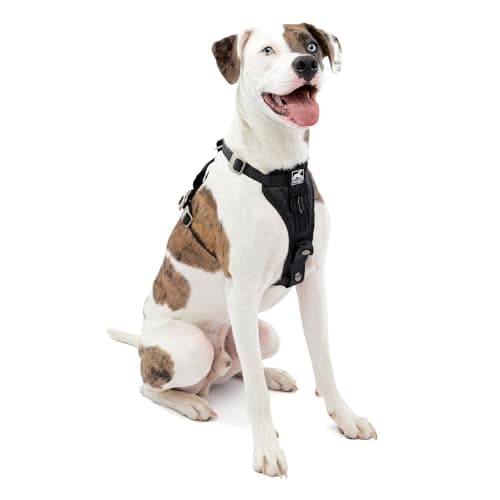
| Kurgo Tru-Fit Smart Harness | Not read at the maker for this page — check the girth band on the size you buy | Five adjustment points, steel nesting buckle | No | Yes — tether included, which is why it is here |
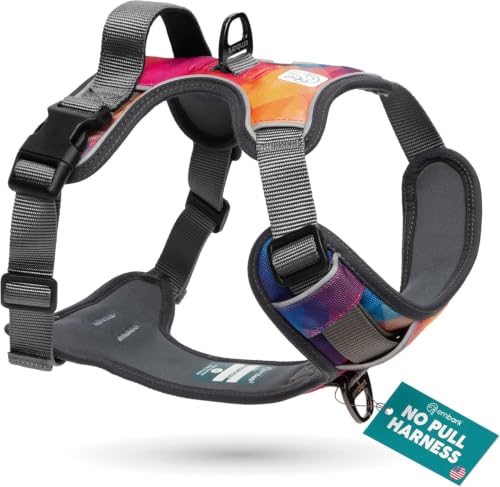
| Embark Adventure No-Pull Dog Harness | Not read at the maker for this page | Front and back clips, padded chest | Yes — a real control handle | No |
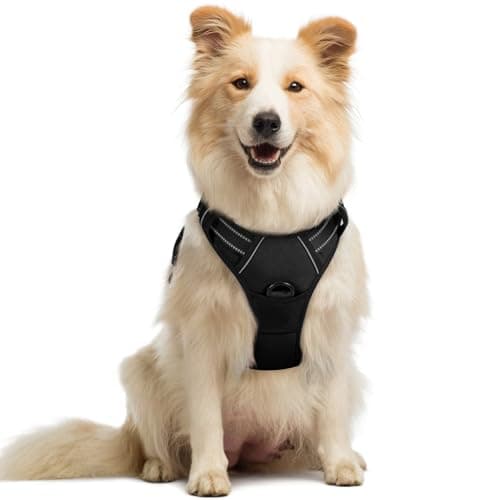
| rabbitgoo No-Pull Dog Harness | Not read at the maker for this page | Four adjustment points, front and back clips | No | No |
Prices are live from our daily price check, with the date stamped under the table below.
Three small-dog problems the listings never mention
Hardware weight
A steel buckle and a V-ring are reassuring on a 60 lb dog and a surprising amount of metal on a 9 lb one. On a very small dog, prefer the lightest fitting that still has four adjustment points, and keep anything else you hang off the collar light too — which is exactly why a rigid low-profile AirTag mount beats a dangling pouch on a little dog.
Over-the-head versus step-in
Plenty of small dogs object strenuously to something being pulled over their head, and a dog that fights the harness every morning ends up wearing a collar instead. If that is your dog, favour a harness you can unbuckle flat, put on the ground and fasten around them. The counter-point: fewer buckles usually means fewer failure points, so do not buy a step-in with a single plastic clip for a dog that pulls.
A two-strap harness is not escape-proof
This is the one we are most insistent about, because small dogs reverse out of harnesses in exactly the moment you least want it — a hotel lobby, a rest stop, airport kerbside. Four adjustment points make a harness that fits; they do not make one a frightened dog cannot back out of. If your dog has ever done it, read our escape-proof harness roundup instead of this page, and note that even our Front Range review says plainly that Ruffwear makes no escape-proof claim for it.
In the car and in the carrier
A walking harness clipped to a seat belt is not a crash restraint. Nothing on this page is crash-tested, the Front Range included — Ruffwear publishes no breaking strength for either leash point and says nothing about vehicles. If you want the harness to do the car job, the Kurgo Tru-Fit Smart Harness at least ships with a tether and is built around that use, and the certified options live on our crash-tested harness roundup. For a small dog specifically, a booster seat with an interior tether is often the better answer than any harness.
For flying, take the harness off inside the carrier or leave it loose: a dog you cannot reach for several hours should not be wearing anything with straps it can catch. The carrier is the product that decides that trip, not the harness.