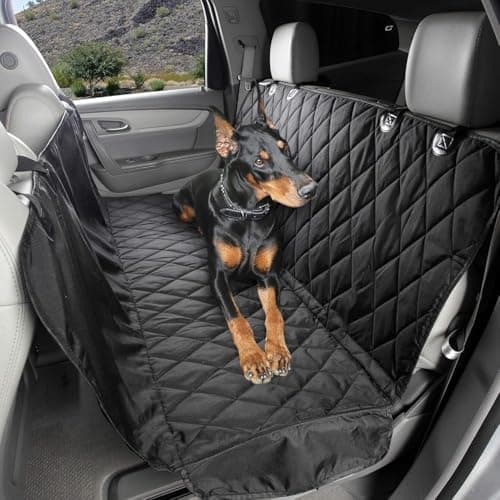
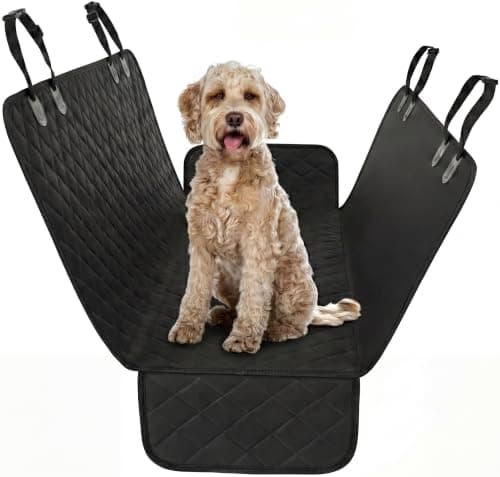
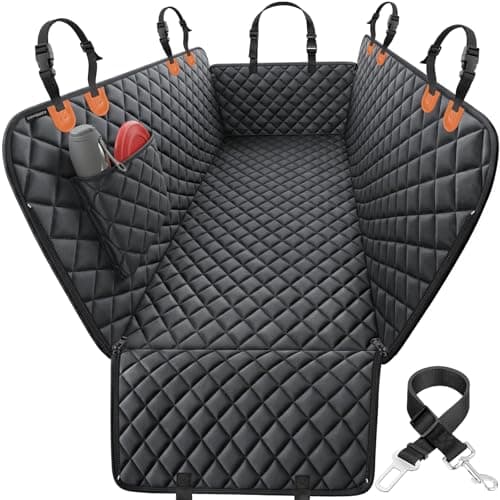
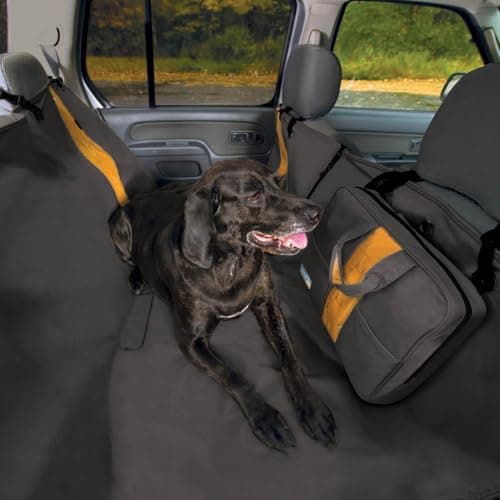
Most people buy a hammock to protect the seats, which is a fine reason. The better reason is the one that does not show up in the product photos: a hammock closes off the footwell, so a dog that gets thrown forward in a hard stop lands on fabric instead of wedging itself into the gap behind the front seats.
That is not crash protection — a hammock is not a restraint and nothing here is crash-tested — but it is a genuine, everyday improvement over a bare bench, and it is why we rank hammock-style covers above flat bench covers for dogs.
The differences between them come down to three things: whether the waterproof layer is real, whether the anchors hold after a month, and whether the fabric survives claws. The Kurgo leads on hardware, the 4Knines on material weight, and the URPOWER is the one to buy if you just need something in the car by Friday.
A hammock and a booster are not alternatives - a lot of small-dog setups use both, with the cover underneath as the drop zone and the non-slip layer. If your back seat is two sculpted buckets rather than a bench, pick the booster accordingly: dog car seats for bucket seats and captain's chairs.
Choosing a car hammock
Hammock or bench cover — you cannot have both
A hammock spans from the back of the front headrests to the rear headrests, which closes the footwell and blocks the rear seats for people. A bench cover lies flat and leaves the footwell open. If you regularly carry passengers in the back, buy the bench cover and accept the footwell risk. If the back seat is the dog's, buy the hammock — it is the better shape for the job.
Waterproof, water resistant, and the difference
"Water resistant" means a wet dog for ten minutes. "Waterproof" means a soaked dog for an hour. Only one of those is the actual scenario after a lake stop, and the gap between the two is where most disappointment in this category lives. The Frontpet liner, for instance, is explicitly water resistant rather than waterproof — fine for muddy paws, not for a swimming dog.
Anchoring is what fails first
Every hammock uses some combination of headrest straps, seat-anchor tucks and non-slip backing. Headrest straps alone will migrate; the covers that stay put use anchors that tuck into the seat bight as well. If your car has removable headrests in the rear, check the cover does not depend on them — plenty of hammocks quietly assume four headrests.
Match the fabric weight to the dog
A 12 lb dog will not trouble any cover here, and buying heavy-duty fabric for one is money spent on nothing. A 70 lb dog with untrimmed nails will go through the budget covers in a season, and the heavy-duty ones are cheaper over two years. Be honest about which dog you have.
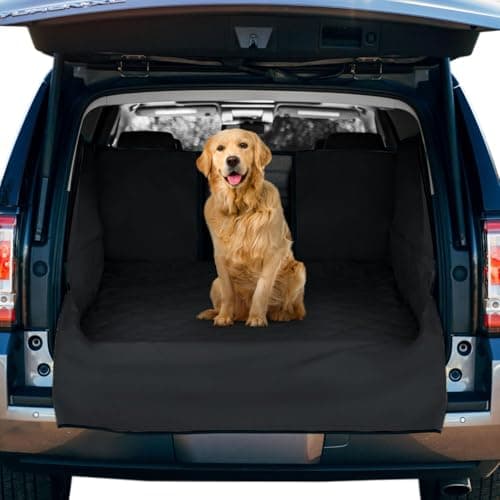
The cargo-bay case is different
If your dog rides in the boot of an SUV, a seat hammock is the wrong shape entirely. You want a cargo liner with a bumper flap — the flap protects the paint strip that every jumping dog scrapes, and no seat cover addresses it. Pair it with a cargo barrier so the dog stays back there.
What we would actually buy
For a dog that rides most days, the Kurgo — the strap hardware is the part that decides whether you still like the cover in six months. For a big or clawed dog, the 4Knines. For occasional trips and rental cars, the URPOWER costs so little that keeping a spare in the trunk makes sense.