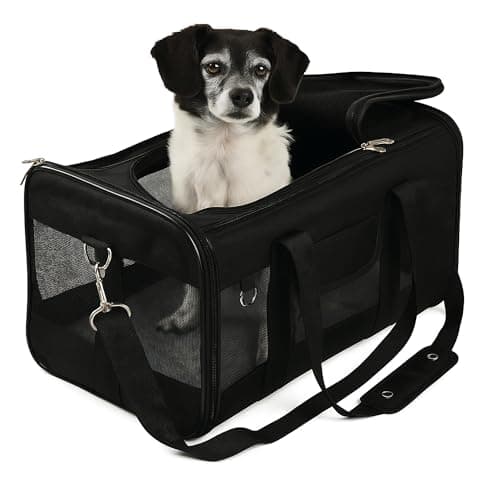
Packing a dog carrier is a different exercise from packing a bag. The carrier has a fixed volume set by your airline's under-seat limit, a dog already occupies most of it, and airlines require that the dog can stand up and turn around in what is left. Every item you add takes space from that requirement. So the list is short, and the test for anything on it is simple: does it lie flat, stay quiet, and do a job that cannot wait until you land?
This page assumes you have already picked the carrier and confirmed it fits — if not, start with the under-seat dimensions table and the carrier roundup, because the bag is the thing that decides whether you board.
Inside the carrier — four things
1. An absorbent pad on the floor
This is the single most important item and it is the cheapest. A puppy pad or an absorbent liner in the base means an accident is a pad you swap in a restroom rather than a soaked carrier you have to keep using for another six hours. Pack at least one spare, flat, in your personal item. Nothing else on this list saves a trip the way this does.
2. Something that smells like home
A familiar blanket or a worn t-shirt costs nothing, takes almost no space and gives an anxious dog a fixed point in a day where everything else is new. VCA makes the same point about a favorite blanket or toy with a familiar scent. Do not wash it the day before — the smell is the entire feature.
3. A quiet chew or a plush toy — not a squeaker
Something to do is worth more than something to look at, and chewing helps with the pressure changes on climb and descent. The constraint is the cabin: a squeaky toy in row 14 makes you the problem passenger and makes your dog the reason the person next to you complains. Take the silent version.
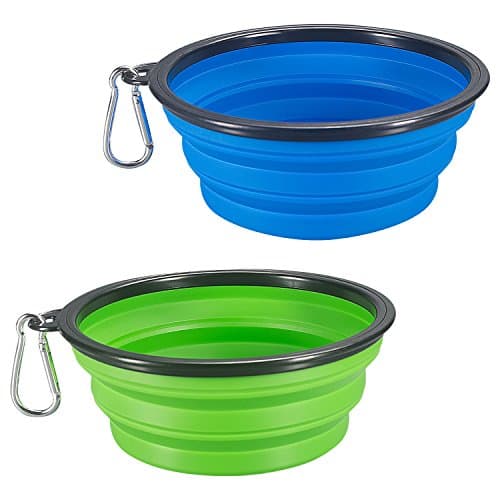
4. A collapsible bowl, empty
Airlines and vets both say the same thing: offer water, do not leave a full bowl in a carrier during taxi and takeoff. A collapsible silicone bowl folds to a disc, so it costs you almost nothing in space and lets you turn a cup of water from the cart — or a bottle bought past security — into a proper drink. Keep it empty between uses. If you want the fuller argument about bowls versus bottles for travel, it is on dog water bottle vs collapsible bowl.
In your personal item, not the carrier
These matter, and they matter outside the carrier, where they are not stealing room from the dog.
- Spare pads and wipes. Wipes clean the dog, the carrier and your hands, and an airport restroom is a bad place to discover you have none.
- Poop bags, more than you think. Relief areas are the one place on a travel day where running out is genuinely awkward.
- One meal of the dog's own food in a sealed bag. Not for the flight — for the delay, the missed connection, or the first night before you can shop.
- Paperwork. Whatever your airline and destination require. The health certificate question is covered on do you need a health certificate to fly.
- A slip lead or a spare leash. Your dog comes out of the carrier at the security checkpoint, and that is the moment a loose dog in an airport becomes possible. See TSA screening with a dog.
Calming gear: what it is, and what it is not
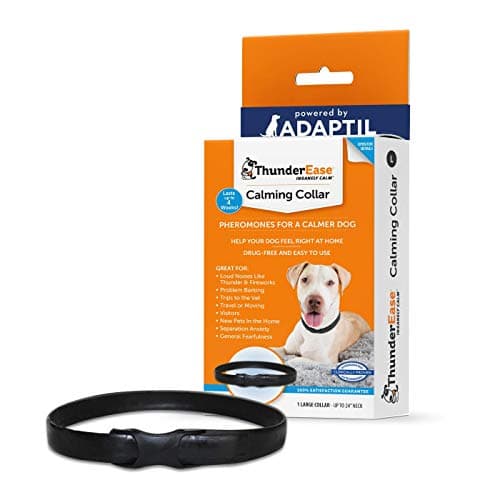
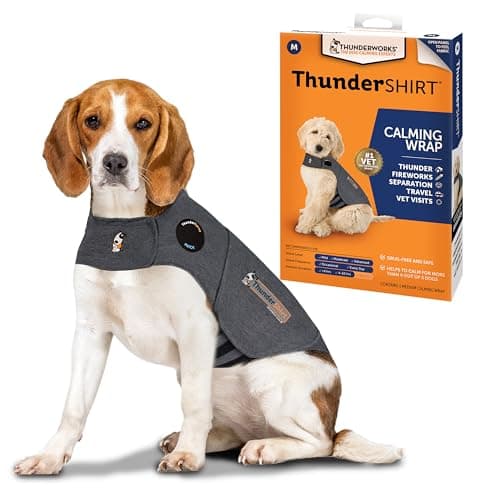
Two products come up constantly for in-cabin flights, and both are worth understanding honestly. A pressure wrap like the ThunderShirt applies gentle constant pressure; a pheromone collar like the ThunderEase is a wearable version of the pheromone products otherwise sold as plug-in diffusers and sprays. Both are drug-free. Both are used by a lot of owners. Neither is a sedative, and neither works for every dog.
Three practical points. First, the collar is the format that travels — a diffuser needs a wall socket and is no use in a carrier under a seat. Second, whatever you try, try it at home several times before the flight; the worst possible introduction to a pressure wrap is the departures hall. Third, and this is the one that matters: talk to your veterinarian before adding any calming product to a flight day. VCA and the AKC both say the same, and a genuinely anxious dog is a conversation with a vet rather than a purchase. We are not a clinic and we do not make efficacy claims about either product.
The behavioral groundwork — crate familiarity, a tired dog, the pre-flight routine — does more than any product on this page and is covered in how to calm a dog for flying.
What to leave at home
A full water bowl clipped inside the carrier
It will empty into the carrier on the first bump and you will spend the flight with a wet dog. Offer water at the gate and between segments instead.
Rigid crates and hard-sided anything
Space inside a soft carrier is bought by flex. A hard bowl, a rigid feeder or a plastic crate tray removes the give that lets the carrier squeeze into a tight under-seat gap — which is the reason we recommend soft carriers for the cabin at all.
Squeaky toys, bells and anything on the collar that jingles
Six hours. Consider your neighbors, and consider that a noisy carrier draws exactly the kind of attention you do not want from crew. A tag silencer is a genuinely useful two-dollar purchase for a travel day.
Anything you have not tested on your dog before
A new chew, a new food, a new supplement, a new anything. Travel day is the worst possible time to find out how your dog reacts to something. Every item in the carrier should be one the dog has already met.
Pack the carrier the night before, then take things out
Load it, put the dog in it at home, and watch. If the dog cannot comfortably stand up and turn around, something comes out — because that is the standard airlines apply, and a gate agent applying it at the door is not a negotiation. Almost everyone packs too much on the first flight and almost nobody does on the second.
The full pre-flight sequence, from booking the pet on to what happens at the gate, is on how to fly with a dog. If your trip is by road instead, the equivalent list is the dog travel kit.