A dog's pads take the entire trip. Hot asphalt at a rest stop, sand that holds the afternoon's heat, granite on a trail, road salt in a February parking lot — the pads are the only part of the dog touching any of it. Our hot pavement guide tells you when not to walk and our dog boots roundup covers the full-coverage answer. This page is the thing in between: the two-ounce tin that goes in the glovebox and actually gets used, because most dogs tolerate wax far better than they tolerate boots.
Start with the distinction nobody puts on the front of the tin. This category is two products:
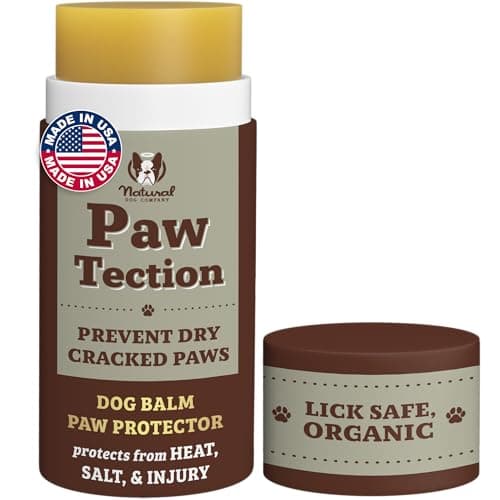
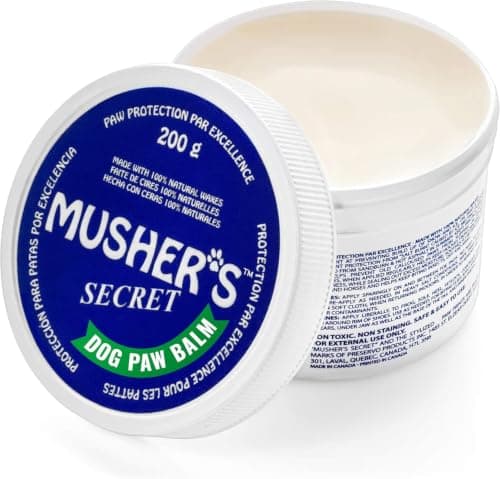
- Barrier wax — a dense blend of beeswax and plant waxes applied beforeyou go out, to put a layer between a healthy pad and a harsh surface. Musher's Secret and Natural Dog Company's PawTection are this.
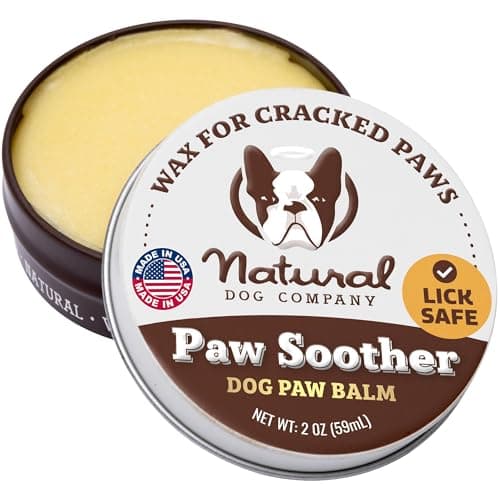
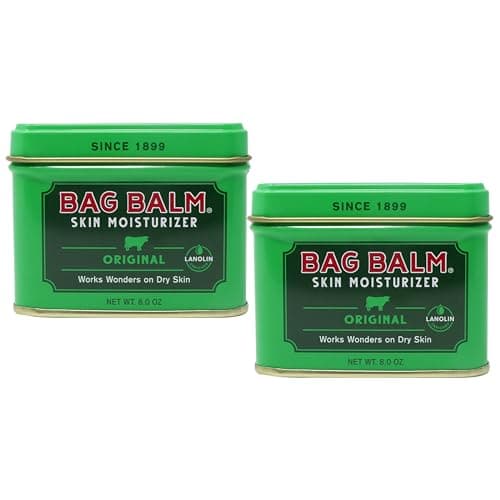
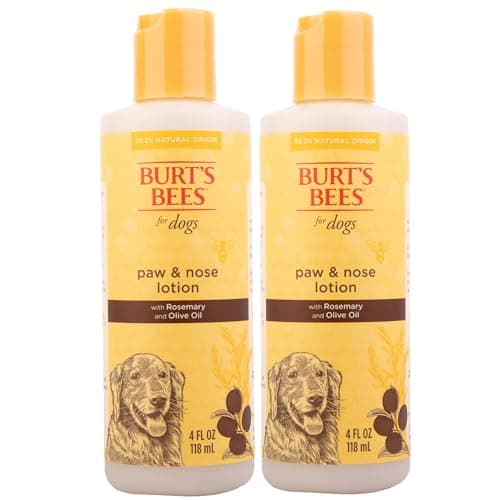
- Repair balm — a softer butter-and-oil or petrolatum blend applied afterthe damage, to soften and heal a pad that is already dry, peeling or cracked. Paw Soother, Bag Balm and the Burt's Bees lotion are this.
Natural Dog Company is the only brand we read that states the split outright — PawTection prevents damage and goes on before going outside, Paw Soother heals damage and goes on before bed. Buy the wrong half and the product genuinely does not work: a barrier wax over a split pad traps the problem, and a soft repair balm before a hike on hot stone softens the pad right when you want it tough.
One more thing we will not do on this page. No balm is burn protection. Nothing here is tested against a surface temperature, nobody claims it is, and the published rule still applies: the AAHA's ten-second hand test decides whether you walk at all — if the pavement is too hot for your palm for ten seconds, it is too hot for a waxed pad. Wax is for abrasion, grit, sand, ice and salt. Heat is a decision, not a product.
What decides a paw balm
1. Barrier or repair — pick the job first
Everything else is detail. If the pads are healthy and the dog is about to walk on something rough, hot or salted, you want a wax. If the pads are cracked, peeling or hyperkeratotic, you want a balm, and you want it at night when the dog is settled. Several brands sell both and expect you to own both; that is the honest version of this category.
2. Does it let the pad breathe?
Musher's Secret is the only pick that publishes the mechanism: a semi-permeable shield absorbed into the pad, so perspiration still escapes through the toes. That matters, because a fully occlusive layer on a working paw is how you get a soft, macerated pad instead of a protected one. Petrolatum products like Bag Balm sit at the other end of that scale — excellent as a dressing for cracked skin, not what you want sealed under a dog walking four miles.
3. Format decides whether it gets used
A tin needs fingers, a flat surface and somewhere to wipe your hand. A stick does four paws in a parking lot without any of that, which is why Natural Dog Company's 2 oz stick ranks second here despite costing several times more per ounce than the Musher's tin. On a road trip, the product you will actually apply beats the product that is better value sitting at home.
4. What is in it, and what happens when the dog licks it
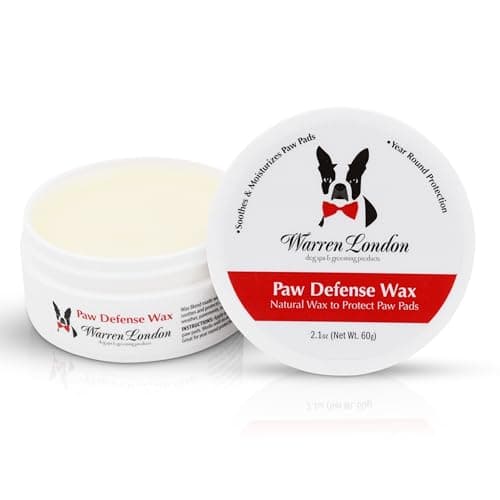
Every one of these gets licked. That makes the ingredient list a real decision rather than a marketing panel. Musher's is a plain wax-and-oil blend with vitamin E. Warren London's Paw Defense contains eucalyptus oil, and PawTection contains lavender essential oil and rosemary extract — fine for most dogs, worth a conversation with your vet if yours is sensitive or a determined licker. Bag Balm includes a 0.3% 8-hydroxyquinoline sulfate antiseptic and says the formula is designed to discourage licking. We do not make medical claims about any of them, and neither should the label.
5. Cost per ounce, because this is a consumable
A 200 g tin and a 2 oz stick are not comparable purchases. Musher's 200 g is roughly seven ounces of wax; two 8 oz Bag Balm tins is sixteen. The premium 2 oz tins and sticks are a fraction of that for a similar price — you are buying format and formula, which is a fair trade for a travel product and a bad one for a dog whose paws you wax at home every week.
6. Timing: wax goes on before, balm goes on after
Give a wax a few minutes to absorb before the dog walks on a hard floor — a freshly waxed dog on tile is a slip, and a freshly waxed dog on a hotel duvet is a stain. Repair balms are a bedtime job for the same reason, and because an hour without licking is what lets them work. Reapply wax after a swim or a rinse; water and sand take it off.
What we left out
Pawz Max Wax. It belongs in this comparison and did not resolve to a live listing we could match by title on the day we checked. Paw sprays and "liquid boot" aerosols. Convenient, and none of the ones we looked at publish a formula or a durability figure of any kind. Human lip balms, coconut oil and petroleum jelly straight from the tub. People use all three. They have no barrier durability, and the dog eats them off in a minute. Anything medicated or prescription. Pad disease — persistent cracking, bleeding, limping, hyperkeratosis — is a vet diagnosis, and a roundup is the wrong place for it.
Every pick on the job it does
Ingredients are the brands' published lists. "Barrier" means applied before going out; "repair" means applied after damage, usually at night.
| Pick | Job | Size | Base | When to apply |
|---|
| Musher's Secret | Barrier | 200 g (60 g / 454 g also sold) | Beeswax, carnauba, candelilla, vitamin E | Before outings; brand says 1-2x a week year-round |
| NDC PawTection stick | Barrier | 2 oz stick | Carnauba, candelilla, sunflower wax, mango butter | Before going outside |
| NDC Paw Soother | Repair | 2 oz tin | Jojoba, hempseed oil, calendula, cajeput | Before bed |
| Warren London Paw Defense | Both (compromise) | 2.1 fl oz jar | Beeswax, coconut oil, vitamin E, eucalyptus oil | Before outings; also as a conditioner |
| Bag Balm Paw & Skin | Repair | 8 oz tins (0.33 / 2 oz tubes also sold) | Petrolatum, lanolin, paraffin, 0.3% antiseptic | After damage; chapped noses too |
| Burt's Bees Paw & Nose Lotion | Conditioning | 4 oz bottle | Water-based with olive oil, rosemary, honey, beeswax | Daily maintenance, dry-skin season |
How to actually wax a dog's paws
- Clean and dry first. Wax over grit grinds the grit in. Rinse or wipe the paws, dry them — see our drying towel picks — then apply.
- Trim the hair between the pads. On a long-coated dog, wax in the feathering turns into a grit magnet. Trim level with the pads before the trip, not on it.
- A light coat, rubbed in.Musher's own instruction is a light coating rubbed into the pads, absorbed in minutes. More wax is not more protection; it is a slippery dog and a greasy car seat.
- Do not forget between the toes. Ice balls, salt and sand collect there first, and it is the spot people skip because the dog objects to it.
- Reapply after water. A swim, a rinse or a river crossing takes the wax with it. Carry the stick for exactly this reason.
- Wash the paws after road salt regardless.The AKC's winter guidance is balm before the walk and warm water after it — the balm reduces the damage, rinsing removes the chemical.
- Look at the pads every few days on a long trip. Catch a thin spot before it is a split. If it is already split, stop using wax on it and switch to a repair balm — and if it is bleeding or the dog is limping, that is a vet, not a tin.
What we would actually buy
Two things, not one. The Musher's Secret 200 g tin lives in the gear bin as the before-you-go wax — cheapest per gram, the clearest published mechanism, and the one that works in both February and July. Add Natural Dog Company's PawTection stick for the glovebox, because a stick is what gets used at a trailhead. If your dog's pads are already rough, start with Paw Soother at night for a week before you worry about barrier wax at all; Bag Balm is the cheaper, plainer version of the same job in a far bigger tin, and the Burt's Bees lotion is the easy daily option for a dog that hates having wax worked into its feet. Then pack the first aid kit — because a cut pad on day two of a trip is the actual emergency this page cannot fix.