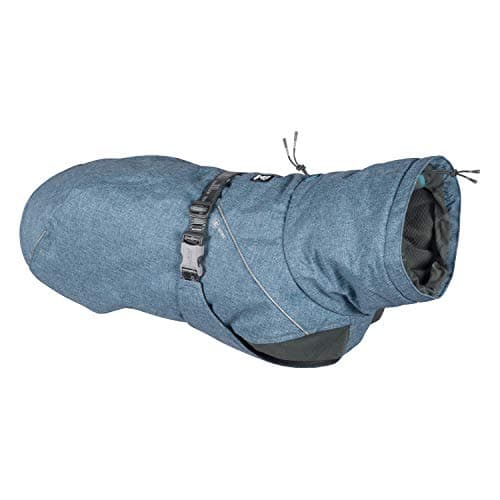
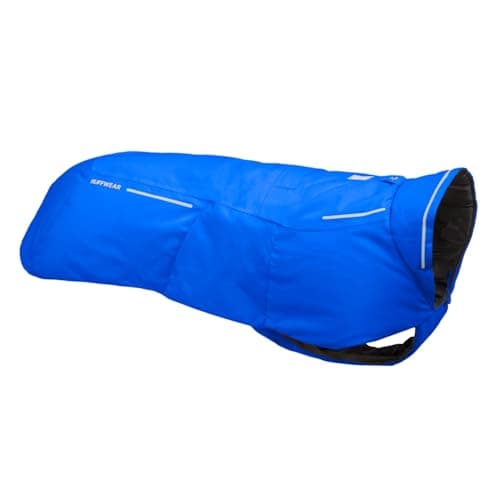
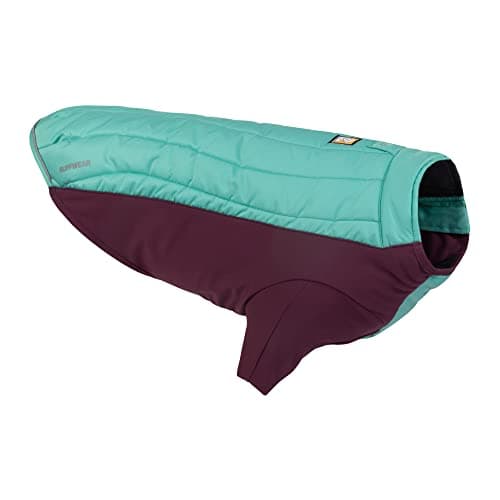
The verdict: buy the Ruffwear Powder Hound if you want one coat that handles cold and wet, because it is the only one here that publishes both numbers that matter - 250 g of recycled polyester insulation and a 10,000 mm waterproof rating - and the only one with sleeves over the chest and shoulders. If your dog is short-haired, deep-chested or long-bodied, buy the Hurtta Expedition Parka instead: it sizes by back length rather than chest girth, and that single difference is why it fits greyhounds, whippets and dachshunds that nothing else does. If the honest use case is a cold town walk, the Kurgo Loft does it for a quarter of the money.
Dog coats are the most marketed and least specified category we cover. The listings are full of adjectives - cozy, windproof, extreme - and nearly empty of figures. So this page ranks on the figures that do exist: grams of insulation, millimeters of waterproof rating, where the coat covers, and how it sizes. Where a product publishes nothing, the card says so instead of borrowing a technical story it has not earned.
What we do and do not know: every spec here comes from the manufacturer's published page, except the Carhartt and Gooby figures, which come from the live listings and are labeled that way. We have not weather-tested any of these coats and we are not going to print a temperature at which your dog needs one - that depends on the dog's coat, body mass, age and health, and it is a conversation with your veterinarian rather than a number from us.
Which dogs actually need a winter coat
A coat is not a kindness for every dog. A double-coated northern breed carries its own insulation and a 250 g jacket on a working husky is weight it does not need. The dogs that genuinely benefit are specific:
- Short-haired and single-coated dogs - no undercoat means no insulating layer at all. Hurtta designed the Expedition Parka line explicitly for these breeds.
- Thin dogs with little body fat - sighthounds lose heat faster than their size suggests, which is also why girth-based sizing fits them so badly.
- Puppies and senior dogs - less reliable thermoregulation at both ends of life. Our traveling with a senior dog guide covers the rest of the older-dog picture.
- Any dog that will be stationary in the cold - standing at a trailhead, waiting outside a store, sitting in a bike trailer, tied at a campsite, or on a boat. A moving dog makes its own heat; a parked one does not.
- Any dog that is going to get wet and then be cold - which is the real mechanism behind most cold-weather misery, and the reason waterproof beats warm when you can only have one.
How we ranked them
- Published insulation weight. In grams of fill - 250 g (Powder Hound, Quinzee), 140 gsm (Kurgo Loft), 120 g (Vert). A coat that publishes no fill weight cannot claim warmth.
- Waterproof, water-resistant, or absorbent.Three different things. Ruffwear's Powder Hound and Vert publish a 10,000 mm rating; the Quinzee and Kurgo are DWR-treated and will wet out; cotton duck soaks.
- Coverage. Back-only, back-and-belly, hips and thighs, or sleeves. Wind-driven snow gets in wherever the coat stops.
- Harness access. A punched leash portal, a two-way zipper, or nothing. This is the practical difference between a coat you use and a coat you fight.
- Fit system. Chest girth alone, back length, or adjustable at several points. Fit is the main reason dog coats get returned.
The comparison table
| Coat | Insulation | Water | Coverage | Sizes by |
|---|
| Ruffwear Powder Hound Insulated Jacket | 250 g recycled polyester | Waterproof, 10,000 mm | Back, belly and front-leg sleeves | Chest girth, 13-42 in |
| Hurtta Expedition Parka | Quilted, varies by size | Houndtex membrane, sealed seams | Extended back and hindquarters | Back length (in) |
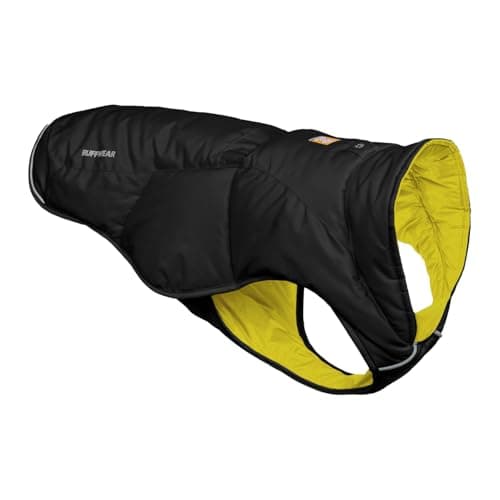
| Ruffwear Quinzee Insulated Vest | 250 g recycled polyester | Water-resistant DWR only | Back and belly, vest cut | Chest girth, 13-42 in |
| Ruffwear Vert Waterproof Insulated Vest | 120 g recycled polyester | Waterproof, 10,000 mm | Back, hips and thighs, leg loops | Chest girth, 13-42 in |
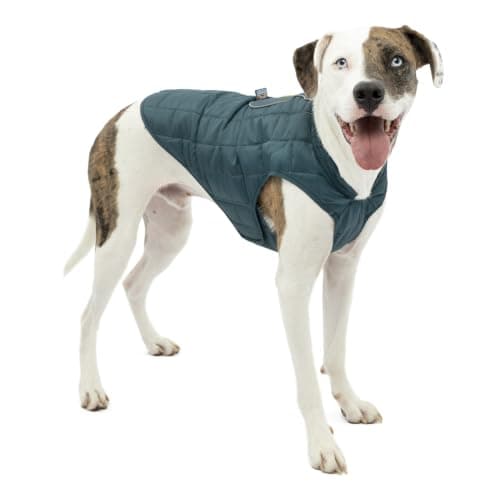
| Kurgo Loft Dog Jacket | 140 gsm Polytech fill | Water-resistant | Back and belly | XS-XL, belly adjusters |
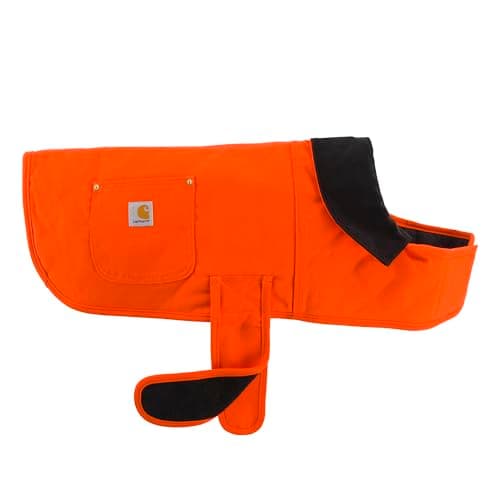
| Carhartt Firm Duck Insulated Dog Chore Coat | Quilted lining (unstated weight) | None - cotton duck absorbs | Back and sides | XS-XL by listing |
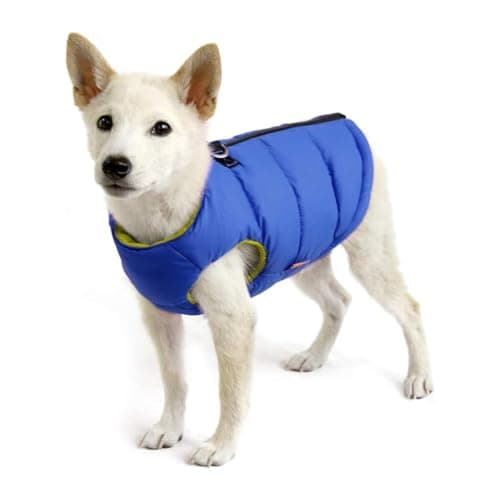
| Gooby Padded Dog Vest | Padding (unstated) | None stated | Back and chest, small-dog cut | Gooby's own small-dog scale |
Prices are live from the Amazon Product API with the date stamped underneath. Coats are sold as individual size and color listings in this category, so the size you need may be a different listing - buy to your measurement, not to the picture.
Waterproof beats warm, if you can only have one
Wet insulation has stopped being insulation. That is the whole argument for choosing a 10,000 mm waterproof shell over an extra 100 g of fill in any climate where snow melts or rain happens: a 250 g water-resistant vest in sustained wet is a cold, heavy coat within the hour, while a 120 g waterproof vest keeps doing its job. The Quinzee is on this page because packability is worth real money to a traveling dog owner - but Ruffwear calls it water-resistant, not waterproof, and we are repeating that rather than smoothing it over.
The corollary is that drying the dog matters as much as dressing it. A wet dog put straight into a cooling car is the actual cold-weather hazard on a road trip, which is why we rank towels at best dog drying towels and why how to keep a dog warm in the car starts with insulation from below rather than apparel.
Measuring, which is where most of this goes wrong
Two systems exist and they are not interchangeable. Chest girth (Ruffwear, Kurgo) is measured around the deepest part of the rib cage, behind the front legs. Back length (Hurtta) is measured along the spine from the base of the collar to the base of the tail. A barrel-chested dog measures into two girth sizes and needs the bigger one; a long, narrow dog measures small on girth and long on back, which is exactly the dog that ends up in a coat that fits its chest and leaves its hips bare. If your dog is long-bodied, start with Hurtta and the back-length system - the same measurement problem we work through for carriers in best carriers for dachshunds.
What we left out, and why
Full-body snowsuits. Legs-included suits exist and make sense for a small, short-haired dog in deep snow, but they are a different product with a different failure mode (a dog that will not walk in them). The Canada Pooch thermal snow jacket our search resolved is one of these; we named it rather than ranking it against open-bellied coats it cannot be compared to fairly.
The WeatherBeeta parka. It resolved to a live listing with a price but no availability string, and our rule on this site is that we feature a product only when availability is explicitly confirmed. It is a reasonable coat; it is not on this page today.
Fleeces, sweaters and hoodies. A fleece is a mid-layer, not a winter coat: no wind resistance, no water resistance, and it holds moisture against the dog. If the whole need is indoor warmth for a thin dog, a fleece is fine and this page is overkill.
Heated coats and battery vests. We do not rank battery-heated apparel for dogs, for the same reason we refuse 12V heated pads on the warm-car page: a heat source against a dog that cannot move away from it is a burn risk and a chew risk, and passive insulation solves the problem.
Cooling vests. The opposite problem and the opposite product - best dog cooling vests is the summer half of this page.