Skip to content
Paw & Passport

HUB 05 · Travel Essentials

Microchip vs GPS Tracker

One is permanent identification that works when a stranger finds your dog. The other is live location that works while nobody has. Neither replaces the other.

By Stephen V.Updated How we research
#ad

We earn a commission when you buy through our Amazon links, at no extra cost to you. It never affects our rankings, and we say so when the cheaper product is the better buy. How this works.

People treat these as competing purchases and they are not remotely the same product. A microchip is a passive identifier that only works once somebody has already caught your dog and taken it somewhere with a scanner. A GPS tracker is an active device that tells you where the dog is right now, and stops working the moment its battery dies. They fail in opposite situations, which is exactly why a traveling dog wants both.

What a microchip is

A rice-grain-sized RFID transponder implanted under the skin between the shoulder blades. It has no battery and no power source of its own - a scanner energizes it and reads back a number. That number means nothing until it is looked up in a registry database, which is why the AVMA is emphatic on the point most owners miss: a microchip that is not registered, or is registered to an old address and a dead phone number, does nothing at all.

What it is good at: permanence. It cannot fall off, be removed, or run out of power, and it lasts the dog's life. It is the thing that proves ownership when a dog turns up two states away three months later, and it is the reason shelters scan every animal that comes through the door.

What it cannot do: tell you where your dog is. It has no location capability of any kind. A chip is a name tag that cannot be lost, not a tracker.

What a GPS tracker is

A collar-mounted device with a GPS receiver and a cellular radio. It fixes its position and sends it to your phone over a mobile network, which is why real trackers carry a subscription - you are paying for the SIM as much as the hardware. Range is wherever there is cell coverage.

What it is good at: the first hour. That is the window in which most lost dogs are found, and a live position on a map is worth more in that hour than every other measure combined.

What it cannot do: work with a flat battery, work outside cell coverage, or survive being pulled off with the collar. It is also not proof of ownership - a stranger who finds your dog does not have your app.

And the third thing: Bluetooth tags

An AirTag or similar is neither of the above. It has no GPS and no cellular radio - it reports its position by borrowing the mobile phones of passers-by, so it works well in a busy city and does nothing in an empty field. As a way of finding a dog that has slipped out of a hotel room in a populated area, it is genuinely useful and cheap. As a wilderness safety device, it is not one. We worked through that distinction in full in GPS tracker versus AirTag.

The short answer

Quick picks

#ProductBest forScorePrice
01
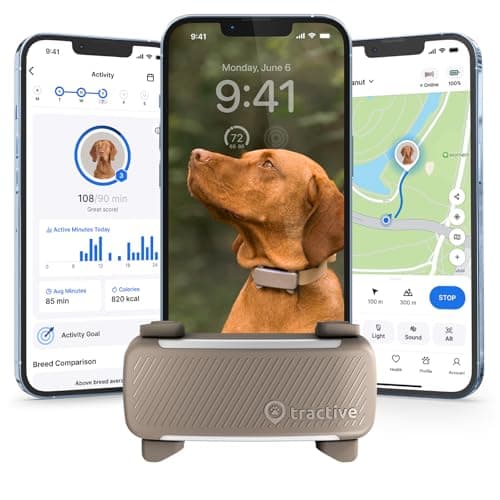
Tractive Tractive Smart Dog GPS Tracker
Tractive Smart Dog GPS Tracker

The real GPS pick. Unlimited range and live tracking — as long as you accept it needs a subscription.

Actual live GPS location
6.8
$55.30Amazon
02
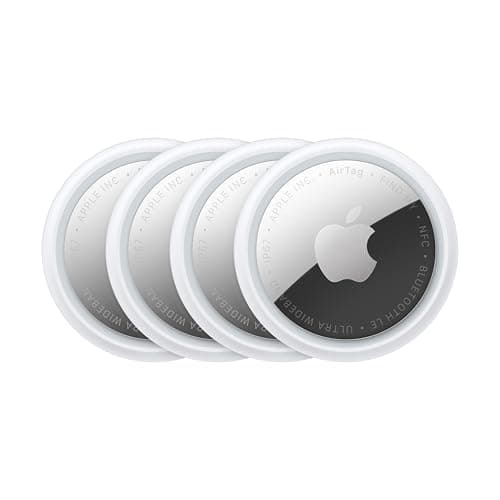
Apple Apple AirTag (4-pack)
Apple AirTag (4-pack)

Not a GPS tracker — but for an iPhone household it's the no-subscription, months-of-battery way to find a dog.

iPhone owners who won't pay a subscription
8.6
$79.99Amazon
03
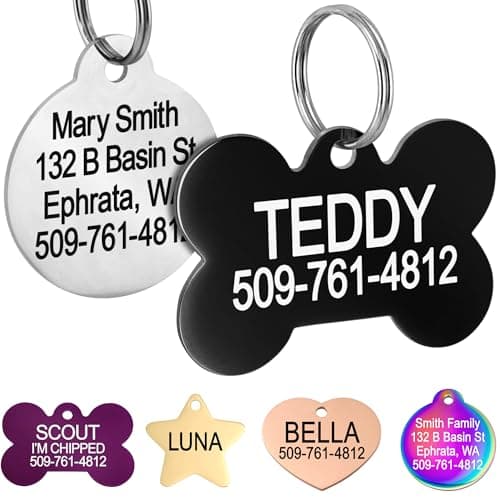
GoTags GoTags Personalized Stainless Steel Dog Tag
GoTags Personalized Stainless Steel Dog Tag

Deep-engraved stainless. The engraving is still readable in three years, which is the only spec that matters.

The tag you actually rely on
8.2
$11.64Amazon

#ad · Live prices from the Amazon Product API, as of Sep 6, 2026. Where we have no verified live price we show none — we would rather leave a gap than print a number that has rotted.

In detail

The picks, in full

01
Tractive Tractive Smart Dog GPS Tracker

Actual live GPS location

Tractive Smart Dog GPS Tracker

LTE + GPSUnlimited rangeWaterproofSubscription required
6.8/10

The real GPS pick. Unlimited range and live tracking — as long as you accept it needs a subscription.

Location accuracy
9
Battery life
8
No subscription
2
Size/weight
8
Value
7

Pros

  • True cellular GPS: it reports live location anywhere there's a mobile signal, not just within Bluetooth range
  • Waterproof and light enough to ride on a collar all day
  • Live tracking and virtual fences are the features an escape-prone dog actually needs

Cons

  • Requires a paid subscription — the device price is not the real cost of ownership
  • Battery is measured in days or weeks, not months — Tractive lists up to two weeks with Power Saving Zones, and about six days without them

Don't buy this if…

you won't pay a monthly fee. Without the subscription a cellular tracker is a paperweight — if you refuse the fee, an AirTag is the honest alternative.

$55.30View on Amazon

$79.0030% off

Price as of Sep 6, 2026. Prices change — Amazon's at checkout is the one that counts.

#ad · we may earn a commission from this link to Tractive Smart Dog GPS Tracker

02
Apple Apple AirTag (4-pack)

iPhone owners who won't pay a subscription

Apple AirTag (4-pack)

Bluetooth + Find MyNo subscription~1 year batteryNeeds a collar holder
8.6/10

Not a GPS tracker — but for an iPhone household it's the no-subscription, months-of-battery way to find a dog.

Location accuracy
6
Battery life
10
No subscription
10
Size/weight
8
Value
9

Pros

  • No monthly fee and a coin-cell battery that lasts about a year — the opposite of the cellular trackers
  • The Find My network is enormous in populated areas, so a lost dog near people gets located fast
  • Dirt cheap per tag in the four-pack, and useful on luggage and keys too

Cons

  • It is not GPS — it has no live location and relies on a nearby iPhone to report it, which fails in the empty countryside where a dog most needs finding
  • Needs a separate collar holder, and works meaningfully only for Apple users

Don't buy this if…

your dog roams rural areas or you're on Android. With no passing iPhones there's nothing to report a location, and off the Apple ecosystem it's the wrong tool — get the Tractive.

$79.99View on Amazon

$99.0019% off

Price as of Sep 6, 2026. Prices change — Amazon's at checkout is the one that counts.

#ad · we may earn a commission from this link to Apple AirTag (4-pack)

03
GoTags GoTags Personalized Stainless Steel Dog Tag

The tag you actually rely on

GoTags Personalized Stainless Steel Dog Tag

Stainless steelFront and back engravingMultiple shapesDeep engraving
8.2/10

Deep-engraved stainless. The engraving is still readable in three years, which is the only spec that matters.

Legibility
10
Durability
10
Quietness
5
Customization
8
Value
8

Pros

  • Stainless resists the wear that turns cheap aluminum tags into unreadable discs within a year
  • Two-sided engraving fits a phone number plus a second contact, which is what you want when traveling
  • The engraving is cut deep rather than laser-marked on the surface

Cons

  • Steel is noisier against other tags than aluminum or silicone
  • Costs several times a basic aluminum tag

Don't buy this if…

you change contact details often. Engraving is permanent; a QR tag you can re-point is the better shape for that.

$11.64View on Amazon

Price as of Sep 6, 2026. Prices change — Amazon's at checkout is the one that counts.

#ad · we may earn a commission from this link to GoTags Personalized Stainless Steel Dog Tag

Side by side

MicrochipGPS trackerBluetooth tag
Tells you where the dog isNoYes, liveLast seen, if people are nearby
Needs a batteryNoYes, daysYes, months
Works with no cell coverageYesNoNo
Can fall offNoYes, with the collarYes, with the collar
Proves the dog is yoursYesNoNo
Ongoing costRegistry, usually one-offSubscriptionNone

Read the "can fall off" row against the "tells you where" row. That is the entire argument for having both: the device that finds your dog fast is also the device most likely to be missing, and the one that cannot go missing cannot find anything.

The chip registration job, which takes ten minutes

  1. Find out if the chip is registered at all. Look the number up at the AAHA Universal Pet Microchip Lookup, which tells you which registry holds it. A chip implanted by a shelter or a breeder is frequently registered to them and not to you.
  2. Put your own details on it - current phone, current address, and a second contact who is not traveling with you.
  3. Update it before a move, not after. A chip pointing at the house you just left is a chip pointing the wrong way, and moving week is when dogs bolt. See moving cross-country with a dog.
  4. Ask your vet to scan it once a year. Chips very occasionally migrate or fail, and the annual check-up is a free opportunity to confirm it still reads.

What we would actually do for a traveling dog

All three, and a visible tag. The chip is the permanent backstop. The tracker is the tool for the hour that matters. A visible collar tag is what a member of the public actually uses, because most found dogs are returned by a neighbor with a phone, not by a shelter with a scanner - which is why our travel ID tag guidance is to put a mobile number on it rather than a home address you are nowhere near.

If you are only buying one thing for a specific trip: a live GPS tracker for anywhere rural, for camping, and for any dog with a history of bolting; a Bluetooth tag if your travel is urban and the risk is a dog out of a hotel room door. Either way, register the chip first - it is free and it is the one that works when everything else has failed.

Do not skip the analog layer

A collar with a legible tag, a recent photo of the dog on your phone, and a note of where you are staying does more work than people expect. When a dog is found by a passer-by, the question is not "what technology did the owner buy" - it is "how quickly can this person reach the owner". Everything on this page should be judged by that standard.
How we picked

We do not test the gear

We compiled the manufacturers' published dimensions and specs, cross-checked them against airline under-seat limits and published safety certifications, read the owner reviews, and scored each product against a published rubric. The scores are judgments from that research — they are not measurements we took, because we do not own a lab and we are not going to pretend we do. Where we could not verify a fit or a claim, we say so on the page.

Questions

Frequently asked

Can a microchip track my dog?
No. A microchip is a passive RFID transponder with no battery and no location capability - it stores a number that a scanner reads back, and that number is looked up in a registry. It only works after somebody has found your dog and taken it somewhere with a scanner. For live location you need a GPS tracker.
Do I need a GPS tracker if my dog is microchipped?
They solve different problems. The chip proves the dog is yours and cannot be lost; the tracker tells you where the dog is in the hour when most lost dogs are recovered. For a dog that travels - unfamiliar areas, campsites, hotel doors, rest stops - having both is the sensible setup.
Why is my dog's microchip not working?
Almost always registration rather than hardware. A chip implanted by a breeder or shelter is often still registered to them, and a chip registered to an old address and a disconnected phone is functionally useless. Look the number up at the AAHA Universal Pet Microchip Lookup to find which registry holds it, then update your own details.
Is an AirTag as good as a GPS tracker for a dog?
Only where there are lots of phones. Bluetooth tags have no GPS and no cellular radio - they report position by borrowing passing phones, so they work well in a city and do very little in open countryside. For camping, hiking and rural travel, a real GPS tracker with a subscription is the one that works.
How often should I check my dog's microchip?
Have your vet scan it once a year at the check-up - chips occasionally migrate or fail - and review the registry details any time your phone number, address or emergency contact changes. Update before a move rather than after, because the days around a relocation are when dogs are most likely to go missing.

Keep reading

Receipts

Sources

We do not run a testing lab, and we do not pretend to. Product dimensions and safety claims come from the manufacturer's own listing; airline limits come from the airline's published policy, with the date we checked it. Where we could not verify something, we say so on the page rather than quietly leaving it out. Read our full method.