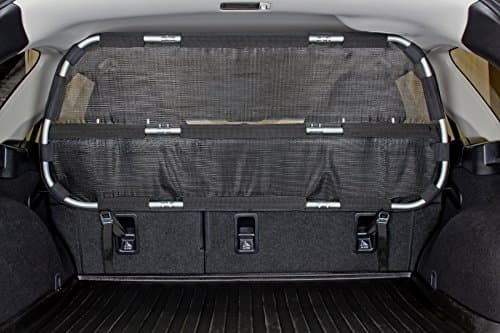
A dog that climbs into the front seat on the highway is a genuine driving hazard, and a barrier is the cheapest fix for it. That is the honest case for this category, and it is a good one.
What a barrier is not is a safety device. In a crash, an unrestrained dog behind a mesh net is still an unrestrained dog — the net is a divider, not a restraint, and no barrier on this page has a published crash-test result. If crash protection is what you are shopping for, you want a crash-tested harness or a car seat, and you should buy that first. A barrier is a useful thing to add on top; it is a poor thing to rely on.
With that said, the choice within the category comes down to one question: how determined is your dog? The Travelin K9 net is enough for most dogs and costs less than a tank of fuel. The rabbitgoo steel option is for the dog that treats mesh as a suggestion. The Bushwhacker takes the top spot because it is sized for the crossover-shaped vehicles most people actually drive.
How to choose a car barrier
Measure the opening before anything else
Barriers fail on fit far more often than they fail on strength. Measure the width of your cargo opening at its widest and at the point where the barrier will actually sit — on most SUVs those are different numbers — and the height from the load floor to the headliner. Then compare against the listed dimensions rather than the vehicle-compatibility blurb, which is usually optimistic.
Mesh, wire or tube
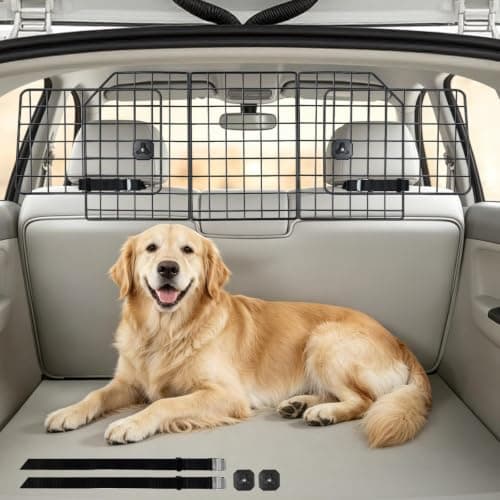
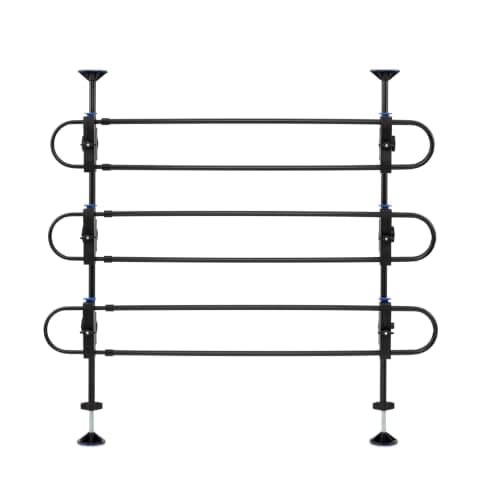
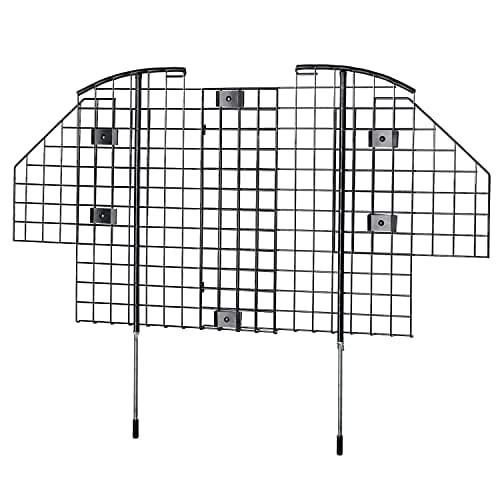
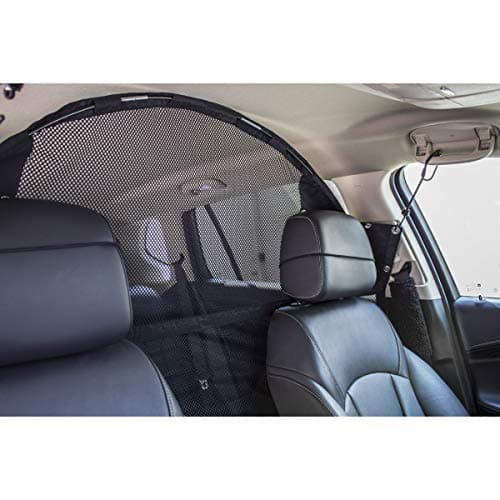
Mesh nets (Travelin K9, Bushwhacker) are light, cheap, quick to fit and almost invisible in the rear-view mirror. They stretch, so a big dog leaning into one will find the give. Steel wire (rabbitgoo, MidWest Homes for Pets) does not stretch and does not get chewed, at the cost of weight, fitting time and a busier mirror. Tubular frames (PetSafe) split the difference: rigid, but with wide spacing that a small dog can squeeze through.
Cargo divider or back-seat barrier
These are different products for different vehicles. A cargo divider goes behind the rear seats and keeps the dog in the boot of an SUV or wagon; a back-seat barrier goes between the front and rear seats and works in a sedan too. Buying the wrong one is the most common mistake in this category — check which shape you are looking at before you compare prices.
Rear visibility is a real cost
Everything you put behind the rear seats is something you look through. Fine mesh is barely noticeable; welded wire on a small grid is genuinely intrusive at night with headlights behind you. If your car has no rear camera, weight visibility heavily. If it does, you can afford the rigid option.
Do not skip the seat protection
A barrier keeps the dog in the back; it does nothing about hair, mud and claws. If the dog is riding on a bench, a hammock seat cover is the natural companion purchase. If it is riding in the cargo bay, a liner does the same job back there.
What we would actually buy
Start with the Travelin K9 net unless you already know your dog defeats mesh — it is cheap enough to be a test rather than a commitment. If it fails, move to the rabbitgoo steel barrier and be done. If you drive a crossover and want the fit sorted properly the first time, the Bushwhackeris the one designed around your vehicle's shape.