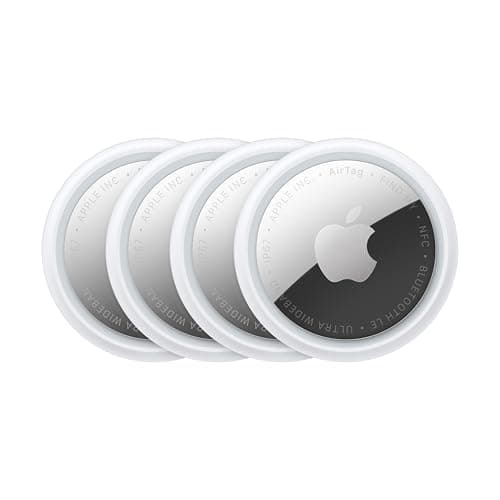
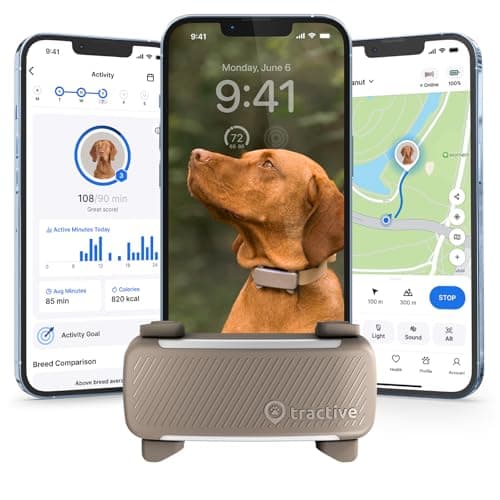
These two products sit on the same shelf, cost wildly different amounts to own, and do fundamentally different things. The confusion between them is the most consequential misunderstanding in dog travel gear, because people buy the cheap one and believe they have bought the other.
A cellular GPS tracker has its own radio and its own connection. It knows where it is and it tells you, anywhere there is mobile signal, whether or not another human being is nearby. That capability is why it needs a subscription.
An AirTag has neither. It is a Bluetooth beacon that is located when someone else's iPhone passes within range and anonymously reports it. In a city that happens constantly and the result feels like magic. On a rural trail at dusk, no iPhone passes, nothing is reported, and the tag shows you the last place it was seen — which may be hours old and miles away.
Two follow-ups. If you land on the AirTag side of this comparison, how to put an AirTag on a dog collar covers the mount and the setup. If your ground has no mobile coverage at all, neither device here works - trackers for no cell service is that case.
Head to head
| Consideration | Cellular GPS tracker | Apple AirTag |
|---|
| Live location | Yes, anywhere with mobile signal | No — last seen by a passing iPhone |
| Works in empty countryside | Yes, with cell coverage | No |
| Ongoing cost | Monthly or annual subscription | None |
| Battery | Days to about two weeks between charges | About a year, then a coin cell |
| Phone requirement | iPhone or Android | Apple devices only |
| Extra features | Virtual fences, activity tracking, alerts | Precision finding when you are close |
| Size and mounting | Larger, purpose-built collar mount | Tiny, needs a separate holder |
The question that decides it: where do you actually travel?
City parks, campgrounds near towns, suburban neighborhoods, busy trailheads — these are places full of iPhones, and an AirTag performs well in all of them. National forest, desert, remote coastline, empty state parks in the off-season — these are places where an AirTag is a keyring ornament. Answer this question honestly and the rest follows.
The second question: does your dog actually bolt?
There is a real difference between "I would like to know where the dog is" and "this dog has run and not come back before." For a dog with a history of bolting, chasing wildlife or getting out of yards, live location is not a luxury. For a dog that stays within thirty feet of you at all times, a tag on the collar is reasonable insurance against the unlikely.
Subscriptions are the real cost, and they are not hidden
A cellular tracker's device price is a fraction of what you will spend on it. Multiply the monthly fee by the years you expect to own it and compare that to the AirTag's zero. That calculation is legitimate, and for a low-risk dog in a populated area the AirTag genuinely wins it. Just do not pretend the two products do the same thing while you make it.
Battery is a practical difference people underestimate
A GPS tracker needs charging every few days to every couple of weeks depending on the model and how hard you track, which means a routine and a charger in the travel bag. An AirTag runs for roughly a year on a coin cell. On a long trip, the tracker that is flat in a drawer because you forgot the cable is worse than the tag that has been quietly working the whole time.
Neither replaces an ID tag
The thing that most reliably reunites a lost dog with its owner is still a phone number on a collar and a registered microchip. Both of those work when the finder is a stranger with no app, no iPhone and no idea what the plastic box on the collar is. Electronics are the supplement, not the plan.
The verdict
Buy a cellular GPS tracker if your dog bolts, if you hike or camp away from people, or if you would pay any monthly fee to avoid one bad afternoon. Our GPS tracker roundup ranks what is actually buyable. Buy an AirTag if you have an Apple household, travel in populated places, and want cheap insurance with no ongoing cost — and put it in a holder that will not lose it. A meaningful number of people should own both, and the combined cost is still less than one night in a pet-friendly hotel.