A tether is a short strap with a clip on one end and a seatbelt attachment on the other. It costs less than a takeaway meal and it is the component that turns a harness into an actual restraint system — which is exactly why it is worth thinking about for five minutes rather than grabbing whichever one is nearest.
The most important thing to understand first: the tether is not the safety device. None of these carry a published crash-test result, and none can make an untested harness safe. Crash performance lives in the harness — see our crash-tested harness roundupfor the models with real evidence. The tether's job is to attach that harness to the car correctly and keep the dog where it should be.
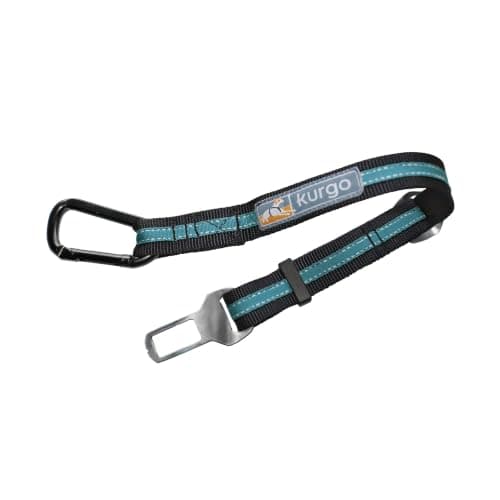
Given that, the differences that matter are how it attaches, how short you can make it, and whether the hardware survives a year. The Kurgo leads because buckling straight into the seatbelt receiver removes the slack that makes most tethers ineffective.
Choosing a seat belt tether
Never, ever clip a tether to a collar
This is the one non-negotiable rule on the page. A tether clipped to a collar puts the entire deceleration load on the dog's neck in a sudden stop. It must attach to a harness with a load-bearing back or chest point. If a product ships with a collar clip, replace the attachment before you use it — or do not use it.
Buckle-in beats loop-through
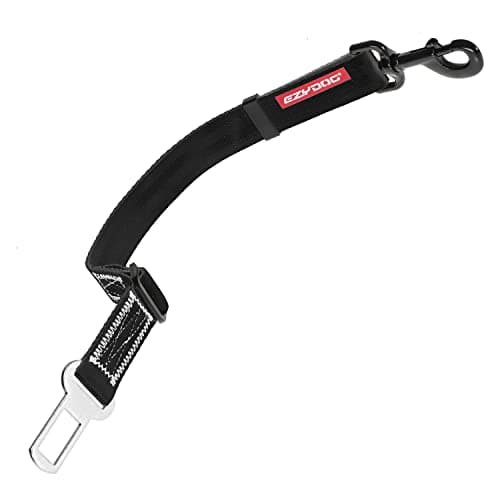
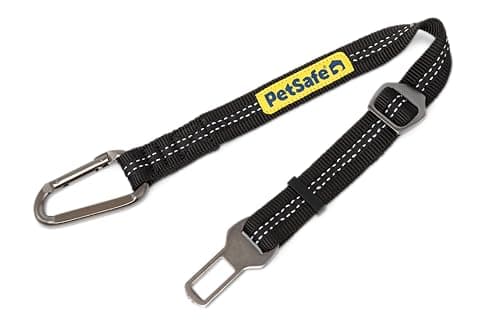
There are two attachment styles. A loop-through tether threads around the seatbelt webbing and relies on friction and the belt's own lock. A buckle-in tether (Kurgo, EzyDog) has a tongue that clicks into the seatbelt receiver like a passenger would. The buckle-in style is more positive, removes a source of slack, and is much harder to fit wrongly.
Shorter is safer
A long tether lets the dog build speed before the strap catches, which converts a restraint into a slingshot. Adjust it so the dog can sit and lie down comfortably and cannot reach the footwell or the front seats. Almost every tether sold is long enough; almost nobody shortens theirs.
Bungee sections are a genuine trade-off
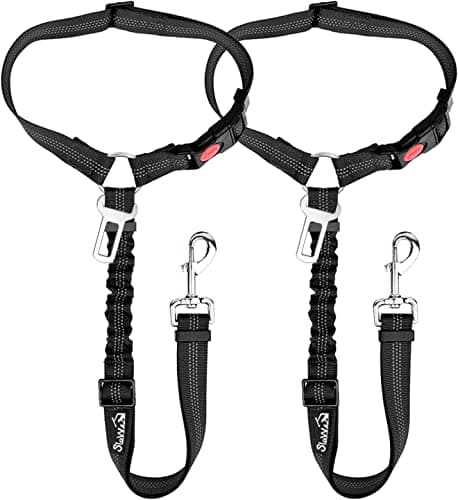
Elastic sections (SlowTon) absorb the snap of an ordinary hard stop, which is kinder day to day. They also increase travel before the strap goes tight. Our view: fine for a calm dog on a short lead length, less good if you cannot keep the connection short. Do not use a bungee tether at full extension.
Hardware is what actually wears out
The clip and the swivel take a twist every single trip. A swivel (Kurgo) stops the strap winding into a knot; heavier webbing (EzyDog) resists fraying at the loop. This is where the price difference between a budget and a premium tether actually shows up, and after a year it is visible.
Buy two
They are inexpensive and the second car, the borrowed car and the rental all have the same problem. Leaving one permanently buckled in each vehicle is how the restraint actually gets used rather than forgotten in a drawer.
What we would actually buy
Most people: the Kurgo. Large dog or daily use: the EzyDog for the heavier webbing. A cheap spare for the second car: the PetSafe. Two dogs on a budget: the SlowTon two-pack, adjusted short.