Skip to content
Paw & Passport

HUB 05 · Travel Essentials

How to Feed a Dog on the Road

The rule is boring and it is the whole guide: same food, roughly the same times, smaller meals on travel days.

By Stephen V.Updated How we research
#ad

We earn a commission when you buy through our Amazon links, at no extra cost to you. It never affects our rankings, and we say so when the cheaper product is the better buy. How this works.

Most travel stomach upsets are not caused by something the dog found at a rest stop. They are caused by the owner: a different food because the usual one would not fit, a big meal before a drive, or four days of irregular feeding times because the trip had no routine.

The fix is unglamorous. Take the food the dog already eats, in the amount it already eats, and feed it at roughly the times it is used to.

Never change food for a trip

A dog's gut adapts to a diet over weeks, and a sudden switch causes diarrhea in a large proportion of dogs even when the new food is better. Doing that in a hotel room, or the day before a flight, is the worst possible timing.

If you must change - you have run out, or the trip is long enough that carrying it all is impractical - transition over five to seven days by mixing increasing proportions of the new food, and start that transition at home before you leave rather than on the road.

Portion before you go

Measuring into daily bags at home takes ten minutes and removes every guessing problem afterwards. It means you are not eyeballing portions into a bowl in a car park, it makes "did anyone feed the dog?" answerable, and it stops the slow overfeeding that happens when several people are involved and everyone is being generous.

Pack one or two spare days beyond the trip length. Delays happen, and the day you run out is the day you buy whatever the gas station has - which is the food change you were trying to avoid.

Timing around travel

  • Driving days: a light meal three to four hours before departure, the main meal on arrival. A full stomach plus motion is the standard recipe for car sickness.
  • Flying days: the same principle, more strictly. A light meal several hours before, and water right up to boarding. Do not withhold water - dehydration is the real in-flight risk, not a full bladder.
  • Multi-day trips: hold the home schedule, even if your own meals have gone sideways. Dogs are considerably more attached to feeding times than to feeding locations.
  • Big activity days: feed after the activity, not before, and give the dog time to settle first. A dog that eats immediately after hard exercise is more likely to be uncomfortable.

The short answer

Quick picks

#ProductBest forScorePrice
01
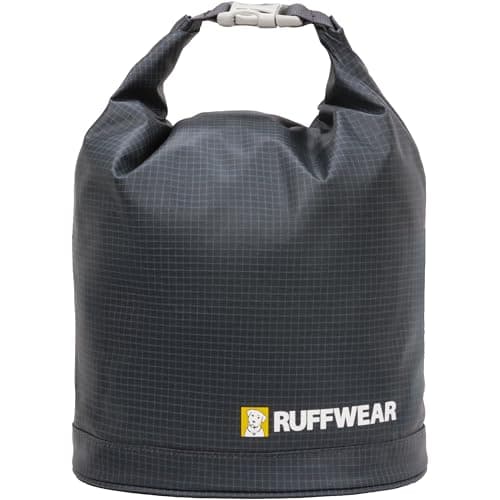
Ruffwear Ruffwear Kibble Kaddie Dog Food Travel Bag
Ruffwear Kibble Kaddie Dog Food Travel Bag

A roll-top food bag that shrinks as the food goes down — the smartest packing design in the category.

Multi-day trips where space is tight
8.0
$49.99Amazon
02
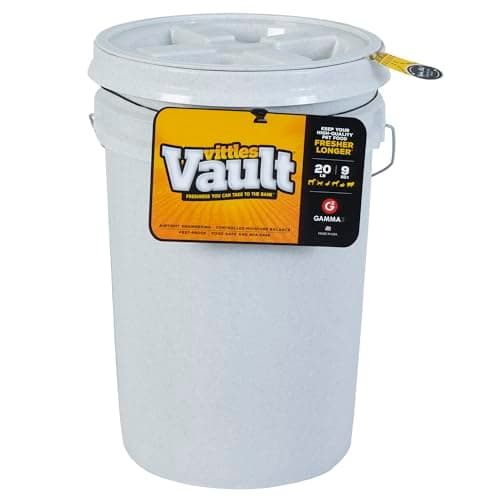
Gamma2 Gamma2 Vittles Vault Food Storage Container, 20 lb
Gamma2 Vittles Vault Food Storage Container, 20 lb

The rigid, sealed option. When freshness and pests matter more than packing small, this is the answer.

Cabins, campers and long stays
7.6
$34.99Amazon
03
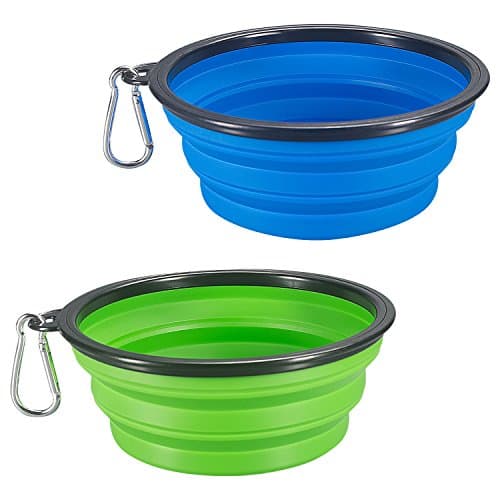
Comsun Comsun Collapsible Dog Bowl (2-pack)
Comsun Collapsible Dog Bowl (2-pack)

Two food-grade silicone bowls for pocket change. The default travel bowl, and it's hard to beat.

Most people
8.4
$8.99Amazon

#ad · Live prices from the Amazon Product API, as of Sep 6, 2026. Where we have no verified live price we show none — we would rather leave a gap than print a number that has rotted.

In detail

The picks, in full

01
Ruffwear Ruffwear Kibble Kaddie Dog Food Travel Bag

Multi-day trips where space is tight

Ruffwear Kibble Kaddie Dog Food Travel Bag

Roll-top closureCollapses as it emptiesPour spoutRuffwear trail line
8.0/10

A roll-top food bag that shrinks as the food goes down — the smartest packing design in the category.

Freshness seal
7
Capacity
9
Pack size
9
Cleaning
8
Value
7

Pros

  • A roll-top collapses as food is used, so the bag stops taking a full-size hole in your trunk on day four
  • The pour spout means you can portion out a meal without decanting the whole bag into a bowl
  • Built from the same abrasion-resistant fabrics as Ruffwear's packs rather than thin liner material

Cons

  • Priciest option here for what is fundamentally a bag
  • A roll-top is water resistant, not airtight — for very long trips a rigid vault holds freshness better

Don't buy this if…

the food lives in a car for weeks. A sealed rigid container is the right tool for long storage.

$49.99View on Amazon

Price as of Sep 6, 2026. Prices change — Amazon's at checkout is the one that counts.

#ad · we may earn a commission from this link to Ruffwear Kibble Kaddie Dog Food Travel Bag

02
Gamma2 Gamma2 Vittles Vault Food Storage Container, 20 lb

Cabins, campers and long stays

Gamma2 Vittles Vault Food Storage Container, 20 lb

Airtight screw-top seal20 lb capacity (listed)BPA-free HDPE bodyMade in USA (listed)
7.6/10

The rigid, sealed option. When freshness and pests matter more than packing small, this is the answer.

Freshness seal
10
Capacity
9
Pack size
2
Cleaning
9
Value
8

Pros

  • The threaded lid and double gaskets are a real airtight seal, which keeps kibble fresh for weeks in a way no fabric roll-top can claim
  • Rigid walls keep ants, mice and damp out — the actual problem in a cabin or camper
  • Twenty pounds covers a large dog for a fortnight, so a long stay does not need a second container

Cons

  • Takes the same space empty as full, which is the exact opposite of what a packing-focused traveler wants
  • At a listed 12 x 12 x 18 inches it is a genuinely bulky object to give up trunk space to

Don't buy this if…

you are packing for a flight or a hike. Rigid containers are for base camps, not for carrying.

$34.99View on Amazon

Price as of Sep 6, 2026. Prices change — Amazon's at checkout is the one that counts.

#ad · we may earn a commission from this link to Gamma2 Vittles Vault Food Storage Container, 20 lb

03
Comsun Comsun Collapsible Dog Bowl (2-pack)

Most people

Comsun Collapsible Dog Bowl (2-pack)

Food-grade silicone2-packCarabiner clipDishwasher-safe
8.4/10

Two food-grade silicone bowls for pocket change. The default travel bowl, and it's hard to beat.

Packability
10
Leak/spill resist
6
Capacity
8
Durability
8
Value
10

Pros

  • Two in the pack means one for food and one for water without a second purchase
  • Collapses flat and clips to a leash or bag with the included carabiner
  • Food-grade silicone that washes clean and doesn't hold odor

Cons

  • Soft walls tip if a big dog shoves the bowl around
  • No lid, so a full bowl doesn't travel with water already in it

Don't buy this if…

you want a bowl you can pre-fill and carry. These collapse for transport but don't seal — for water on the move, a bottle-and-bowl combo is the tool.

$8.99View on Amazon

$9.9910% off

Price as of Sep 6, 2026. Prices change — Amazon's at checkout is the one that counts.

#ad · we may earn a commission from this link to Comsun Collapsible Dog Bowl (2-pack)

Storage: air, heat and smell

Kibble goes stale because the fats in it oxidize on contact with air, and heat accelerates it. The FDA's pet food storage guidance is the right baseline: keep food in its original bag where practical, sealed, cool and dry, and do not decant into an open container. The original packaging is designed as a fat barrier in a way that a plastic tub is not - the usual compromise is to put the bag itself inside a sealed container.

On the road that translates to three rules:

  • Sealed, not rolled shut. A roll-top bag is fine for a weekend; anything longer wants a genuine airtight seal.
  • Not in a hot car boot for days. This is where trip food actually degrades, and it is the one most people get wrong.
  • Smell control matters at campsites. An open bag of kibble is a wildlife attractant - store it the way the site tells you to store human food. Our camping gear guide covers the campsite rules.

For trips of a week or more, a rigid sealed container is the honest choice; for a weekend, a roll-top fabric carrier that packs down as it empties is easier to live with. The full category is in travel food containers.

Wet food, raw food and the cold chain

Wet food travels fine unopened; opened cans and pouches need refrigeration and a hotel minibar is not a reliable fridge. Pack single-serving sizes rather than large cans so nothing has to be kept.

Raw diets are genuinely difficult on the road: they need a maintained cold chain, and a cooler in a car in summer is not one. If your dog is raw-fed, either plan around accommodation with a real freezer or transition to a shelf-stable option well before the trip rather than during it. Handle it hygienically - the food safety considerations do not relax because you are in a hotel room.

Bowls and water

One bowl, rinsed, is enough. A collapsible bowl that clips to a bag lives in a door pocket and is available at every stop, which matters more than capacity. Water gets its own treatment - offer little and often at stops rather than leaving a full bowl in a moving car, and carry your own rather than using standing water. That is covered properly in keeping a dog hydrated while traveling.

The dog that will not eat away from home

Common, and usually not a problem for a day or two in an otherwise healthy adult dog. Things that help: feeding in the same spot in the room each time, using the dog's own bowl from home, feeding after a walk rather than on arrival, and leaving the food down for a defined period rather than all day.

What is not normal is a dog refusing water, refusing food for more than about 48 hours, or refusing food alongside lethargy or vomiting. That is a vet call, and looking up the nearest clinic when you arrive somewhere is a two-minute job that makes it an easy one.
How we picked

We do not test the gear

We compiled the manufacturers' published dimensions and specs, cross-checked them against airline under-seat limits and published safety certifications, read the owner reviews, and scored each product against a published rubric. The scores are judgments from that research — they are not measurements we took, because we do not own a lab and we are not going to pretend we do. Where we could not verify a fit or a claim, we say so on the page.

Questions

Frequently asked

Should I change my dog's food when traveling?
No. A dog's gut adapts to a diet over weeks and a sudden change causes diarrhea in a lot of dogs even when the new food is better. Take the food the dog already eats, plus one or two spare days for delays. If you genuinely have to switch, transition over five to seven days and start it at home before the trip.
When should I feed my dog on a driving day?
A light meal three to four hours before you leave, and the main meal on arrival. Traveling on a full stomach is the standard cause of car sickness. Keep the timing roughly consistent with home on multi-day trips - dogs are much more attached to feeding times than to feeding locations.
Should I feed my dog before a flight?
A light meal several hours before, not immediately before, and keep water available right up to boarding. Do not withhold water to avoid accidents - dehydration is the real in-flight risk. Feed the main meal after you land and the dog has settled.
How should I store dog food while traveling?
Sealed, cool and dry, and ideally still in its original bag inside a container - the bag is designed as a barrier against the air that turns the fats rancid, in a way a plastic tub is not. Keep it out of a hot car boot, and at campsites store it the way the site tells you to store human food, because open kibble attracts wildlife.
What if my dog will not eat on holiday?
A day or two of reduced appetite is common in a healthy adult dog in a new place. Feed in the same spot each time, use the bowl from home, feed after a walk, and offer the food for a defined period rather than leaving it down. Refusing water, going more than about 48 hours without eating, or refusing food alongside lethargy or vomiting is a reason to call a vet.

Keep reading

Receipts

Sources

We do not run a testing lab, and we do not pretend to. Product dimensions and safety claims come from the manufacturer's own listing; airline limits come from the airline's published policy, with the date we checked it. Where we could not verify something, we say so on the page rather than quietly leaving it out. Read our full method.