Skip to content
Paw & Passport

HUB 02 · Car Travel Safety

How to Keep a Dog Cool in the Car

The numbers are worse than they feel: about 20 degrees Fahrenheit in ten minutes, and cracking the windows makes no difference at all.

By Stephen V.Updated How we research
#ad

We earn a commission when you buy through our Amazon links, at no extra cost to you. It never affects our rankings, and we say so when the cheaper product is the better buy. How this works.

Start with the figure everything else follows from. According to the AVMA, the interior of a parked vehicle can rise about 20 degrees Fahrenheit in ten minutes, almost 30 degrees in twenty, and more than 40 degrees within an hour. On a 70-degree day that is over 110 degrees inside the car. Cracking the windows makes no measurable difference, and parking in the shade is not a solution either.

That is the parked-car rule and it has no exceptions worth arguing about: the dog comes with you or the dog stays home. Everything below is about the other 95% of the problem - keeping a dog comfortable in a car that is actually moving, on a day that is actually hot.

Dogs cool differently, and worse than you

You sweat. A dog pants, moving air across wet tissue to shed heat by evaporation, plus a small amount through the paw pads. That system works well in dry moving air and badly in a hot, still, humid car. It also degrades sharply with age, weight, thick coats, and short muzzles - which is why the same drive that a lean young collie finds fine can genuinely endanger a bulldog. If your dog is brachycephalic, read the snub-nosed guide too, because the physiology is the same problem in a different setting.

The five things that actually work while driving

  • Cool the car before the dog gets in. Run the air conditioning for a few minutes with the doors open. Loading a dog into a car that has been sitting in a car park since noon starts the trip in a deficit it may not recover from.
  • Get the cold air to the back. Most cars cool the front footwells and nothing else. Point the rear vents at the dog, use recirculation, and if your car has no rear vents, angle a front one backwards. A dog in a cargo area with the seats up is in the hottest part of the vehicle.
  • Shade the glass.A window shade or sunshade on the dog's side does more than any gadget. Direct sun through a rear window on a stationary dog is radiant heat with nowhere to go.
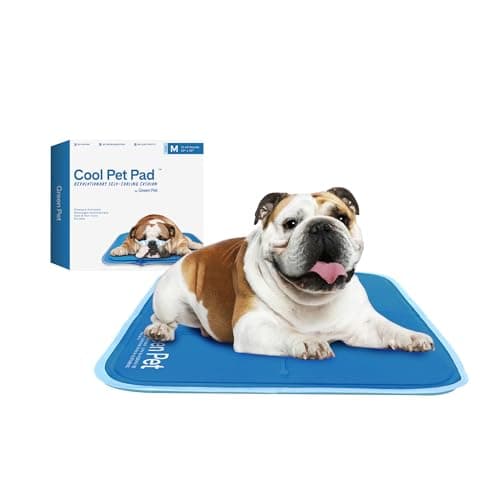
  • Give it something cool to lie on. A pressure-activated cooling mat works for exactly this situation - a dog lying still on a surface for hours - and unlike a wet vest it does not leave you with a damp dog and a damp seat. Our cooling mat roundup ranks them.
  • Water at every stop, in small amounts. Not one bowl left sloshing in the back. See hydration on the move.

What does not work

Cracked windows on a parked car, as above. Ice water in large quantities, which can cause a dog to gulp and vomit - cool water, offered often, is better than freezing water offered once. A fan blowing hot air, which just moves hot air. And a soaked towel laid over a dog, which restricts evaporation from the coat rather than helping it; a damp towel under a dog is the useful version.

The short answer

Quick picks

#ProductBest forScorePrice
01
no image
The Green Pet Shop Chillz Pressure-Activated Cooling Mat

Pressure-activated gel: no water, no freezer, no power. Put it down and it works.

Car back seats and hotel floors
8.0
Check price →
02
Highwave Highwave AutoDogMug
Highwave AutoDogMug

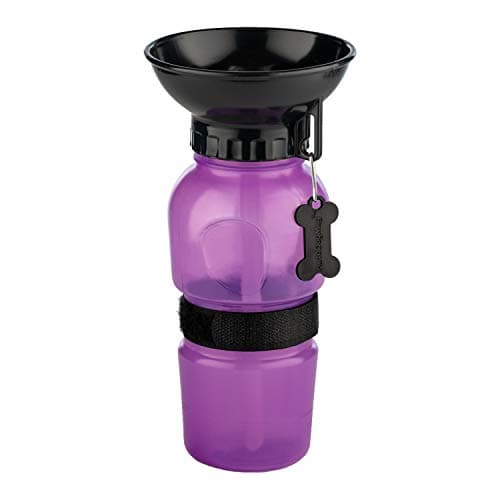
The mug-and-bowl-in-one — squeeze to fill the attached cup, release to draw it back. Genuinely one-handed.

Simplest one-handed drinking
7.8
$20.00Amazon
03
Ruffwear Ruffwear Swamp Cooler Dog Vest
Ruffwear Swamp Cooler Dog Vest

The evaporative benchmark. Soak it, wring it, and it keeps working for as long as it stays damp.

Hot-weather hiking
8.0
$74.99Amazon

#ad · Live prices from the Amazon Product API, as of Sep 6, 2026. Where we have no verified live price we show none — we would rather leave a gap than print a number that has rotted.

In detail

The picks, in full

01
No image

Car back seats and hotel floors

The Green Pet Shop Chillz Pressure-Activated Cooling Mat

Pressure-activated gelNo refrigeration neededRecharges when unusedMultiple sizes
8.0/10

Pressure-activated gel: no water, no freezer, no power. Put it down and it works.

Cooling effect
8
Durability
6
Portability
8
Cleaning
9
Value
9

Pros

  • Needs nothing — no freezer, no soaking, no power — which is exactly right for a car or a hotel room
  • Recharges itself after about twenty minutes off the mat, so it works in cycles all day
  • The category original, with the longest owner-report record of anything here

Cons

  • Gel mats puncture, and a puncture ends the mat — not one for a digger or a chewer
  • The cooling is noticeable rather than dramatic; it takes the edge off, it does not chill a dog

Don't buy this if…

your dog scratches at bedding. One claw through the gel layer and it is finished.

Check price on Amazon →

We don't have a verified live price for this right now, so we aren't showing one.

#ad · we may earn a commission from this link to The Green Pet Shop Chillz Pressure-Activated Cooling Mat

02
Highwave Highwave AutoDogMug

Simplest one-handed drinking

Highwave AutoDogMug

Squeeze-to-fill bowlOne-piece design~20 ozBPA-free
7.8/10

The mug-and-bowl-in-one — squeeze to fill the attached cup, release to draw it back. Genuinely one-handed.

Leak resistance
8
Capacity
7
One-hand use
9
Weight
7
Value
8

Pros

  • The attached cup fills on a squeeze and empties back on release — the most intuitive one-handed design here
  • One piece, nothing to lose, nothing to assemble at a rest stop
  • A long-running, proven design people keep repurchasing

Cons

  • Wider and stubbier than a slim bottle — it doesn't slot into a bike cage
  • Single-wall, so no insulation on a hot day

Don't buy this if…

you want something slim that fits a bottle cage or side pocket. The wide mug shape is the ergonomic win and the packing penalty.

$20.00View on Amazon

Price as of Sep 6, 2026. Prices change — Amazon's at checkout is the one that counts.

#ad · we may earn a commission from this link to Highwave AutoDogMug

03
Ruffwear Ruffwear Swamp Cooler Dog Vest

Hot-weather hiking

Ruffwear Swamp Cooler Dog Vest

Evaporative coolingThree-layer constructionHarness portReflective trim
8.0/10

The evaporative benchmark. Soak it, wring it, and it keeps working for as long as it stays damp.

Cooling effect
9
Fit and coverage
9
Re-wet speed
8
Weight
7
Value
7

Pros

  • Layered construction holds water where it helps and keeps the dog's coat from getting soaked through, which is the difference between cooling and just being wet
  • A harness port means the vest works with a hiking harness instead of forcing you to choose
  • Ruffwear cuts for movement, so it does not bunch at the shoulders on mile five

Cons

  • Evaporative cooling needs dry air — in humid heat it does much less than the marketing implies
  • The most expensive cooling option here

Don't buy this if…

you live somewhere humid. Evaporation is the mechanism; humidity is what stops it. Shade and water beat any vest in a swamp.

$74.99View on Amazon

Price as of Sep 6, 2026. Prices change — Amazon's at checkout is the one that counts.

#ad · we may earn a commission from this link to Ruffwear Swamp Cooler Dog Vest

Heatstroke: the signs, in the order they appear

Know these well enough to spot them from the driver's seat in a mirror.

  1. Heavy, fast panting that does not slow down when the car cools, and drooling that is thicker than usual.
  2. Restlessness - a dog that keeps standing up, repositioning, and cannot settle.
  3. Bright red or, later, dark or dusky gums; a dry, tacky mouth.
  4. Wobbliness, vomiting or diarrhea, confusion, collapse. This is an emergency, not a wait-and-see.

If you see the early signs: pull over somewhere shaded, get the dog out of the car, offer small amounts of cool water, and wet the paws, belly and groin with cool - not ice cold - water while air moves over the dog. Then call a vet. Heatstroke can do organ damage that is not visible at the roadside, and a dog that looks recovered still needs to be seen.

Planning a hot-weather drive

  • Drive early or late. The hours either side of dawn are the whole solution to a summer road trip and they cost nothing.
  • Plan stops around shade, not around fuel. A shaded verge at a quiet exit beats a sunlit service station forecourt every time. The stopping rhythm gets shorter and more frequent in heat.
  • Never leave the dog while you go in somewhere,including for "just five minutes". In a number of states this is also an offense - our state law reference covers where.
  • Check the asphalt before you walk. Hot pavement burns pads, and it is usually far hotter than the air. The back-of-the-hand test and the fix are in protecting paws on hot pavement.
  • Take the cooling gear you would take on a hike. A cooling vest earns its place at the stops - walking a dog in one at 2pm is much easier than walking a dog without.

Crates and cargo areas in summer

A crate is the safest place for a lot of dogs in a car, and it is also the hottest. Airflow through a crate is worse than airflow around a loose dog, and a soft crate is worse than a wire one. In hot weather: wire or a well-ventilated hard crate rather than fabric, positioned where the air conditioning reaches it, never in direct sun, and never in a cargo area with a closed tonneau cover. If your dog rides in a crate, read how to secure it for the safety half of the same decision.

The rule that covers everything else

If you would not sit in that car, with the engine off, for as long as you are about to leave your dog in it - do not leave your dog in it. That single test replaces every judgment call people get wrong on a hot day, including the ones that end with a broken window and a vet bill.

How we picked

We do not test the gear

We compiled the manufacturers' published dimensions and specs, cross-checked them against airline under-seat limits and published safety certifications, read the owner reviews, and scored each product against a published rubric. The scores are judgments from that research — they are not measurements we took, because we do not own a lab and we are not going to pretend we do. Where we could not verify a fit or a claim, we say so on the page.

Questions

Frequently asked

How hot does a parked car get for a dog?
The AVMA reports that a vehicle's interior can rise about 20 degrees Fahrenheit in 10 minutes, almost 30 degrees in 20 minutes, and more than 40 degrees in an hour. On a 70-degree day that is over 110 degrees inside. Cracking the windows makes no measurable difference and shade is not a fix.
Can I leave my dog in the car with the air conditioning running?
It is not a safe plan. Engines stall, air conditioning systems fail, and a dog can knock a gear selector or a control. Some states also treat leaving an animal unattended in a vehicle as an offense regardless of whether the engine is running. If the dog cannot come with you, the trip needs a different plan.
What are the first signs of heatstroke in a dog in the car?
Heavy, fast panting that does not settle when the car cools, thick drooling, and restlessness - a dog that keeps standing up and cannot get comfortable. Later signs are bright red or dusky gums, a dry tacky mouth, wobbliness, vomiting and collapse. Early signs mean pull over now; later signs are a veterinary emergency.
Do cooling mats work in a car?
Yes, and the car is where they work best. Pressure-activated gel mats need a dog lying still on them to do anything, which is exactly what a dog does in a car for hours. They are more practical than a cooling vest for driving because they leave the dog and the upholstery dry.
Is the boot or cargo area safe for a dog in summer?
It is usually the hottest part of the vehicle and the furthest from the air conditioning. If your dog travels there, make sure air actually reaches it, avoid closed tonneau covers entirely, and consider moving the dog into the cabin on hot days even if the cargo area is your normal setup.

Keep reading

Receipts

Sources

We do not run a testing lab, and we do not pretend to. Product dimensions and safety claims come from the manufacturer's own listing; airline limits come from the airline's published policy, with the date we checked it. Where we could not verify something, we say so on the page rather than quietly leaving it out. Read our full method.