Skip to content
Paw & Passport

HUB 04 · Outdoor & Adventure

Protecting a Dog's Paws on Hot Pavement

Air temperature tells you almost nothing about surface temperature. The back of your hand tells you everything, in seven seconds.

By Stephen V.Updated How we research
#ad

We earn a commission when you buy through our Amazon links, at no extra cost to you. It never affects our rankings, and we say so when the cheaper product is the better buy. How this works.

Pad burns are one of the most common summer injuries dogs turn up at a vet with, and they are almost entirely a mistake of measurement. People check the air temperature. Dogs walk on asphalt, which absorbs solar radiation all day and can be far hotter than the air above it - and unlike you, a dog cannot take its shoes off to find out.

The test that replaces guessing

Put the back of your hand flat on the surface and hold it there for seven seconds. If you cannot keep it there comfortably for the full seven, the surface is too hot for your dog to walk on. Back of the hand, not the palm - palms are calloused and will lie to you.

Two things this test catches that intuition does not. Asphalt stays hot for hours after the sun has moved off it, so a 7pm walk on a road that baked all afternoon can still fail the test on a pleasant evening. And a shaded stretch of the same road can pass while the sunlit stretch fails, which is why the answer is often a route change rather than a canceled walk.

What actually solves it

  1. Change the time. Early morning is the whole solution and it costs nothing. Before the surface has had a day of sun on it, none of the rest matters.
  2. Change the surface. Grass, dirt, woodland trail, packed sand in the shade. A route that keeps the dog off asphalt is better than any product.
  3. Shorten it. Two short walks in the cool beat one long one at 2pm, and a hot day is a good day for indoor enrichment instead.
  4. Then, if you still need to cross hot ground - boots. Not first. Boots are the answer to unavoidable hot surfaces, not a license to walk a dog across a car park in July.

On a trip there is a fifth option people forget: take the paws off the ground entirely. For a small or older dog crossing a hot resort car park or a city block at 2pm, a folding travel stroller solves the surface problem completely, which no boot does.

Where boots earn their place

Boots are genuinely useful for city dogs who cannot avoid pavement, for service and working dogs, and for trips where the walk from the car to the trail crosses baking asphalt. They are also the item most likely to be bought, tried once, and abandoned - because they were the wrong size and fell off.

Two things decide whether boots work: sizing, and acclimation. Trace the weight-bearing paw on paper rather than measuring a lifted one, because a paw spreads under load, and size to the larger front paws. Then introduce them indoors over a week before you rely on them outdoors. Our boot sizing guide covers the method, and the boot roundup ranks what stays on.

The short answer

Quick picks

#ProductBest forScorePrice
01
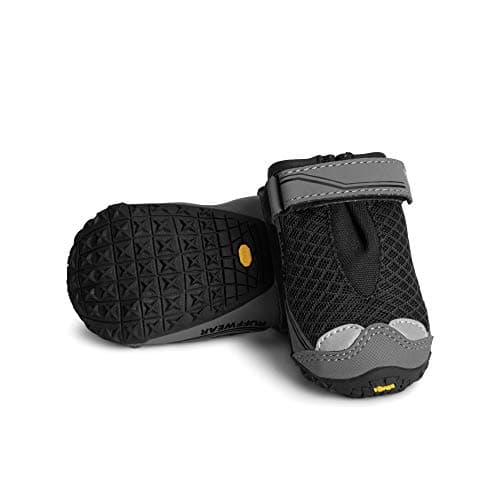
Ruffwear Ruffwear Grip Trex Dog Boots
Ruffwear Grip Trex Dog Boots

The trail boot everything else is measured against — a genuine lugged rubber sole, not a fabric sock.

Real trail miles, hot pavement and snow
8.4
$49.99Amazon
02
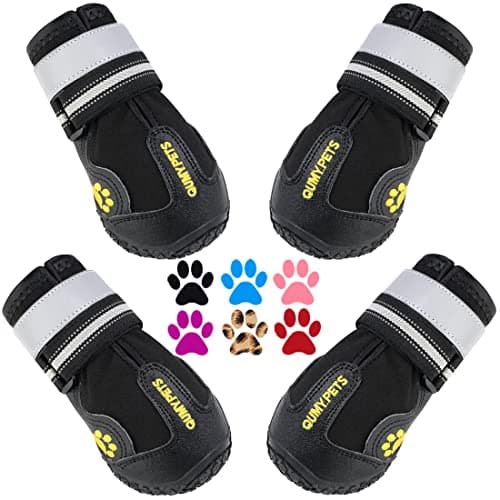
QUMY QUMY Waterproof Dog Boots
QUMY Waterproof Dog Boots

The best-selling budget boot, and genuinely fine for hot pavement and salted sidewalks.

Hot pavement and winter salt
7.6
$26.09Amazon
03
no image
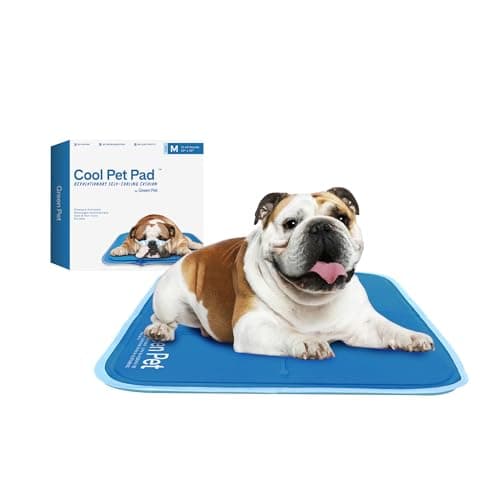
The Green Pet Shop Chillz Pressure-Activated Cooling Mat

Pressure-activated gel: no water, no freezer, no power. Put it down and it works.

Car back seats and hotel floors
8.0
Check price →

#ad · Live prices from the Amazon Product API, as of Sep 6, 2026. Where we have no verified live price we show none — we would rather leave a gap than print a number that has rotted.

In detail

The picks, in full

01
Ruffwear Ruffwear Grip Trex Dog Boots

Real trail miles, hot pavement and snow

Ruffwear Grip Trex Dog Boots

Vibram-style lugged soleBreathable upperHook-and-loop closureSold in pairs
8.4/10

The trail boot everything else is measured against — a genuine lugged rubber sole, not a fabric sock.

Grip
10
Stays on
9
Durability
9
Fit range
8
Value
6

Pros

  • An actual treaded rubber outsole grips wet rock and scree, where fabric-soled booties simply slide
  • The upper breathes, so a dog wearing them for hours is not standing in its own sweat
  • Sizing is by paw width with a published chart, which is the only way boots ever fit

Cons

  • Sold as pairs, so a full set of four is a serious spend
  • Stiff out of the box; dogs need a few short sessions before they walk normally in them

Don't buy this if…

you want them for occasional icy sidewalks. That is a job for a cheap bootie, and the Grip Trex is overkill.

$49.99View on Amazon

Price as of Sep 6, 2026. Prices change — Amazon's at checkout is the one that counts.

#ad · we may earn a commission from this link to Ruffwear Grip Trex Dog Boots

02
QUMY QUMY Waterproof Dog Boots

Hot pavement and winter salt

QUMY Waterproof Dog Boots

Waterproof upperAnti-slip soleReflective strapsSet of four
7.6/10

The best-selling budget boot, and genuinely fine for hot pavement and salted sidewalks.

Grip
7
Stays on
7
Durability
7
Fit range
7
Value
10

Pros

  • Sold as a set of four, so the price you see is the price for the whole dog — unlike the premium pairs
  • Rugged enough for pavement heat and road salt, which is what most owners actually need boots for
  • Wide split-seam opening makes them far easier to get onto a resistant paw than a narrow sock-style boot

Cons

  • The sole is anti-slip but not lugged — on wet rock they are noticeably behind a trail boot
  • Sizing runs unforgiving; measure the paw width and expect to exchange once

Don't buy this if…

you are hiking technical terrain. These are pavement and sidewalk boots that also survive a park trail.

$26.09View on Amazon

$28.9910% off

Price as of Sep 6, 2026. Prices change — Amazon's at checkout is the one that counts.

#ad · we may earn a commission from this link to QUMY Waterproof Dog Boots

03
No image

Car back seats and hotel floors

The Green Pet Shop Chillz Pressure-Activated Cooling Mat

Pressure-activated gelNo refrigeration neededRecharges when unusedMultiple sizes
8.0/10

Pressure-activated gel: no water, no freezer, no power. Put it down and it works.

Cooling effect
8
Durability
6
Portability
8
Cleaning
9
Value
9

Pros

  • Needs nothing — no freezer, no soaking, no power — which is exactly right for a car or a hotel room
  • Recharges itself after about twenty minutes off the mat, so it works in cycles all day
  • The category original, with the longest owner-report record of anything here

Cons

  • Gel mats puncture, and a puncture ends the mat — not one for a digger or a chewer
  • The cooling is noticeable rather than dramatic; it takes the edge off, it does not chill a dog

Don't buy this if…

your dog scratches at bedding. One claw through the gel layer and it is finished.

Check price on Amazon →

We don't have a verified live price for this right now, so we aren't showing one.

#ad · we may earn a commission from this link to The Green Pet Shop Chillz Pressure-Activated Cooling Mat

Paw wax: what it does and does not do

Wax-type paw balms create a thin barrier and help with abrasion, salt and ice. They are not heat protection in any meaningful sense - a millimeter of wax does not insulate a pad from a surface hot enough to fail the seven-second test. Use balm for conditioning dry, cracked pads and for winter grit; do not use it as a substitute for not walking on hot asphalt.

Spotting a burn

Pad burns often are not obvious at the time, because a dog will keep walking on a burnt pad if you keep walking. Look for:

  • Limping, or refusing to walk, shortly after being on a hot surface
  • Pads that are darker or redder than normal, or noticeably paler in patches
  • Licking or chewing at the feet
  • Missing pad surface, blisters, or flaps of loose pad
  • The dog holding one paw up, or walking oddly on grass but not on carpet

If you see any of that: get the dog off the hot surface, cool the feet with cool - not ice-cold - water, keep the dog from licking, and call a vet. Burnt pads get infected easily, and the ones that look mild on day one frequently need treatment on day three.

The rest of the hot-weather picture

Paws are the injury people forget; heat itself is the one that kills. On any day hot enough to worry about pavement, you are also managing hydration and body temperature. The short version: walk early, carry water, use shade, and know that a dog lying on a cooling mat in shade sheds heat far better than a dog standing in it. A cooling vest is worth having if you walk in the middle of the day by necessity rather than choice.

And the car remains the biggest risk of a hot day out - a parked vehicle heats fast enough to be lethal well before it feels dangerous. The numbers and the protocol are in keeping a dog cool in the car.

Which dogs are most at risk

  • Puppies, whose pads have not toughened yet.
  • Indoor and carpet dogs - pads condition to what they walk on, and a dog that mostly walks on grass has softer pads than one that walks pavement daily.
  • Dogs recently moved to a hot climate, for the same reason.
  • Small dogs, whose whole body sits closer to the radiating surface.
  • Dark-coated and short-nosed dogs, who are fighting the heat itself as well as the ground.

The single habit worth building: touch the ground before every summer walk. It takes seven seconds and it is the entire prevention strategy.
How we picked

We do not test the gear

We compiled the manufacturers' published dimensions and specs, cross-checked them against airline under-seat limits and published safety certifications, read the owner reviews, and scored each product against a published rubric. The scores are judgments from that research — they are not measurements we took, because we do not own a lab and we are not going to pretend we do. Where we could not verify a fit or a claim, we say so on the page.

Questions

Frequently asked

How hot is too hot for a dog to walk on pavement?
Use the hand test rather than the thermometer. Place the back of your hand flat on the surface for seven seconds - if you cannot hold it there comfortably, it is too hot for your dog's pads. Asphalt absorbs heat all day and stays hot well into the evening, so a comfortable air temperature tells you very little.
Do dog boots protect against hot pavement?
Yes, when they fit and stay on, and they are the right answer for unavoidable hot surfaces - city pavements, or the walk from a car park to a trail. They are not a substitute for walking earlier or choosing grass. Size by tracing the weight-bearing paw rather than a lifted one, and acclimate the dog indoors over a week before relying on them.
Does paw wax protect from hot ground?
Not meaningfully. Wax balms help with abrasion, salt and ice, and they condition dry or cracked pads, but a thin layer of wax does not insulate a pad from a surface hot enough to fail the seven-second test. Treat balm as skin care, not heat protection.
What does a burnt paw pad look like?
Limping or refusing to walk after being on a hot surface, pads that look darker, redder or blotchy, licking and chewing at the feet, blisters or missing pad surface, and holding a paw up. Cool the feet with cool water, stop the dog licking, and call a vet - burnt pads infect easily and often look worse on day three than on day one.
What time of day is safe to walk a dog in summer?
Early morning is the reliable window, before the ground has had a day of sun on it. Evenings feel cooler but asphalt holds heat for hours, so an 8pm walk on a road that baked all afternoon can still fail the hand test. Whatever the hour, test the surface rather than trusting the air temperature.

Keep reading

Receipts

Sources

We do not run a testing lab, and we do not pretend to. Product dimensions and safety claims come from the manufacturer's own listing; airline limits come from the airline's published policy, with the date we checked it. Where we could not verify something, we say so on the page rather than quietly leaving it out. Read our full method.