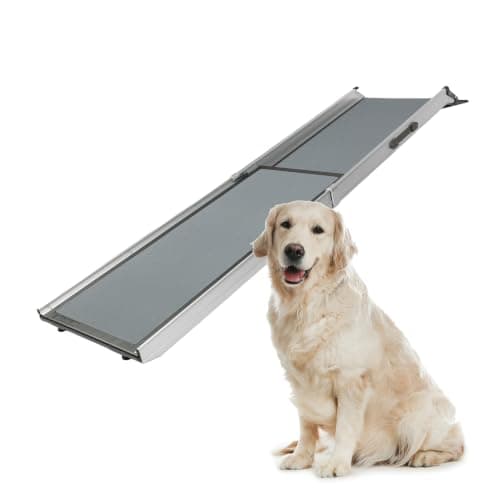
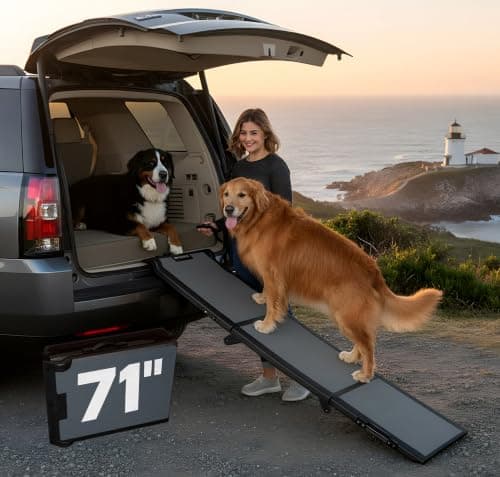
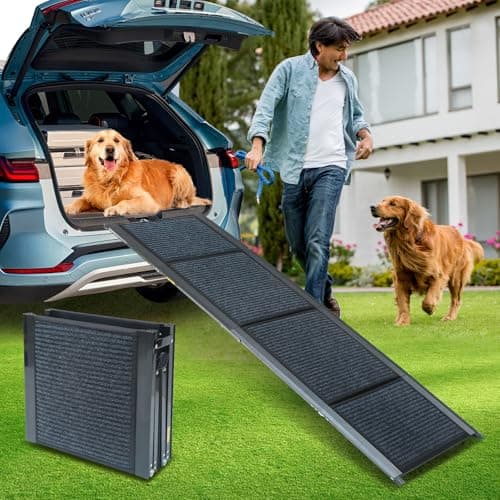
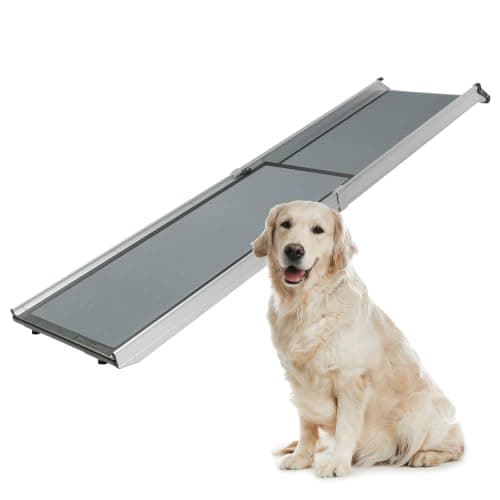
For an SUV, buy the PetSafe Happy Ride Extra Long Telescoping Dog Ramp. It is the longest ramp on this site, and length is the only variable that changes the climb: the same load floor with a longer ramp is a shallower slope, and slope is what a dog with bad hips is actually negotiating. If your trunk is the constraint rather than the height, the Pet Gear Tri-Fold Portable Pet Ramp gives you a listed 71 in of ramp that folds in three. The budget pick is the PawStep Portable Folding Dog Ramp: aluminum, listed to 250 lb, and the right way to test whether your dog will use a ramp at all.
Here is the geometry, because it is the whole page. A ramp's angle is set by the height it has to reach divided by its length. Put a short ramp against a tall load floor and you have built a ladder: the dog either refuses it or scrambles, and a dog that scrambles on a ramp is more likely to come off the side than a dog that jumps. That is why a page about SUVs ranks differently from our general car ramp roundup, which weighs packed size and grip equally — at 28 in and up, length wins and the rest follows.
How to buy for a tall vehicle
1. Measure the load floor, then do one division
Ground to the top of the load floor, in inches. Then compare: a 70 in ramp against a 30 in lift gives a much kinder angle than a 42 in ramp against the same lift. You do not need trigonometry, only the comparison — longer is always shallower for a fixed height.
2. Decide which opening you are using
Autocomplete asks about three different ones and they are not the same problem. A trunk or tailgate is the easiest: you can set a long ramp straight out behind the vehicle. A side door is the hardest, because the ramp has to clear the sill, sit at a usable angle and still leave the dog somewhere to stand — a long telescoping ramp is usually the only thing that works. A pickup bed is the tallest of all and needs the most length you can carry.
3. Grip, and what the dog is walking on
High-traction surfacing is the difference between a ramp and a slide, especially wet. All four picks here list a non-slip walking surface; the Solvit adds safety side rails, which is worth real money for a dog that drifts sideways. Every fold is also a hinge, and a nervous dog notices flex — which is the honest cost of the tri-fold's packability.
4. Capacity and weight, both ways
Check the dog weight rating, and then check what the ramp weighs, because you are the one lifting it in and out at every stop. A long telescoping ramp is the heaviest thing in this category and that is a real daily cost.
The four, side by side
| Ramp | Who it is for | Length / build | The honest cost |
|---|
| PetSafe Happy Ride Extra Long Telescoping Dog Ramp | Tall vehicles and arthritic dogs | Extra-long telescoping, high-traction surface | Heavy, and wasted length on a sedan |
| Solvit Deluxe Telescoping Pet Ramp | Buyers who want a proven design | Telescoping with safety side rails | Packs larger than a tri-fold |
| Pet Gear Tri-Fold Portable Pet Ramp | Long ramp, small trunk | Listed 71 in, folds in three | Two hinges means noticeable flex |
| PawStep Portable Folding Dog Ramp | Finding out whether a ramp helps | Aluminum, listed to 250 lb, folding | Shortest here, so the steepest angle |
Two cases where this page is the wrong page
You drive a sedan. A long ramp against a low sill is a shallow slope that eats your whole trunk for no benefit. Buy short, or buy steps — our dog car steps roundup covers the heights where steps genuinely win, and steps vs ramp settles the choice.
Your dog is young, sound and simply will not use the ramp. A ramp is training before it is equipment. Lay it flat on the ground, walk the dog over it for treats, then raise one end a few inches at a time over several days. A dog introduced to a ramp at full SUV angle on day one learns that ramps are frightening, and that lesson is expensive to undo.
Set it up so it cannot move
Two things cause ramp accidents: a foot that is not planted and a lip that is not engaged. Make sure the top edge is seated on the load floor rather than resting on the lip, make sure the bottom is on ground that will not slide, keep a hand on the dog's harness for the first few trips, and never leave a set-up ramp unattended with a dog loose around the vehicle.
And the usual reminder: a ramp solves loading, not travel. Once the dog is in, it needs a crash-tested harness, a crate or a barrier. If the reason you are here is a senior dog, the AVMA's senior pet guidance is the reference for the underlying problem and traveling with a senior dog covers the rest.